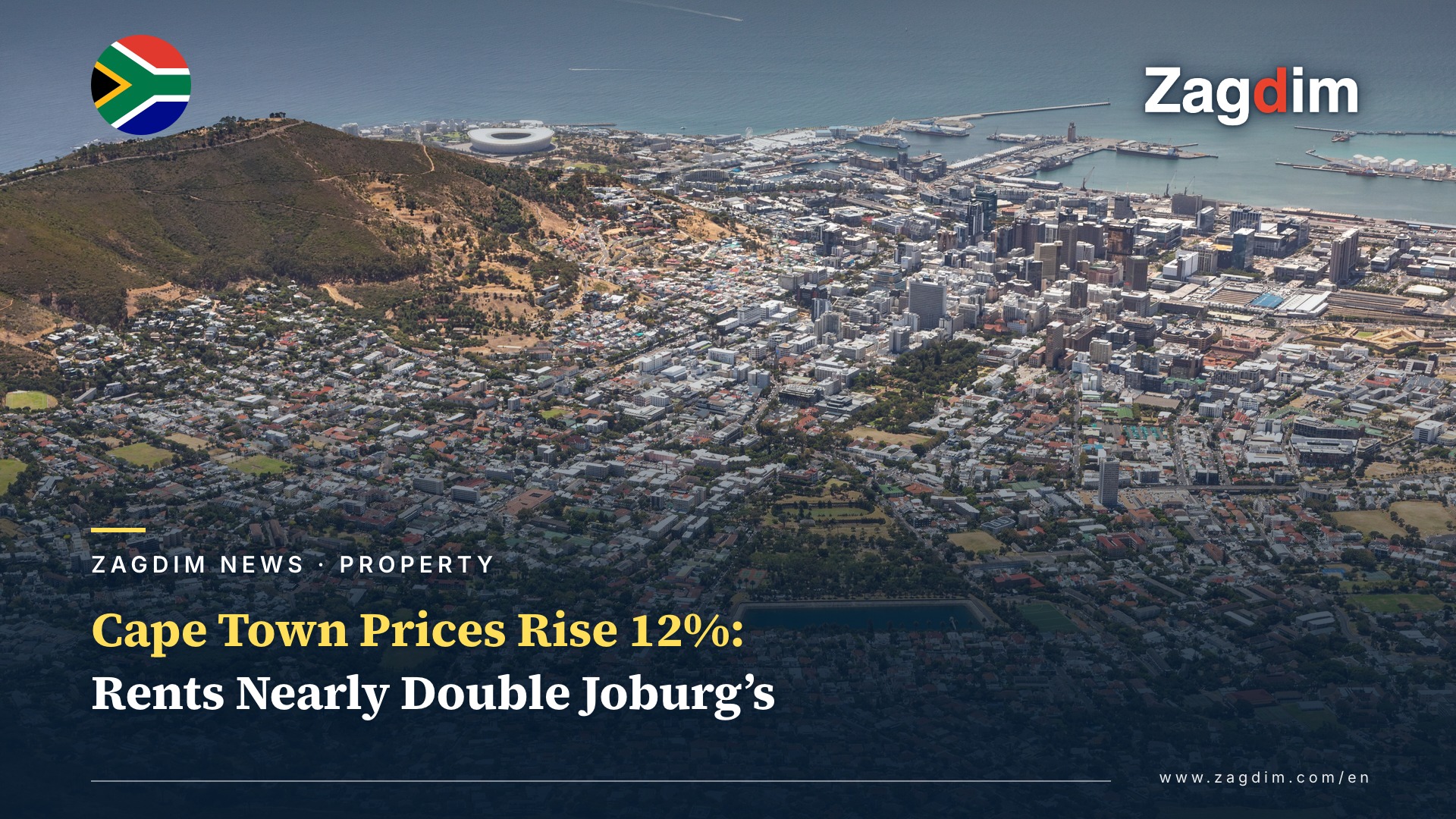
Cape Town recorded the highest annual residential property price increase among South Africa’s metros in June 2026, according to Statistics South Africa’s (StatsSA) Residential Property Price Index. Prices in the city rose 12% year-on-year, compared with 4.9% in Johannesburg and 7.2% in Ekurhuleni, taking the national metro average to 8%. At provincial level, the Western Cape recorded price inflation of 11.6%, against 4.9% in Gauteng.
The increase was broad-based: sectional-title prices (apartments and townhouses) rose 11.7% in Cape Town versus 1.4% in Johannesburg; freehold prices (standalone houses) rose 10.4% versus 9%; and resold-property prices rose 11.8% versus 4.3%. Cape Town’s index also rose 1% month-on-month in June, against 0.4% in Johannesburg.
Separate estimates from Numbeo put rents far apart between the two cities despite near-identical average take-home pay. A one-bedroom city-centre apartment was estimated at R17,188 a month in Cape Town, against R8,620 in Johannesburg; a three-bedroom city-centre apartment at R29,010 against R17,908. Numbeo’s estimated average monthly net salary was R27,541 in Cape Town and R27,795 in Johannesburg — meaning the estimated one-bedroom rent equates to roughly 62% of take-home pay in Cape Town, against 31% in Johannesburg. StatsSA and Numbeo both caution that their respective figures are subject to revision and are crowdsourced estimates rather than verified transaction data.
References
Cape Argus – Cape Town rents nearly double Joburg’s as property prices jump 12%