



























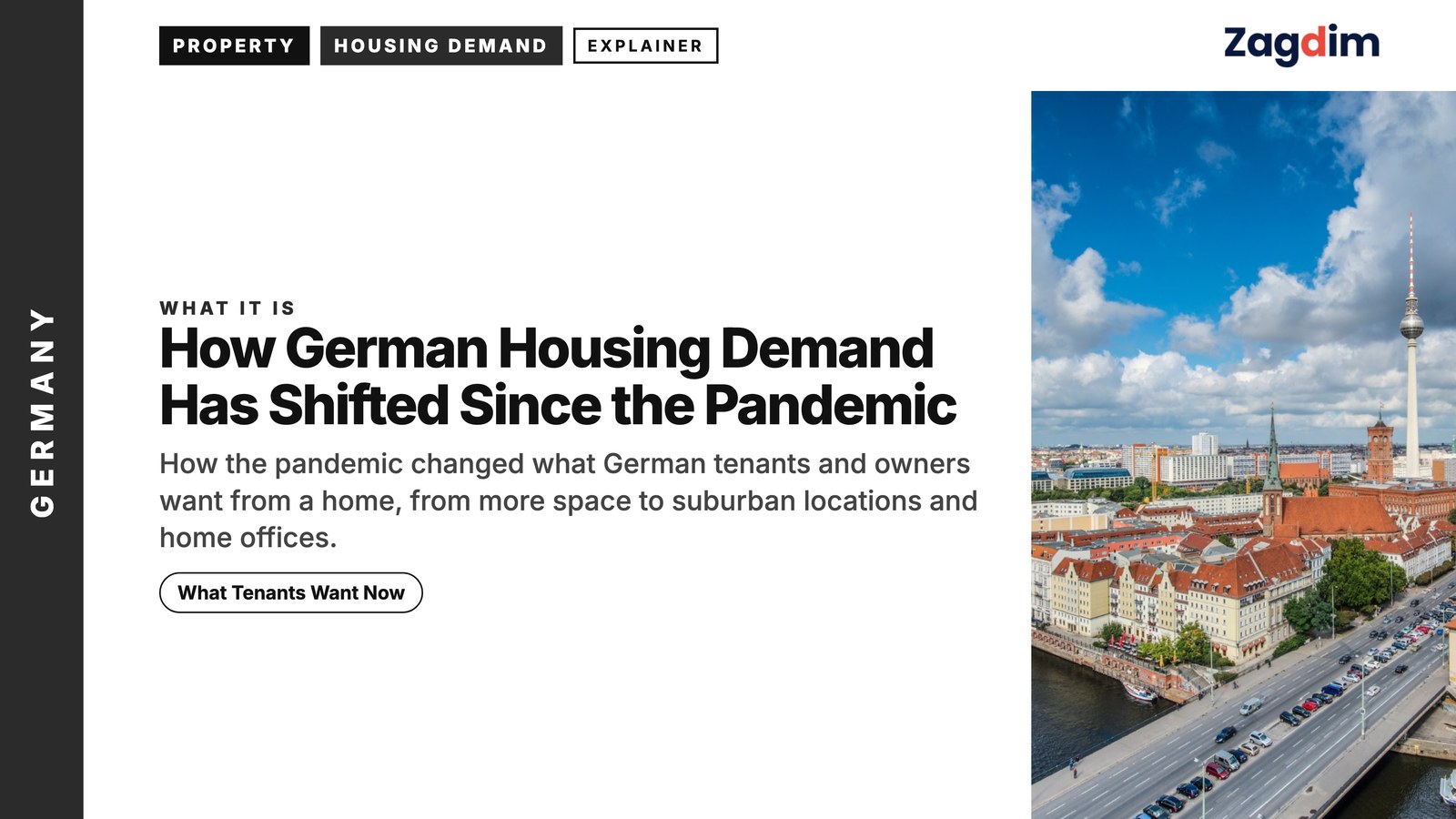
Over the past two to three years, many people have changed their idea of the perfect property. This is true both for owners using their own German property, and for tenants in Germany looking for somewhere to live long-term. Historically, the German property market has been a tenants’ market, and tenant demand is an important signal for investment decisions — even in a high-demand market, it matters a great deal to understand what tenants actually want.
What has changed, why, and what comes next? The pandemic and a set of new economic developments are the biggest drivers. On top of that, the generation born in the 1980s and 1990s has a different view of work-life balance and prefers to live differently from older generations. The pandemic in particular forced people to work from home or in a separate space. For anyone sharing a two-room apartment with children, working quietly and staying focused was a serious challenge. Home technology standards, such as internet connections, were often not good enough to communicate with a company or with clients either. Germany’s strict data-protection rules can also make working from home difficult at times. For many people, this created real strain — talking about technological progress is easy, but actually acting on it is more complicated.
What Tenants Want Now
For tenants, the top priority has become more space: a separate office, and a quieter home-office setup to work in. But more space and more technical facilities also mean higher rent and more costs. Even with employer support and some government tax breaks, affordable housing in the same area as before has often been out of reach. The best solution for many has been to move a little further out from where they used to live, somewhere with good internet infrastructure and not too far or complicated a commute. This is one reason areas 10–40km around major cities have become so popular — especially where a highway or a well-connected train station is nearby. Most tenants now favor a 3–4 bedroom apartment of 80–120 square meters in a green area or a small town with good infrastructure, giving a family more room for children and one or two parents working from home.
At the same time, underlying demand for German residential property remains high. New building completion rates are too low to meet actual demand. Many older buildings, moreover, cannot easily be renovated because of tighter environmental and climate requirements, and renovation costs considerably more than new construction. A fast, stable internet connection is also an important factor.
City-Center Apartments Still Have a Market
So what about apartments in city centers? There is no need to worry — many older residents are still looking for smaller homes. Germany’s average population age is high, and central apartments remain the most popular choice for this group, since short trips for shopping and healthcare matter a great deal to them. This may also be the start of a broader reshaping of cities, moving away from purely retail or entertainment areas toward areas for meeting, communication and services, offering good healthcare and other support. City apartments can work well alongside good population mobility.
Overall, the trend at the time was toward more space outside the city combined with a good, stable internet connection, while city-center apartments remained attractive because they offer short walking or public-transport journeys to the places people need most, and the chance to meet and interact with others nearby.
The pandemic, the shift to home offices and new ways of thinking all brought new challenges to the property market. German property investors, facing these changes, also had to weigh up and decide what kind of investment made the most sense.
Have a question about this guide? Leave a comment below, or ask Zagdim directly.
Your first stop for international property and global living.
Research and insights. Know what’s changing. Understand what matters.