






























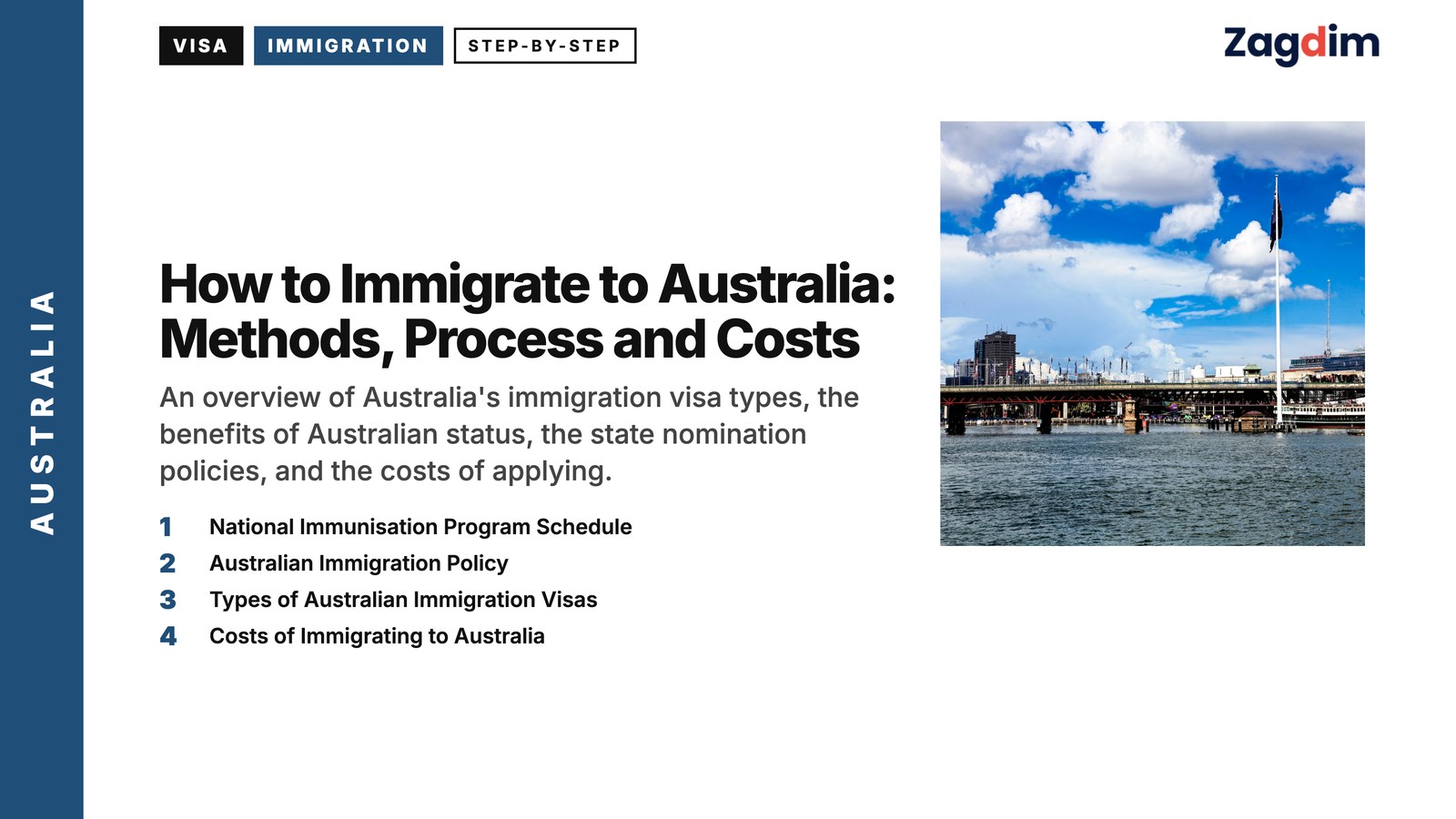
Australia offers generous welfare benefits and a beautiful natural environment, and is home to several of the world’s top 100 universities, giving it excellent education resources. Australia also has a low population density and a high standard of living. Its favorable business environment, high quality of life, diverse society, fair immigration policies, strong education system, and support for new immigrants have long attracted migrants from many countries. Among the many countries and immigration programs available worldwide, Australian immigration is considered excellent value for money.
Four Benefits of Australian Immigration Status
1. Australian Passport Holders Get Faster Entry to the UK
According to Australian news reports, from next year the UK government will open electronic passport gates at most airports. This means that people holding an Australian passport traveling to the UK will no longer need to queue at manual immigration counters and can instead use the electronic passport gates.
Currently only citizens of the European Economic Area can use the electronic passport gates. From next year this will expand to include visitors from Australia, New Zealand, the United States, Canada and Japan. This is also seen as a move by the UK, after leaving the EU, to strengthen ties with these five countries.
2. Australian Passport Holders Can Settle in the United States
After Australia and the United States signed the Australia-United States Free Trade Agreement, exchanges between the two countries became increasingly frequent. As a result, the United States created the E-3 visa specifically for Australians — only Australian citizens can apply, and the annual quota is as high as 10,500 places.
This visa has a maximum validity of 10 years per grant, with no limit on the number of renewals. There is no restriction on how long the visa holder can work or live in the United States, and a spouse and children may accompany the holder.
3. Australian Permanent Residency Also Grants New Zealand Permanent Residency Benefits
Under the Trans-Tasman Travel Arrangement, Australian permanent residents (PR holders) can enjoy permanent-residency-equivalent benefits in New Zealand under the arrangement: visa-free travel, work and residence in New Zealand, along with access to local healthcare, education and welfare.
New Zealand later extended this further: under the reciprocal citizenship arrangement between Australia and New Zealand, Australian permanent residents can obtain New Zealand permanent residency directly, and Australians studying at New Zealand universities are treated the same as local students — adding further value to Australian residency status.
4. Australia’s Medical Benefits
In Australia, whether you are a permanent resident or a resident, you are required to take out health insurance and then apply for a Medicare card. Generally, taxpayers pay a Medicare levy of 2% of income, but because Australia’s healthcare system is comprehensive, this card is often described as one of the most comprehensive health insurance cards in the world.
Australian citizens holding a Medicare card can access free outpatient visits (general practitioners and specialists) and hospital benefits (including hospital meals and the cost of medicines during a hospital stay).
In addition, you can benefit from the government’s Pharmaceutical Benefits Scheme (PBS). General Medicare cardholders pay up to a cap of AUD 41 per prescription; once medicine costs exceed the PBS Safety Net threshold, the amount you need to pay drops further, and can become free.
Australia also has Reciprocal Health Care Agreements with the United Kingdom, Sweden, New Zealand, Belgium, Malta, Finland, Italy, the Netherlands, Norway, Ireland and Slovenia. Medicare cardholders can access essentially free medical care in these countries.
National Immunisation Program Schedule
Under this program, eligible infants, children, adolescents or adults can receive free vaccinations. This is especially important for the children of new immigrant families, since it can affect whether a child can enroll in childcare, kindergarten or school on schedule.
Australian Immigration Policy
New South Wales, Queensland and Western Australia previously offered reduced investment thresholds and relaxed business-type restrictions for state-nominated applicants under the Business Innovation and Investment Program (BIIP) visa streams described below. The BIIP closed to new applicants on 31 July 2024, so these state-specific concessions no longer apply to new applications.
Types of Australian Immigration Visas
1. The Business Innovation and Investment Program (Closed) and the National Innovation Visa
The Business Innovation and Investment Program (BIIP) — which included the 188A Business Innovation, 188B Investor, 188C Significant Investor, 188D Premium Investor and 188E Entrepreneur streams, the 888 permanent visa, and the 132 Business Talent visa — closed to new applicants on 31 July 2024. It was replaced from 6 December 2024 by the National Innovation visa (subclass 858), which uses an exceptional-achievement criterion rather than a fixed capital investment. Existing 188 provisional-visa holders may still apply for the permanent 888 visa.
2. 186 Employer Nomination Scheme Visa
The 186 visa is part of Australia’s Employer Nomination Scheme skilled migration program. It allows Australian businesses or organizations to recruit professional talent from overseas and sponsor the visa that lets that person work and live in Australia. This visa has three streams: the Temporary Residence Transition stream, the Direct Entry stream, and the Labour Agreement stream.
3. 187 Regional Sponsored Migration Scheme Visa
The 187 (RSMS) visa closed to new applications on 16 November 2019 and was replaced by the 494 Skilled Employer Sponsored Regional visa and the 491 Skilled Work Regional visa. Only its Temporary Residence Transition stream still processes applications from people who already held a 187 visa.
Costs of Immigrating to Australia
Part 1: Skills Assessment and Related Fees
A skills assessment is a prerequisite and foundation for Australian skilled migration. The assessment fee ranges from a lower amount of AUD 500 (ACS) to around AUD 1,200 (VET), or higher in less common cases — roughly HKD 3,000 at the low end and around HKD 7,200 at the high end. If both the main applicant and a secondary applicant undergo a skills assessment, both must pay the assessment fee. The skills assessment fee is charged directly by the assessing body (usually paid by credit card). The exact fee depends on the assessing body’s fee schedule at the time.
Submitting an Expression of Interest (EOI) is free; no cost is incurred at this stage.
State nomination fees: Western Australia charges AUD 200, New South Wales AUD 300, and Queensland AUD 200; nomination in other states is free, and payment is made directly by credit card.
Proof of funds: if applying for state nomination, applicants generally need to show proof of assets to demonstrate available funds — the usual recommended amounts are AUD 35,000 for a single applicant, AUD 50,000 for a family of two, AUD 60,000 for a family of three, and AUD 65,000 for a family of four. This is not money that is spent; it is only evidence that the applicant has this much liquid capital available (real estate is not counted — it must be liquid funds that can genuinely be used).
Visa application fee: once the EOI invitation is issued, the visa stage requires payment of the immigration application fee, currently AUD 3,520. Australian skilled migration also charges application fees for a spouse and children, further increasing the total cost: AUD 1,760 for a secondary applicant and AUD 880 for a child under 18. In other words, a family of three would need AUD 3,520 + AUD 1,760 + AUD 880 = AUD 5,930 in visa fees alone.
English-language fee: a spouse is not required to take IELTS, but if they do not take IELTS, or do not achieve an overall score of 4.5, they must pay an English-language training fee of AUD 4,885.
Part 2: Third-Party Costs (Beyond the Embassy and Assessing Body)
The figures below are illustrative third-party service costs quoted in Hong Kong dollars, as originally published for Hong Kong-based applicants; they cover notarization, certification, medical exams and similar services and are separate from the official AUD fees listed above.
| Third-Party Cost | Amount |
|---|---|
| Notarization fee | approx. HKD 1,800–2,400 |
| Certification fee | HKD 761–1,520 |
| IELTS exam fee | approx. HKD 2,015 per sitting |
| Medical exam fee | HKD 1,800 per person (around HKD 1,000 per child) |
| Notarization | HKD 2,800 |
| Certification | HKD 760 |
| Medical exam | HKD 1,800 |
| Exam fee | HKD 2,000 |
| Skills assessment | HKD 3,600 |
| Visa application | HKD 23,000–38,400 |
| State nomination | HKD 1,600 |
Total: approximately HKD 42,000–54,000. The added spouse and child application fees increase the cost of a family application considerably. Service agency fees vary by individual and by agency; some applicants also attend English-language courses or sit IELTS multiple times, which adds to the total cost.
Note: if a spouse also undergoes a skills assessment, this adds a further HKD 10,000–20,000 or more. If the spouse does not sit IELTS, the HKD 30,000 English-language training fee applies, further raising the total cost.
Part 3: Investment Migration Costs
The investment thresholds and turnover conditions for converting a 188A, 188B, 188C, 188D or 188E provisional visa to the permanent 888 visa applied under the Business Innovation and Investment Program (BIIP), which closed to new applicants on 31 July 2024 (see above). Existing 188 provisional-visa holders may still apply for the 888 visa under the conditions that applied to their stream; new applicants should look instead at the National Innovation visa (subclass 858).
Have a question about this guide? Leave a comment below, or ask Zagdim directly.
Your first stop for international property and global living.
Research and insights. Know what’s changing. Understand what matters.