
































Status note: The measures described in this article have been approved by Cabinet but have not yet taken effect. All details remain subject to the official Ministry of Interior announcement in the Royal Gazette. Readers are advised to monitor official Thai government channels for the confirmed country lists and effective date.
Thailand’s government is preparing to substantially overhaul its entry arrangements for foreign visitors.
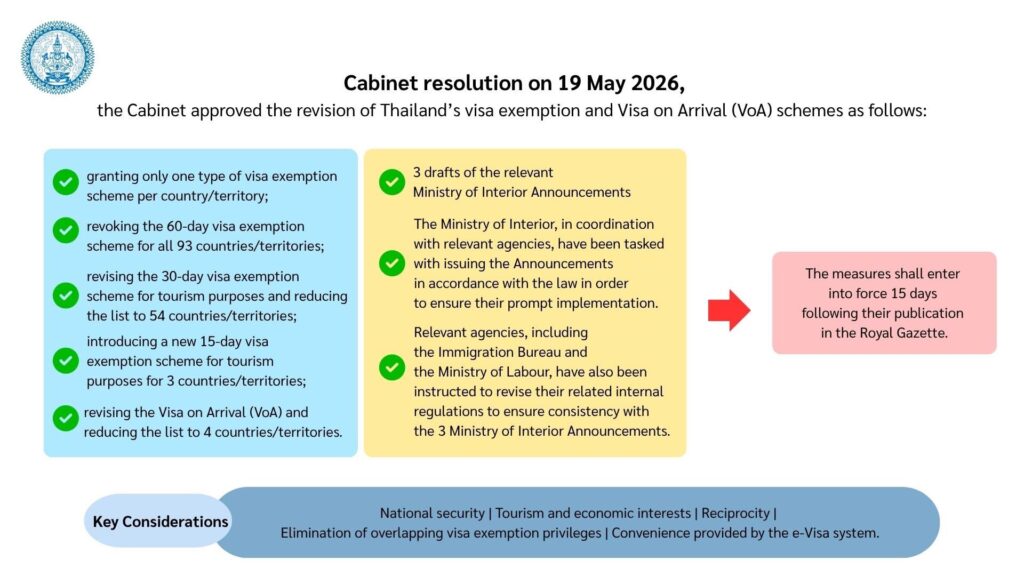
According to information published on May 20, 2026 by Thailand’s Department of Consular Affairs, the Thai Cabinet formally approved revisions to the Visa Exemption and Visa on Arrival (VoA) systems on May 19, 2026. The revisions affect the current 60-day visa-free arrangement, the 30-day tourism visa exemption country list, and the scope of VoA-eligible nationalities.
However, the measures have not yet officially taken effect. They must first be published in the Royal Gazette (ราชกิจจานุเบกษา — Thailand’s official government journal, through which laws, royal decrees, and ministerial announcements are formally enacted) by the Ministry of Interior before coming into force.
60-Day Visa Exemption to Be Fully Cancelled
The most significant change in this revision is that Thailand will withdraw the 60-day visa-free stay policy currently extended to 93 countries and territories.
The 60-day exemption was originally introduced as part of Thailand’s broader tourism recovery drive and was widely used by digital nomads, long-stay visitors, and retirees as a flexible short-term residence option. Under the revised framework, this arrangement will no longer apply going forward.
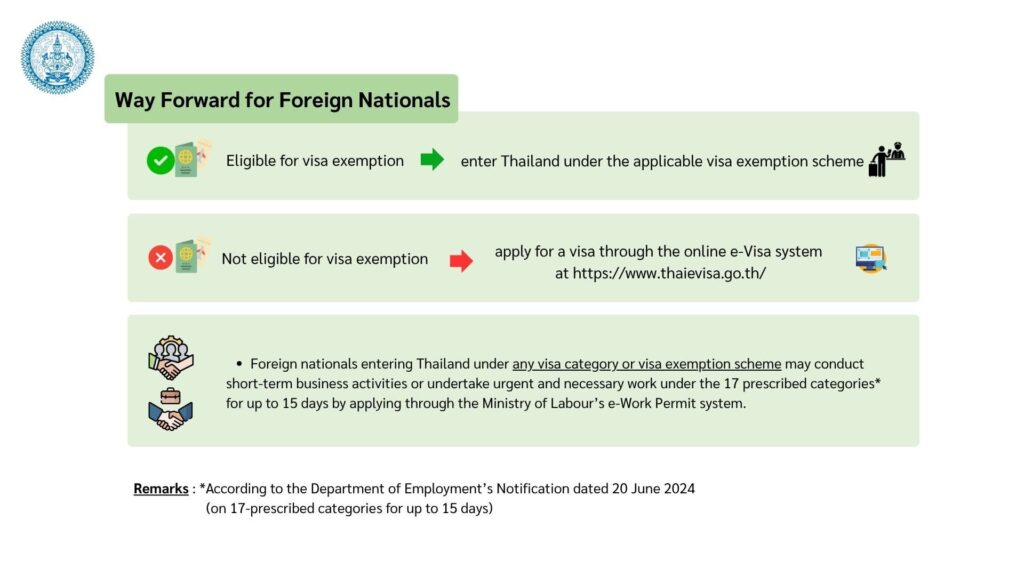
What Changes Under Thailand’s Revised Visa Exemption Framework
According to the Department of Consular Affairs briefing, the revision includes five core changes:
One Visa Exemption Type Per Country or Territory
The government will eliminate situations where a single nationality could qualify for multiple overlapping entry arrangements, aiming to reduce systemic overlap and confusion for travellers.
60-Day Visa Exemption Cancelled for All 93 Countries and Territories
The existing 60-day visa exemption will be fully withdrawn.
30-Day Tourism Visa Exemption to Be Adjusted
The 30-day visa exemption will be retained, but the eligible countries and territories are expected to be reduced from 57 to 54, and the permitted purpose will be limited to tourism only. The complete updated country list has not yet been officially published and remains subject to the final Royal Gazette announcement.
New 15-Day Tourism Visa Exemption to Be Introduced
Based on the current briefing, the government is expected to introduce a new 15-day tourism visa exemption applicable to 3 countries or territories. The specific countries eligible under this arrangement have not been officially confirmed as of the time of writing.
Visa on Arrival Eligibility Significantly Reduced
Currently, 31 countries and territories are eligible for VoA. Under the new framework, only 4 countries or territories are expected to retain VoA eligibility. This represents a sharp narrowing of short-stay entry channels for a large number of nationalities.
When Does This Take Effect? The Royal Gazette Process Explained
The Ministry of Foreign Affairs has indicated that all details and official eligibility criteria are subject to the forthcoming Ministry of Interior announcement. The measures will be published in the Royal Gazette and will take effect 15 days after that publication date.
One point worth noting on timing: the Cabinet approval on May 19 does not itself start the countdown. The 15-day clock begins only from the date the Ministry of Interior formally publishes the measures in the Royal Gazette. As of the time of writing, no publication date has been announced.
Country lists, briefing slides, and social-media summaries currently circulating are therefore not yet the final official version.
Thai Government: Five Rationales Behind the Revision
The Ministry of Foreign Affairs stated that the adjustment is based on five considerations:
- National security concerns
- Tourism and economic interests
- Reciprocity with other countries
- Reducing confusion caused by overlapping visa exemption schemes
- The e-Visa system has improved application accessibility, reducing the need for broad on-arrival arrangements
Thailand’s Broader Entry Policy Direction: Context Worth Understanding
Over the past year, Thailand has consistently expanded visa-free and long-stay arrangements, including the 60-day visa exemption, the Destination Thailand Visa (DTV), the Long-Term Resident Visa (LTR), and various digital nomad and remote work policies.
In recent months, the government appears to have more frequently raised concerns related to illegal employment, grey-area industries, unlawful commercial activity, long-term overstay, and cross-border financial crime risks — based on publicly reported statements from Thai authorities.
Zagdim Analysis
This revision may reflect a broader recalibration by the Thai government of the balance between tourism facilitation and tighter entry oversight. Over the past two years, Thailand leaned heavily into open-door visa policies to attract tourists and longer-stay visitors. The simultaneous tightening of short-term entry channels — particularly the sharp reduction in VoA-eligible countries and the withdrawal of the 60-day exemption — suggests the government is now placing greater weight on regulatory control. Whether this marks a sustained policy direction or a targeted correction remains to be seen.
Thailand’s visa policy has been one of the more frequently watched variables for people considering longer stays, property decisions, or relocation planning in the country. This Cabinet approval is a meaningful signal, even if the final details are not yet settled. The country lists, the exact effective date, and any transitional arrangements will all become clearer once the Royal Gazette publishes. For those currently in Thailand or planning a visit or longer stay, it is worth waiting for that official publication before drawing firm conclusions.
Have questions about what this means for your situation? Let us help you clarify — start here.
This article is based on officially verified sources current as of May 21, 2026. Requirements change frequently. Always confirm your specific situation with a licensed immigration attorney or the relevant Thai authority directly.