
































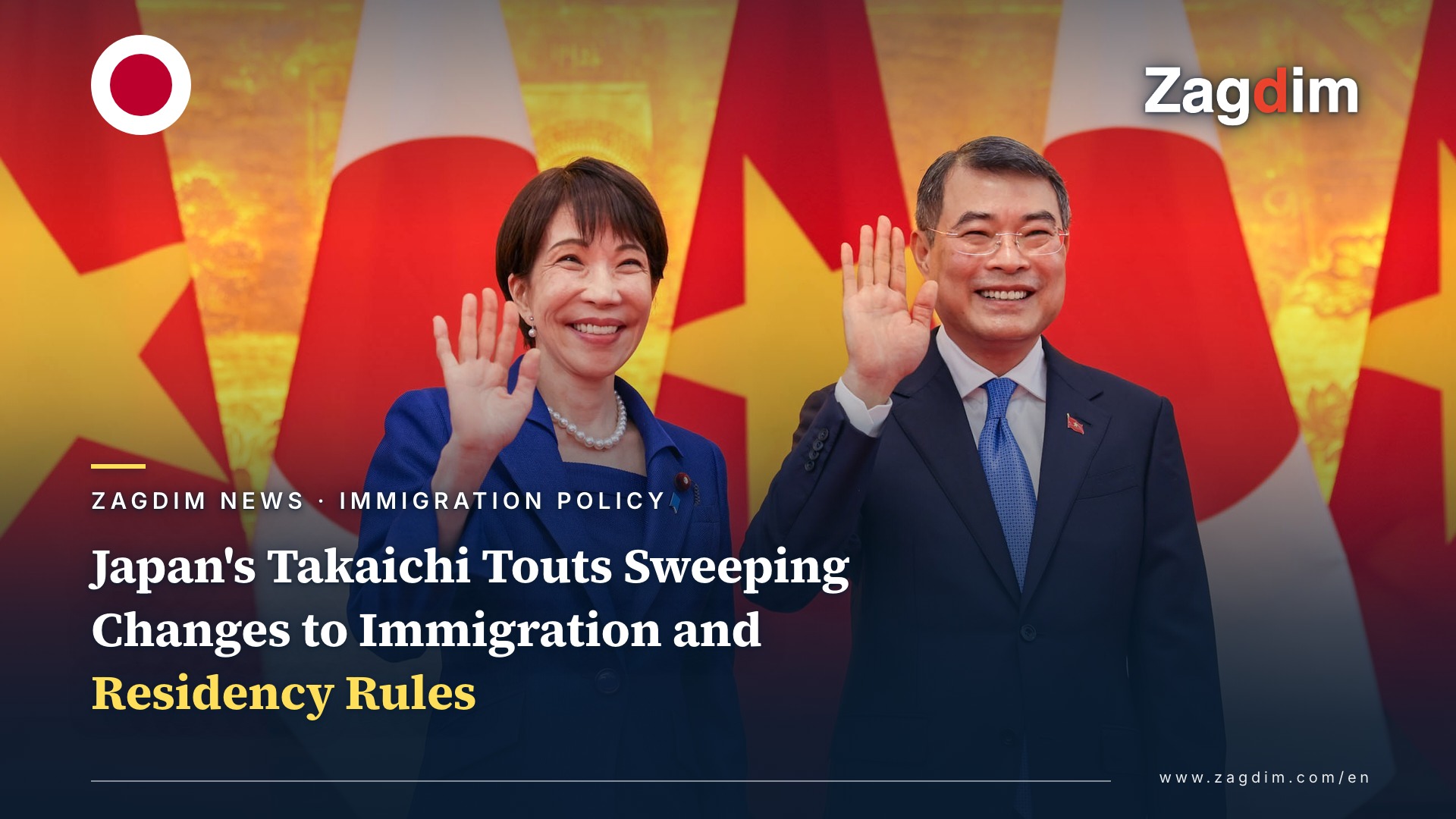
Japanese Prime Minister Sanae Takaichi used a series of social-media posts over the weekend to list ongoing changes to rules affecting foreign nationals, days before some of those rules take effect. She said the government “acknowledges that some citizens feel anxious or a sense of unfairness due to the rising number of foreign residents,” framing the overhaul as an effort to “ensure order” while letting “both citizens and foreign nationals live safely and securely.”
Takaichi cited a 90% drop in visas issued in the “business manager” category in the first half of 2026 compared with a year earlier, and a 15% increase in repatriations over the same period, as evidence the tightening is already taking effect. New rules for permanent residents are set to take effect this Thursday, October 1, requiring applicants to maintain an income above the national average; further requirements in the pipeline include proof of Japanese-language proficiency and demonstrated understanding of relevant rules. The government is separately weighing a fee on visitors to Japan as early as 2028, alongside tighter visa criteria more broadly.
Public opinion has shifted alongside the policy moves: a University of Tokyo survey released in August found 56.3% of respondents opposed having more foreign nationals in Japan, up from 35.6% in 2024, with the increase most pronounced among younger respondents. A separate Mainichi Shimbun poll from November 2025 found 71% supported Takaichi’s efforts to tighten rules on foreign residents, against 10% opposed.
For anyone planning a long-term move to Japan, the concrete items to track are the new permanent-residency income floor taking effect this week and the language and rules-comprehension requirements still being finalised — both add hard qualifying criteria on top of the years-of-residence tests that already apply.
References
The Edge Singapore – Japan’s Takaichi touts sweeping changes in immigration rules