

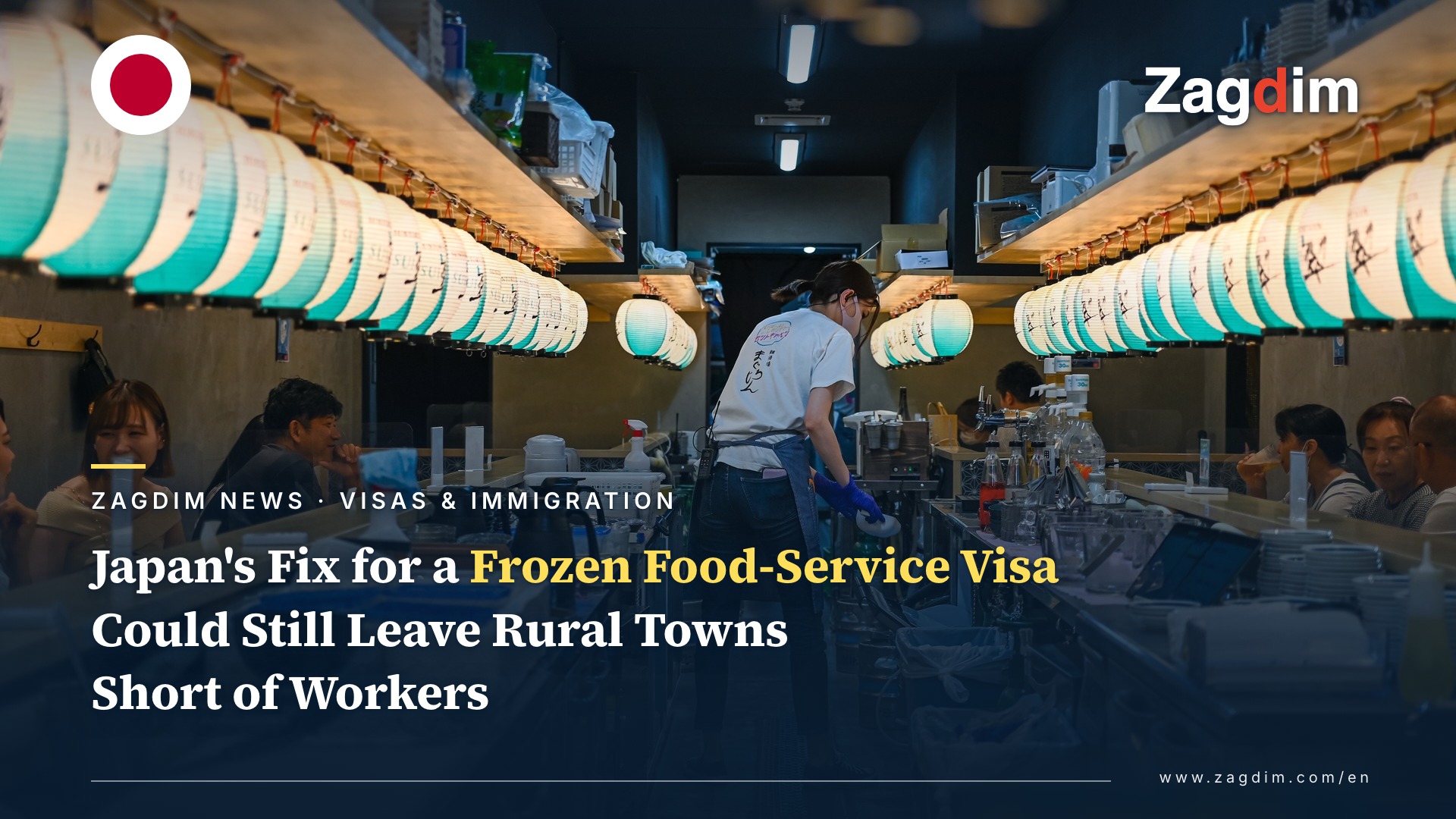
Japan’s government is moving to unfreeze part of a stalled visa route for foreign workers, but the fix is narrow enough that rural employers fear it will do little to stop workers drifting toward Tokyo. In April 2026, the government suspended new Type 1 Specified Skilled Worker (SSW) certifications for the broader food service sector after projecting the sector’s roughly 50,000-person cap was about to be reached, according to The Asahi Shimbun. The freeze has hit small, foreign-staffed restaurants hardest, including in towns such as Kitakami in Iwate Prefecture, about 450 kilometers north of Tokyo, Nikkei Asia reported.
On October 19, the government presented a panel of experts with a workaround: reclassify meal-preparation jobs at hospitals, nursing-care facilities and schools out of the food service sector and into the food and beverage manufacturing sector instead, whose 133,500-person cap has not been reached, The Asahi Shimbun reported. The government said leaving the freeze in place risked “serious disruptions” to nutritional management for facility users, schoolchildren and students. The change needs Cabinet approval in December and is expected to take effect in April 2027.
Crucially, the reclassification only covers institutional meal-prep roles — hospitals, care homes and schools — not the general restaurant and izakaya jobs that made up the bulk of frozen food-service hiring. Nikkei Asia reports that small business owners in rural prefectures worry that once new slots do open up, workers will gravitate toward Tokyo and other major cities rather than staying in sparsely populated areas already struggling with Japan’s broader labor shortage.
The government is separately raising the Type 1 cap for the nursing-care sector to 146,900, by reassigning 20,000 of the 33,800 slots earmarked for a new “training and employment” residency status launching in April 2027, The Asahi Shimbun reported — a response to nursing-care SSW numbers (about 80,000 as of end-July, already 64% of the existing cap) growing faster than expected. Combined, Japan’s 19 SSW Type 1 sectors were capped at about 810,000 workers as of January 2026, with the new training-and-employment status adding capacity for roughly 420,000 more — a potential total of about 1.23 million foreign workers under the two statuses.
References
The Asahi Shimbun – Japan to Reopen Doors to Foreign Workers in Public Meal Services / Nikkei Asia – Rural Japan Fears New Visas Will Divert Foreign Workers to Tokyo