
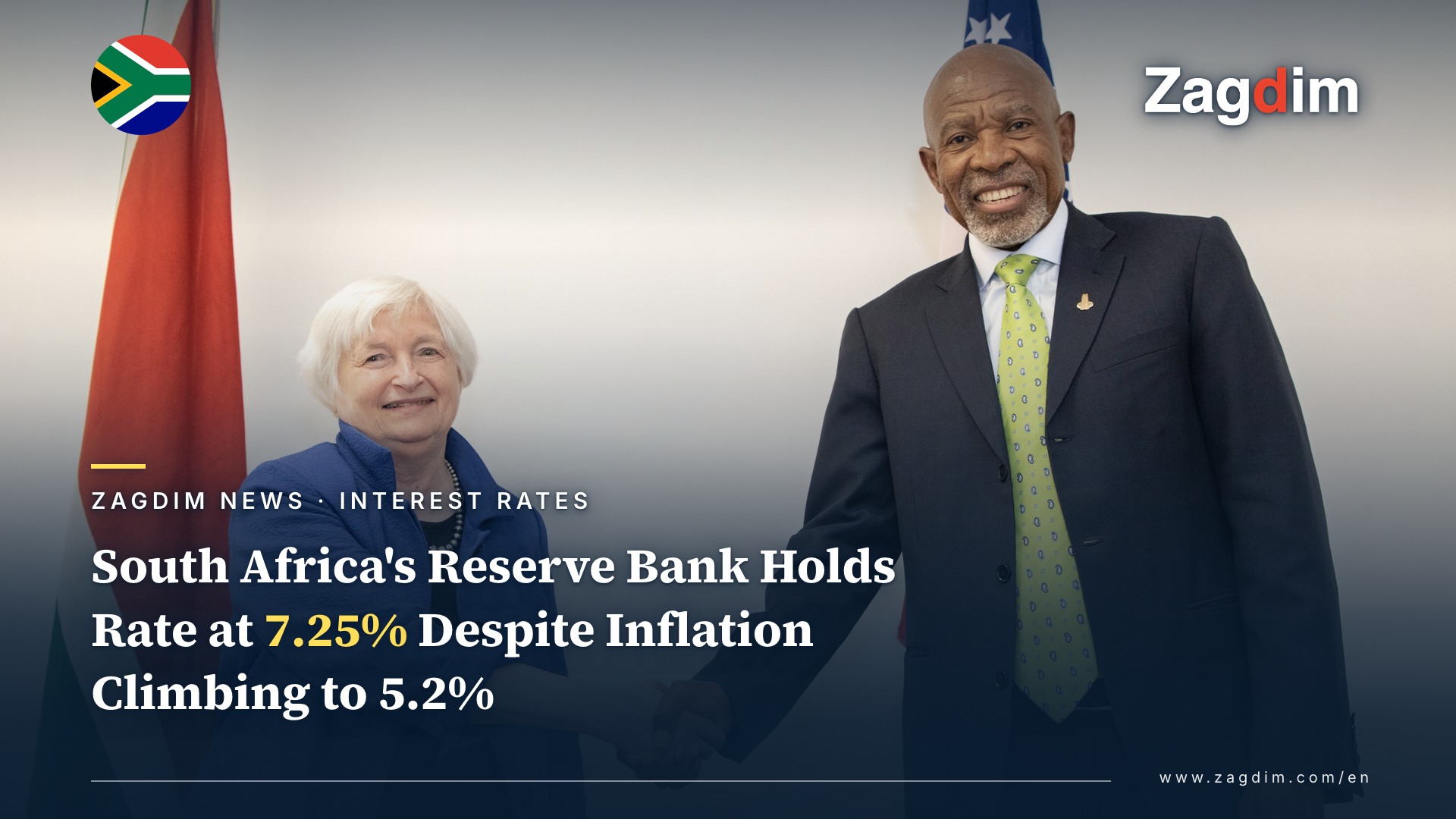
The South African Reserve Bank (SARB) kept its benchmark interest rate at 7.25% on November 19, even as rising fuel costs pushed inflation higher, after a closely contested vote by its Monetary Policy Committee (MPC) in which four members backed a hold and three favored a 25-basis-point increase, according to Businessday NG. SARB Governor Lesetja Kganyago said the bank considers its current policy stance “moderately restrictive” and sufficiently tight to bring inflation under control, but remains ready to raise rates “if needed, to return inflation to target,” the report said.
Annual consumer inflation accelerated to 5.2% in October, up from 4.5% in September and the highest level since May 2024, pushing the rate further above the central bank’s 3% target, Businessday NG reported. Fuel prices rose 42.9% year-on-year in October, lifting transport inflation to 15.2% and contributing 2.1 percentage points to the headline figure, according to Statistics South Africa figures cited in the report; core inflation, which excludes food, fuel and energy, also rose to 4.2%, suggesting price pressures are broadening beyond fuel.
The central bank now expects inflation to return to its 3% target only in the third quarter of 2028, later than its previous projection of late 2027, reflecting the persistence of price pressures, Businessday NG reported. The decision leaves South Africa’s prime lending rate at 10.75%, following two rate increases totaling 50 basis points earlier this year, according to the report.
SARB maintained its 2026 economic growth forecast at 1.2%, with output expected to expand to 2% by 2029, even as South Africa’s unemployment rate climbed to 33.7% in the third quarter, Businessday NG reported — underscoring the central bank’s balancing act between containing inflation and supporting a weak labor market.
References
Businessday NG – South Africa Holds Interest Rate at 7.25% Despite Rising Inflation