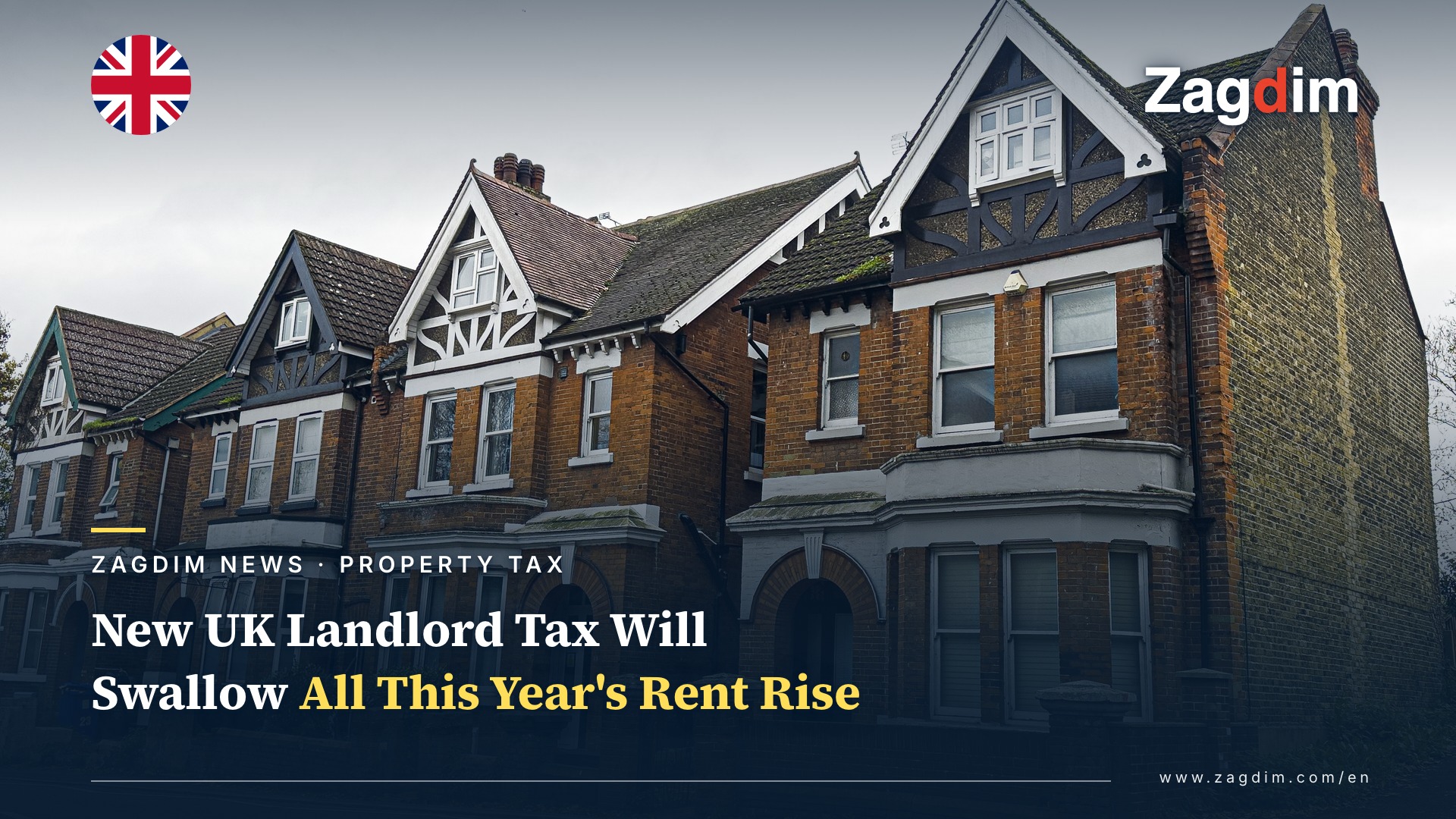
Average UK private rents rose 3.8% in the year to October 2026, reaching £1,411 a month, according to the Office for National Statistics — but analysis by property management firm August suggests a forthcoming property-income-tax increase will absorb most of that gain for individual landlords, Landlord Today reports.
From April 6, 2027, property-income-tax rates for landlords in England, Wales and Northern Ireland are set to rise to 24%, 44% and 49% — four percentage points above current rates. For an individual basic-rate landlord receiving the average rent, with operating costs equal to 25% of rental income and no mortgage, August estimates the higher rate would add about £508 to their annual tax bill — equivalent to 83% of the average £612 annual rent increase (£51 a month). After costs and tax, that landlord would retain about £141 less per year than a year earlier, even before accounting for inflation, which reached 3.6% over the same period. Landlords with mortgages may face additional pressure depending on their financing costs.
The impact varies by region: the North West had the fastest rent growth in England at 5.6% — the only region where the rent rise still leaves a landlord ahead after the new tax rate applies — while the South West, with the slowest growth at 3.3%, would see the tax take 94% of the year’s rent increase. In London, rents rose 3.8% while house prices fell 3.5%, with inner London recording its largest annual price fall since August 2009. August chief executive Richard Samuel said landlords reviewing rents or deciding whether to keep a property “should look beyond the headline rental figures and calculate what they will actually keep under the new tax rates.”
The change affects individual landlords in England, Wales and Northern Ireland who pay property income tax on rental income, particularly those in slower rent-growth regions or with higher operating costs.
References
Landlord Today – New Landlord Tax Will Swallow All This Year’s Rent Rise