
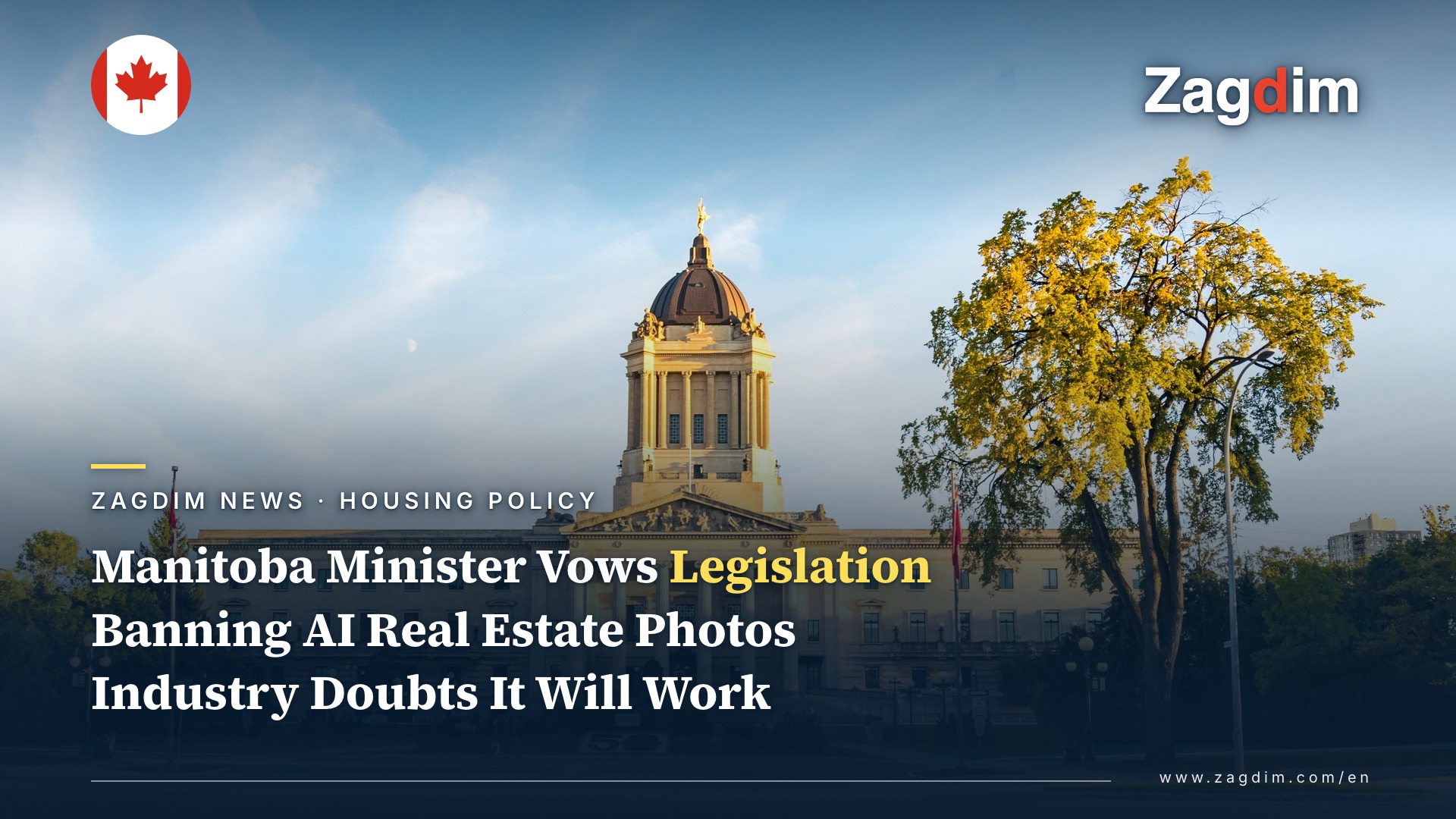
Manitoba’s Innovation and New Technology Minister, Mike Moroz, said on Nov. 20 that the government will introduce legislation to ban AI-generated images in real estate advertising, firming up a one-line pledge from the province’s Nov. 17 Speech from the Throne. For buyers who cannot view a property in person — including most overseas buyers deciding from abroad — the practical reality for now is that no such rule exists yet, and even its final shape is unsettled, so listing photos still need to be read with caution rather than taken at face value.
Manitoba Real Estate Association chief executive David Salvatore said Moroz’s office consulted the association ahead of the announcement, and he expects the outcome to be a disclosure requirement rather than an outright ban, with the association leading agent education once a rule is set. He noted the province’s existing Real Estate Services Act already bars misleading images and advertising, though it does not specifically name virtual staging or AI-generated imagery, and said he has not seen a rise in complaints about misleading AI photos. Toronto-based real estate photographer Mitchell Fain, owner of The Print Market, said a full ban would be impossible to enforce and predicted the eventual rule would be a “light” one; he said some agents already ask photographers to edit out real features, such as power lines, despite the risk of fines.
CTV News Winnipeg’s coverage of the same throne-speech pledge adds a second, more divided set of industry voices: Winnipeg photographer Mike McComb called the government’s focus on AI staging misplaced, arguing responsibly used virtual staging can save sellers thousands of dollars, while Winnipeg realtor Kyle Bazylo supported a ban, saying some listings have been altered so heavily that buyers arrive at showings to find the property looks different from its online photos. The Winnipeg Regional Real Estate Board already runs its own policy governing listing images. Manitoba is not acting in isolation: Ontario’s real estate regulator issued guidance in October requiring AI-altered or virtually staged images to be clearly labelled and to still reflect permanent features accurately, rather than banning the practice outright, and the Canadian Real Estate Association currently treats AI-image labelling as a recommendation rather than a requirement — there is no national Canadian rule.
Moroz did not give a date for introducing the legislation or say what it would cover. Salvatore said the association’s near-term focus is realtor education regardless of the rule’s final shape, while Fain said he still expects only a “light” measure to pass, not a true ban.
References
The Globe and Mail – Industry doubtful as Manitoba aims to ban AI use in real estate / CTV News Winnipeg – Manitoba’s proposed ban on AI images in real estate draws mixed reaction