

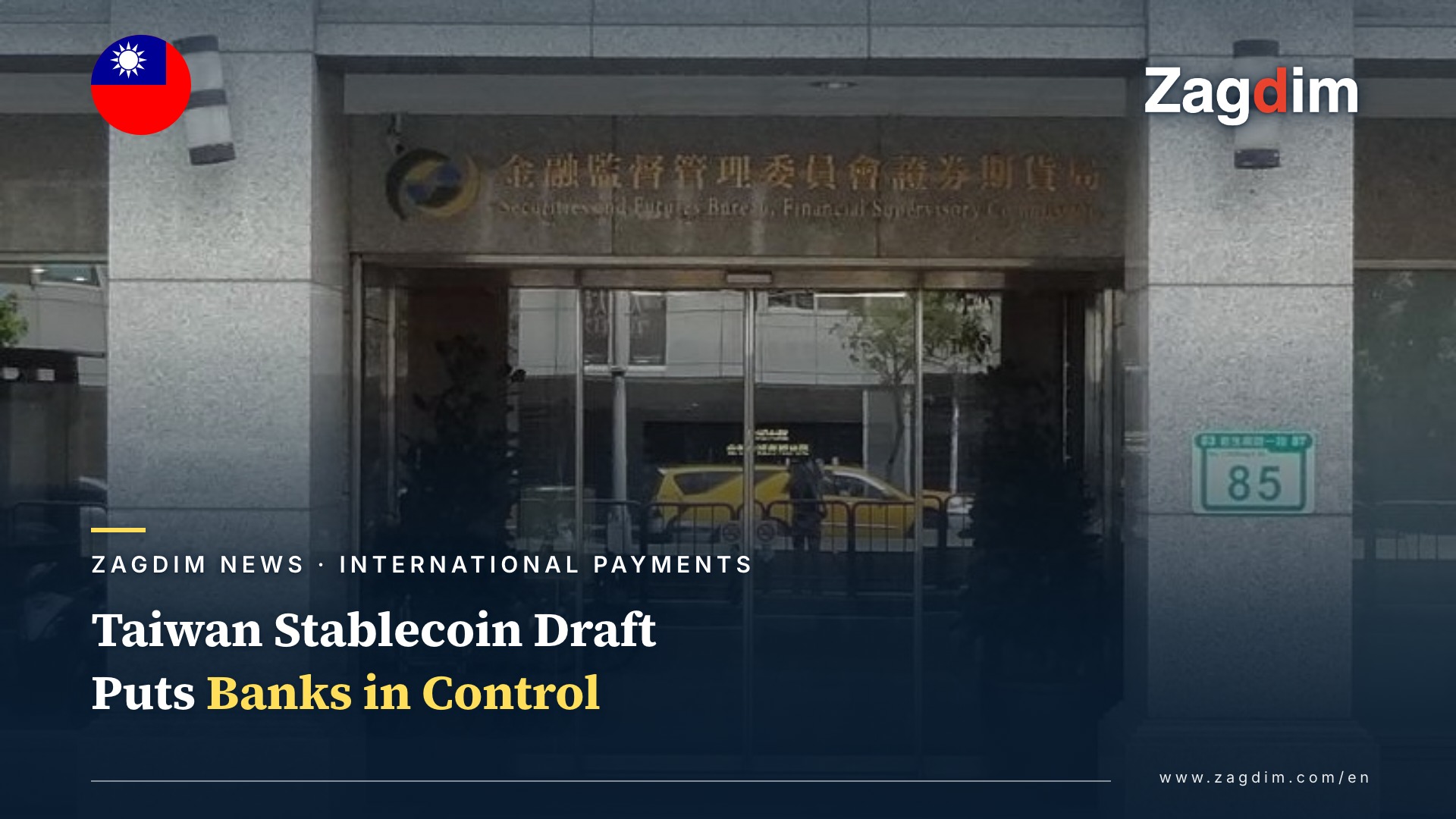
Taiwan’s Financial Supervisory Commission (FSC) published a draft “Regulation Governing the Issuance and Management of Stablecoins” in the official gazette on November 6, 2026, setting out who may issue a stablecoin on the island under the Virtual Asset Service Act, which was promulgated on July 22, 2026, Forbes reported.
Under the draft, a non-bank issuer may apply only if it is a company invested in by a financial holding company or a bank, and only if financial holding companies and banks together hold more than 50% of its voting shares or capital, with a single financial holding company or bank holding more than 25%. A non-bank issuer must also be a Taiwanese company limited by shares with at least NT$300 million in paid-in cash capital, must be or become a public company within a year of receiving a permit, and must conduct stablecoin issuance and redemption as its exclusive business. Issued tokens must be linked one-to-one to the New Taiwan dollar or a single foreign currency, fully backed by reserves held in a trust account at a bank other than the issuer, and non-bank issuers may not extend credit to holders.
The FSC shortened the public comment period to 40 days to align with the act’s implementation timetable, putting the window at roughly mid-December. Wang Yun-chung, deputy director-general of the FSC’s Banking Bureau, told CNA that the law and its subsidiary rules are expected to take effect together, possibly as early as the first quarter of 2027, and that financial holding companies and banks have expressed interest but do not yet have concrete plans on use cases or currencies.
Forbes noted the structure mirrors Hong Kong, where the Hong Kong Monetary Authority has so far licensed only two bank-led issuers under its Stablecoins Ordinance, and South Korea, where local reporting this month described a forthcoming Digital Asset Basic Act leaning toward bank-led consortium issuance. The report contrasted this with the United States’ GENIUS Act, which licenses both bank and non-bank issuers without a bank-ownership test.