































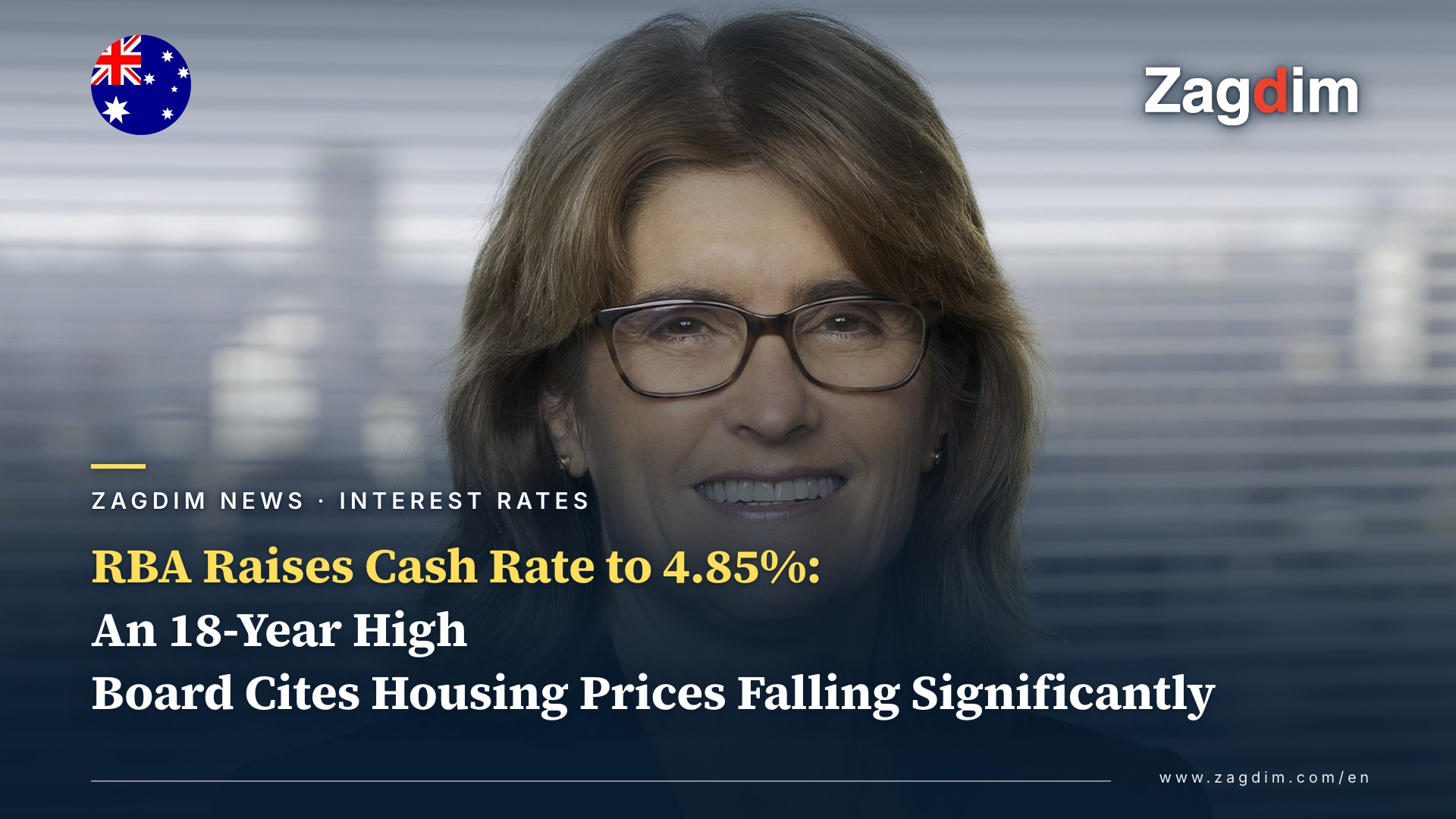
Australia’s Reserve Bank raised its cash rate target by 25 basis points to 4.85% on November 3, 2026 — the fifth increase this year and the highest level since 2008 (an 18-year high). The Monetary Policy Board’s decision was not unanimous: six members voted for the increase, while three voted to hold the rate at 4.60%.
In its own statement, the Board said inflation “remains elevated” and “broadly based,” partly reflecting higher fuel and commodity prices tied to the Middle East conflict, alongside rapid price growth in AI-related technology goods. At the same time, the Board acknowledged the cost of tightening so far: “the economy is slowing, housing prices have fallen significantly and the unemployment rate has risen.” It expects the unemployment rate to rise by more than it forecast in August, and now does not expect inflation to return to the 2–3% target range until late 2027 — about three quarters later than previously projected.
For anyone holding or financing property in Australia, today’s move adds to a rate-hike cycle that is already visibly cooling the market: national home sales volumes have fallen year-on-year for nine straight months and prices have dropped for six straight months, according to Cotality data covered separately. Lenders in Australia typically pass RBA cash-rate changes through to standard variable mortgage rates within one to two weeks, so owners on variable loans should expect a repayment increase to follow. The Board gave no explicit signal on its next move, saying only that it “will be attentive to the data and the evolving assessment of the outlook and risks” at future meetings.