































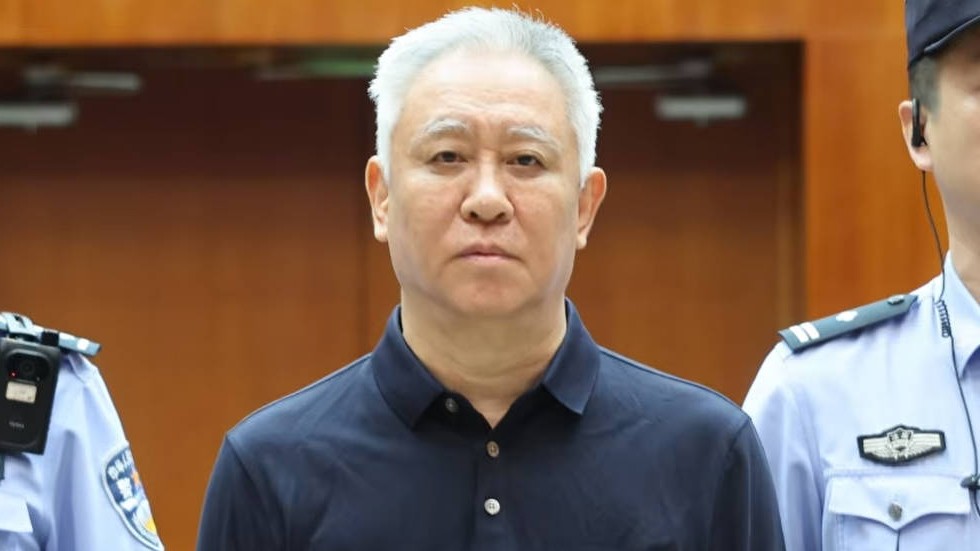
A court in Shenzhen has sentenced Hui Ka Yan, also known as Xu Jiayin, founder of China Evergrande Group, to life in prison for large-scale financial fraud tied to the collapse of what was once the world’s most heavily indebted property developer. The Shenzhen Intermediate People’s Court said Thursday it convicted the 67-year-old of inflating Evergrande’s assets and concealing its liabilities, and of abusing his position to orchestrate fraud and misappropriate company assets. Evergrande Group was fined 8.82 billion yuan ($1.31 billion) and Evergrande Real Estate Group a further 7 billion yuan ($1.04 billion).
Hui’s sons, Xu Tenghe and Xu Zhijian, were sentenced alongside senior Evergrande executives and others linked to the group, on charges including illegally taking public deposits, fundraising fraud and illegal use of funds, China’s Xinhua News Agency reported. More than 50 individuals in total received prison terms ranging from 22 months to 18 years. Hui pleaded guilty in April to charges including illegal absorption of public deposits, fraud and bribery, after being detained in China.
The sentencing caps a saga that began when Evergrande defaulted on more than $300 billion in liabilities after Chinese authorities cracked down on excessive borrowing in the real estate sector in 2020 — a crackdown that triggered a broader crunch among developers and a property-market downturn that has weighed on China’s economy ever since, pulling home prices down 20% or more since 2021. Investigators in Hong Kong and mainland China previously found that Evergrande had manipulated its financial data, including by prematurely booking revenue from property sales before apartments were completed and delivered to buyers — overstating revenue by roughly $80 billion across 2019 and 2020. Hui was fined 47 million yuan ($6.5 million) in 2024 and banned for life from China’s securities markets by the China Securities Regulatory Commission.
Evergrande was founded in 1996 during the early stages of China’s housing boom, defaulted on its debts in 2021, and was later ordered to liquidate its assets — a collapse that has become a defining reference point for confidence in mainland Chinese property.