
Lawmakers from the ruling People Power Party and the Reform Party, representing greater Seoul constituencies, held a news conference at the National Assembly on November 23 calling for revisions to the Lee Jae-myung government’s proposed real estate tax overhaul, Chosunbiz reported.
The group, called the Greater Seoul Housing Innovation Forum, wants to end the current distinction in the comprehensive real estate holding tax’s basic deduction based on whether an owner actually lives in the home, and to guarantee a 1.4 billion won deduction for single-home households and a 1.8 billion won deduction for homes jointly owned by married couples. They also oppose raising the fair market value ratio used to calculate the tax above the current 60%, though they accept the proposed removal of higher rates tied to the number of homes owned — while opposing higher rates for expensive homes specifically. The lawmakers warned that if the government does not withdraw the changes, “the 2028 general election will inevitably become a referendum on its real estate policies.”
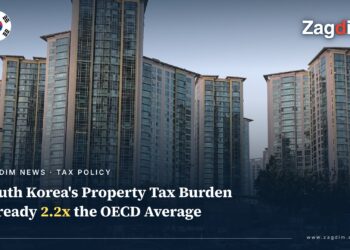
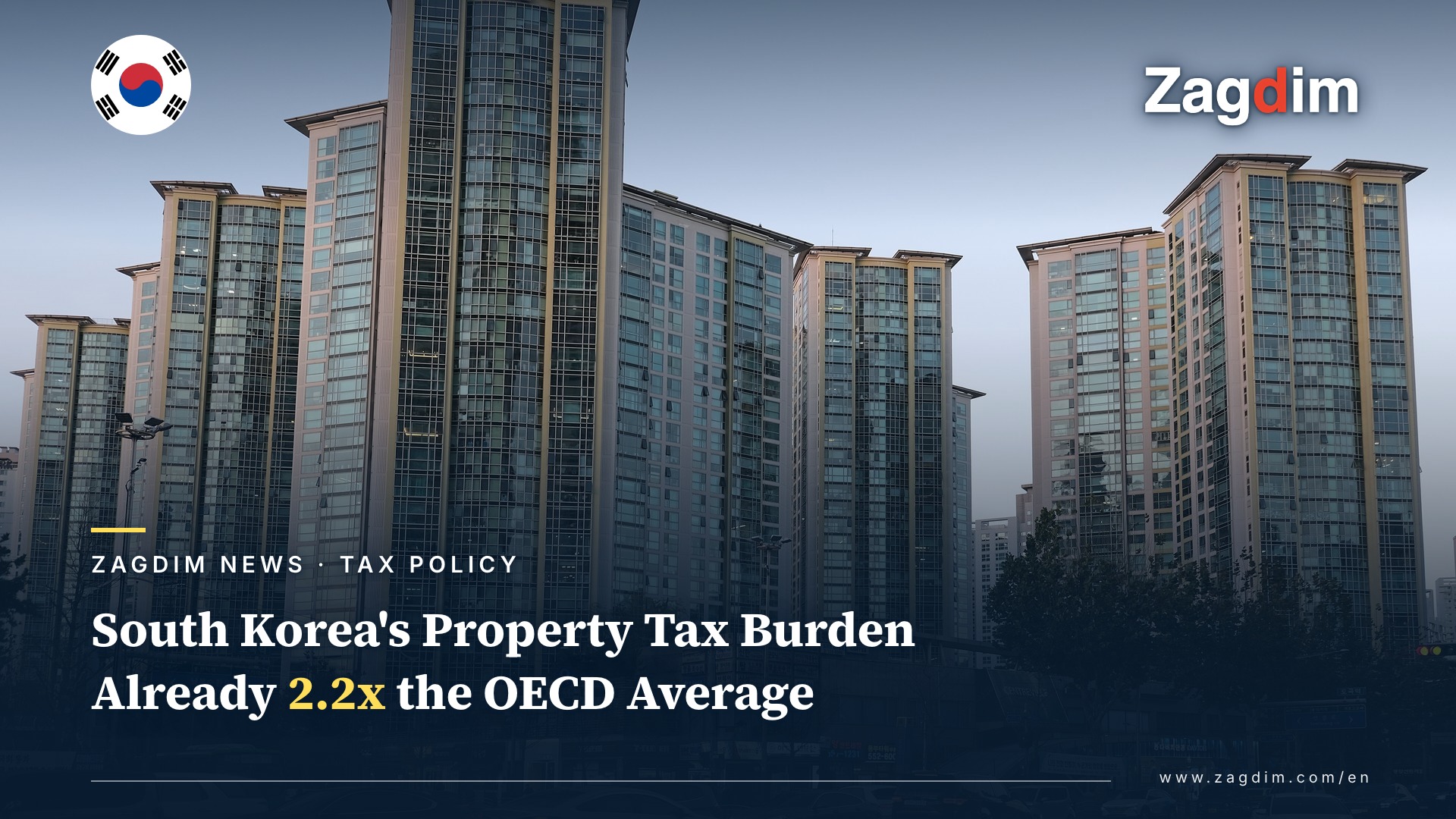
The same day, the Center for Free Enterprise, a Seoul-based think tank, published a report arguing Korea’s property tax structure already places an excessive burden on individuals, Seoul Economic Daily reported. As of 2024, property holding taxes made up 4.9% of Korea’s total tax revenue excluding social security contributions — 1.1 percentage points above the OECD average of 3.8%. Taxes on property acquisitions and transfers accounted for 6.6%, versus an OECD average of 1.4%, the highest share among major advanced economies. Combined, the two categories came to 11.5% of total tax revenue, about 2.2 times the OECD average of 5.2% — and the report projects that figure would rise to 2.3 times the OECD average if the pending tax overhaul is adopted as proposed.
Report author Ko Kwang-yong recommended shifting the property tax toward proportional rates, phasing in a merger of the comprehensive real estate holding tax, simplifying acquisition tax rates, and easing taxation at the point of acquisition and transfer, among other changes.
The proposed overhaul has not been finalized; both the political pushback and the think-tank report are inputs into South Korea’s ongoing debate over how property in Seoul and other major cities should be taxed going into 2027.
References
Chosunbiz – South Korean lawmakers urge revisions to proposed property tax changes / Seoul Economic Daily – Korea’s Property Tax Burden Doubles OECD Average, Think Tank Says