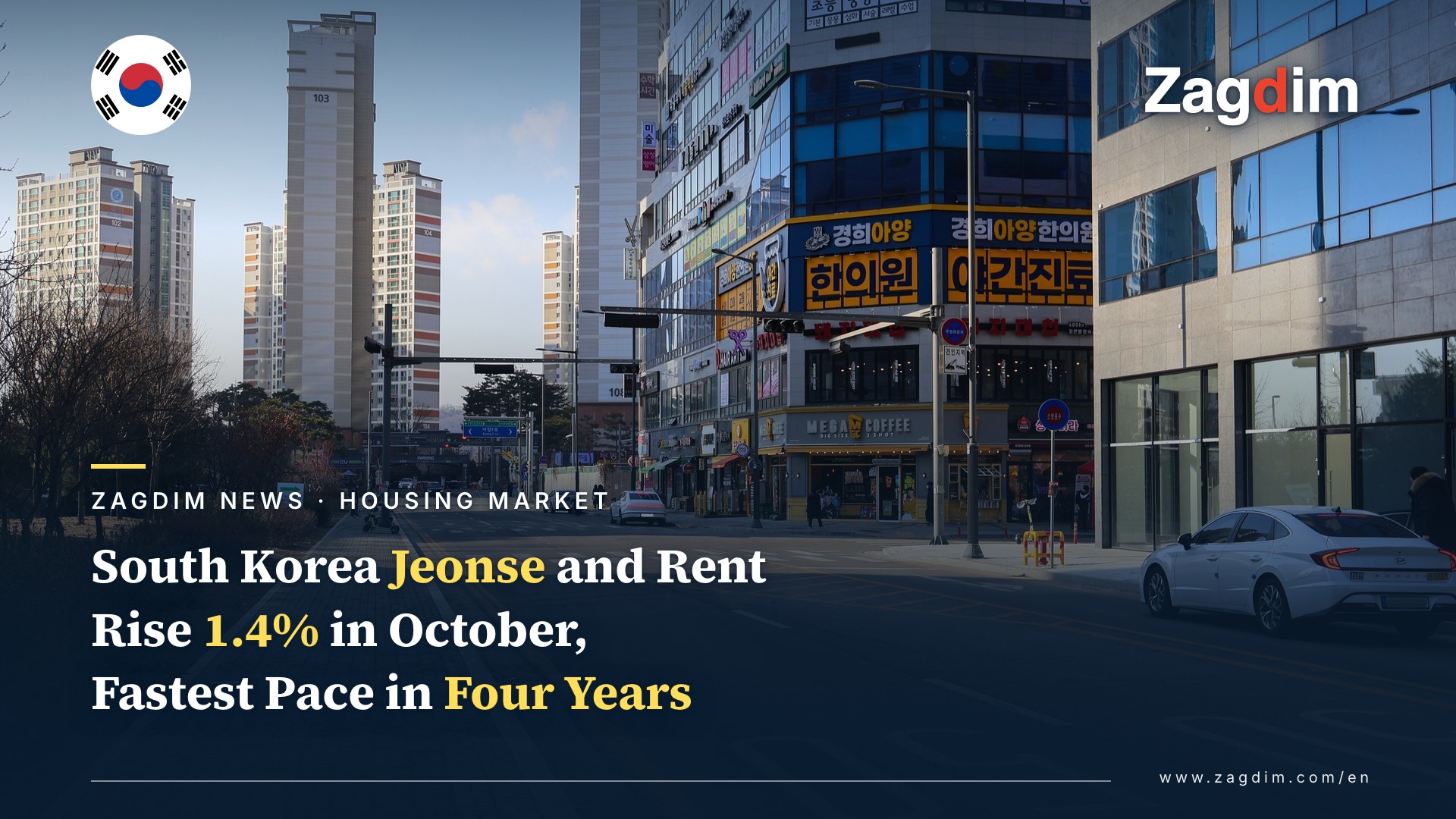
South Korea’s jeonse and monthly rent prices rose 1.4 per cent in October from a year earlier, the fastest increase in almost four years, according to data released on November 15 by the Korean Statistical Information Service (KOSIS) under Statistics Korea. The index, based on a survey of roughly 11,000 households nationwide, has now risen for four consecutive months — the first such stretch since early 2021 — as rising interest rates compound already-climbing rental costs.
Broken down by rental type, the monthly rent inflation rate hit 1.5 per cent, the highest since December 2013, while the jeonse inflation rate reached 1.4 per cent, the highest since February 2023. Statistics Korea attributed the shift partly to tightened regulations on jeonse loans, which have reduced the supply of jeonse listings and accelerated a shift from jeonse to monthly rent. By region, Ulsan recorded the steepest increase at 2.4 per cent, followed by Seoul at 2.1 per cent and Sejong at 1.6 per cent — the only three regions to exceed the national average.
The average jeonse deposit last year stood at 217.97 million won, up 34.9 per cent from 161.62 million won in 2019, while loans taken out by jeonse households to fund those deposits jumped 53.0 per cent over the same period, outpacing deposit growth by 18 percentage points. The Korea Development Institute (KDI) warned in a recent report that the combination of rising market interest rates and weak wage growth outside the semiconductor sector could further constrain household consumption. Ewha Womans University professor Seok Byung-hoon said the rent increases stem from real-estate policy and should be addressed through real-estate policy, cautioning against using consumer-support funds as a fix.
References
SBS – Jeonse and Monthly Rent Prices Rise 1.4% in October, Fastest Pace in Nearly 4 Years