

Zagdim
Follow Zagdim
  • News
    • Latest news
    • Global Reports
  • Country Guides
    • Thailand
    • Japan
    • United Kingdom
    • Malaysia
    • UAE
    • Australia
    • Vietnam
    • Canada
    • Portugal
    • Spain
    • United States
    • Singapore
    • Philippines
    • Indonesia
    • Germany
  • Expert analysis
    • Expert views
    • Reports and insights
    • Global Experts
  • Guides
    • By country
    • By topic
    • Topics in focus
    • Living abroad
  • Property Research
    • Zagdim Insights
  • Ask Zagdim
  • Services
    • Japan
  • About
    • About Zagdim
    • Explore Zagdim
    • Zagdim Research
    • Expert Network
    • Contact Us — LINE / WhatsApp
  • 中文 EN
No Result
View All Result
Zagdim
No Result
View All Result

China’s Offshore Trust Tax Crackdown Cools Singapore’s Luxury Home Market

Home News
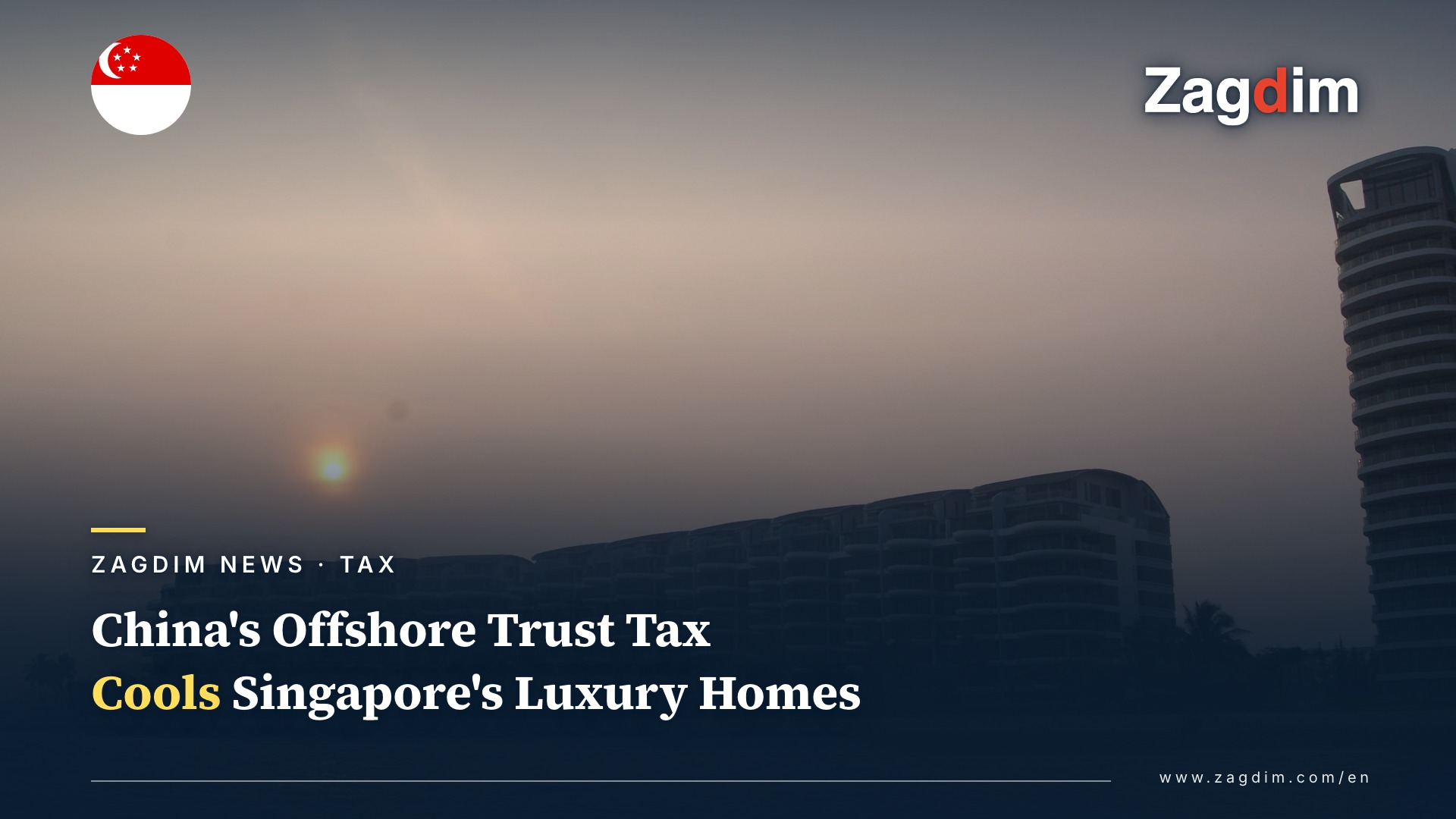
China's Offshore Trust Tax Crackdown Cools Singapore's Luxury Home Market

Photo: Jacklee via Wikimedia Commons (CC BY-SA 4.0)

November 17, 2026
in News, Real Estate & Economic News
Reading Time: 3 mins read
Tags: Singapore

China’s new tax regime for offshore trusts has taken full effect this month, and lawyers and property researchers in Singapore say it is already weighing on wealthy Chinese buyers’ appetite for luxury homes here — even though trust structures remain attractive to them for reasons beyond tax. China’s Ministry of Finance and the State Taxation Administration issued a statement in late July setting a 20% individual income tax on offshore trust income and a 90-day transition period for compliance; that transition period has now ended. On 11 November, the State Taxation Administration said cumulative individual income tax declared on offshore trusts had exceeded 160 billion yuan (about S$30.9 billion), with more than 120 billion yuan collected in October alone, driving a nearly 90% rise in China’s individual income tax revenue that month.

Loh Kia Meng, senior partner and chief operating officer at Dentons Rodyk, told Lianhe Zaobao (LHZB) that the new rules shift the question from who legally owns a property in Singapore to who has an economic connection to China. He said the flow of rental income or sale proceeds into bank accounts, financing records and trust or company documents — plus audits and investigations — can all give China’s tax authorities a way to trace the money. Even if a trust’s rental income stays undistributed, he said, it can still be attributed to the Chinese tax resident who funded the structure each year, creating a tax liability in China. Deputy Prime Minister and Minister for Trade and Industry Gan Kim Yong told parliament in September that Singapore and China exchange financial-account information under the Common Reporting Standard, but that this does not cover real estate.

The tax change lands on top of an existing cooling measure: Singapore raised the Additional Buyer’s Stamp Duty (ABSD) on foreign buyers from 30% to 60% in April 2023. According to data Realion Group chief researcher and strategist Christine Sun provided to LHZB, Chinese nationals buying as foreigners purchased just 38 non-landed private homes in 2025, down from 369 in 2021 — while purchases by Chinese nationals who are Singapore permanent residents stayed comparatively stable (1,142 units in 2025 versus 1,375 in 2021). In the first nine months of 2026, Chinese nationals bought 769 non-landed private homes in total, but only 20 of those were bought as foreigners; the remaining 749 were bought by permanent residents. One workaround some wealthy Chinese buyers use, LHZB reports, is placing property in a trust naming their US-born, US-citizen children as beneficiaries, since a Singapore–US agreement gives US citizens the same stamp duty treatment as Singapore citizens; trust purchases still face a 65% ABSD upfront, refundable later if the trust names an identifiable beneficiary.

A market report from property agency Huttons shows the pressure already in the data: luxury non-landed home transactions fell 31.2% in value year-on-year to S$509.6 million in the third quarter (down from S$673.4 million in the second quarter), with volume down 19% to 66 units, from 81 a year earlier. Transactions for ultra-luxury homes priced at S$10 million or more fell to just 11, the lowest since the fourth quarter of last year. Good Class Bungalow sales were similarly soft, with an estimated 24 sold in the first nine months of 2026 against 26 in the same period last year. Huttons chief executive Mark Yip said short-term buying sentiment in the luxury non-landed sector “is likely to remain muted among UHNWIs amid ongoing uncertainty from China’s tax crackdown,” and the Huttons report noted speculation that some Chinese nationals were liquidating assets to meet their new tax obligations.

Not everyone expects a lasting chill. Nicholas Mak, chief research officer at Mogul.sg, told LHZB that while China’s tax policies will inevitably affect Singapore’s luxury private housing market to some degree, the overall impact should be limited, since Singaporeans make up more than 80% of local luxury home buyers — so even a pullback by foreign buyers would not substantially dent total demand. Huttons’ own outlook is similarly two-sided: it expects uncertainty over Chinese policy to persist in the near term and UHNWI appetite to stay subdued, while maintaining that Singapore’s property-market fundamentals “remain sound.” A separate Realion-OrangeTee & ETC report cited by LHZB projects new luxury-unit launches in the Core Central Region to rise to 2,943 next year, from 1,374 this year, with 650 to 750 luxury home sales expected in 2027.

References

Lianhe Zaobao – China’s ‘wealth tax’ takes effect, with offshore trusts holding Singapore luxury homes potentially liable / Lianhe Zaobao – China’s tax crackdown may dampen demand for Singapore luxury homes as third-quarter sales value falls 31%: Report

Zagdim AI
All content is researched, written, or authorized for publication by the @Zagdim Overseas team. Sharing and reposting are welcome, but please make sure to credit the source and include the original article link from this website. Any plagiarism or unauthorized use may result in legal action. For article submissions, please contact us via Facebook. Thank you for your support!

For article submissions, press release publication, or interview notices, please contact [email protected]. 

Zagdim Ask

Have a specific question about overseas living, property, visa, or practical arrangements?

Fill in your situation and key concerns through Zagdim Ask. Our team will review your message and get back to you by email where appropriate.

Submit your enquiry →

Similar Topics

Pierre Chao with Parliament House, Canberra, and a timeline of Australia's trust tax reforms: CGT reform from July 2027, 30% trust minimum tax from July 2028
News

Trust Tax Reform: What Should Overseas Families Do About Their Australian Property?

November 22, 2026
news-brief-en-us news brief banner
News

DHS Proposes $70,000 Per-Student Fee for International Work Permits

November 22, 2026
news-brief-en-uk news brief banner
News

UK Savings Tax Rates Set to Rise to 24% From April 2027

November 22, 2026
Next Post
Taiwan Stocks Suffer Second-Largest One-Day Drop on Record as Central Bank Steps In to Defend the Dollar

Taiwan Stocks Suffer Second-Largest One-Day Drop on Record as Central Bank Steps In to Defend the Dollar

Gardens by the Bay Supertrees and conservatory domes in Singapore, cover for the tourist GST refund guide

Singapore Tourist GST Refund 2026: Who Qualifies and How eTRS Works

Pink Tan Dinh church in Ho Chi Minh City, cover for the Vietnam VAT refund guide

Vietnam VAT Refund for Foreign Visitors: How to Claim at the Airport

Zagdim

International property & global living

Independent reporting, expert analysis and research on overseas property, residency and life abroad.

X

Explore

  • News
  • Global Reports
  • Zagdim Insights
  • Buying & Immigration Guide
  • Living Abroad
  • Property research
  • Ask Zagdim

Countries

  • United Kingdom
  • Japan
  • Thailand
  • Malaysia
  • UAE
  • Australia
  • Vietnam
  • Portugal

Contact

  • [email protected]
  • WhatsApp · LINE · WeChat: Zagdim
  • Partnerships: [email protected]
Follow Zagdim
© 2026 Zagdim. All rights reserved.Research methodology · Expert network · Privacy · 中文
No Result
View All Result
  • News
    • Latest news
    • Global Reports
  • Country Guides
    • Thailand
    • Japan
    • United Kingdom
    • Malaysia
    • UAE
    • Australia
    • Vietnam
    • Canada
    • Portugal
    • Spain
    • United States
    • Singapore
    • Philippines
    • Indonesia
    • Germany
  • Expert analysis
    • Expert views
    • Reports and insights
    • Global Experts
  • Guides
    • By country
    • By topic
    • Topics in focus
    • Living abroad
  • Property Research
    • Zagdim Insights
  • Ask Zagdim
  • Services
    • Japan
  • About
    • About Zagdim
    • Explore Zagdim
    • Zagdim Research
    • Expert Network
    • Contact Us — LINE / WhatsApp
  • 中文 EN

©2026 Zagdim Overseas All Rights Reserved · Privacy Policy