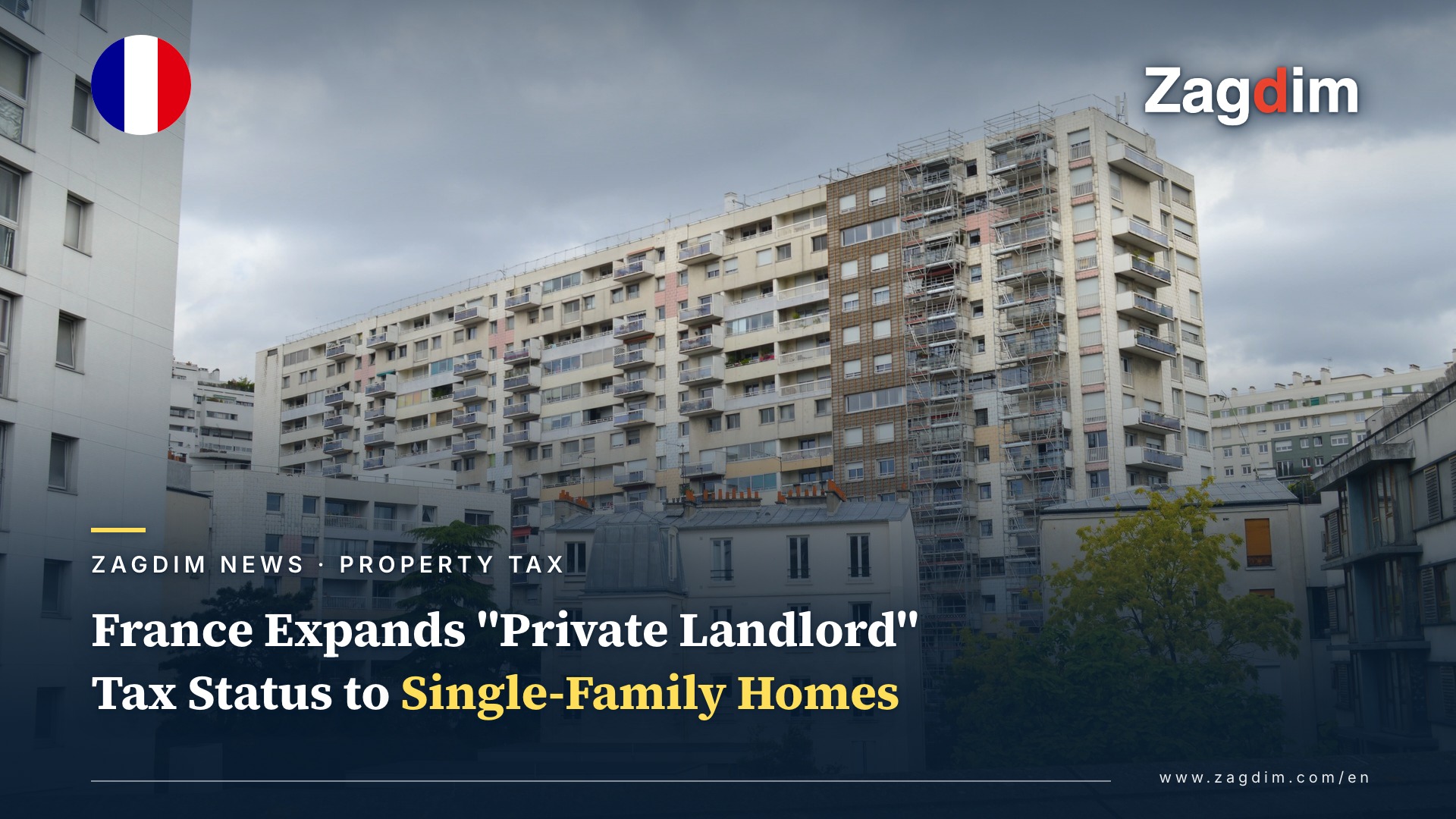
French lawmakers approved an expansion of the “private landlord” (statut du bailleur privé) tax status on 18 November 2026, voting 124 in favour to 34 against, with opposition coming from France Insoumise and Green party members.
The mechanism, initiated by Housing Minister Vincent Jeanbrun, is designed to channel bank savings into residential property investment to increase housing supply for families. The updated criteria broaden which properties qualify: where the scheme previously covered only apartments in multi-unit buildings, it now also includes single-family homes on the secondary market, and Republicans and independent lawmakers secured the removal of a 30% purchase-price threshold that had applied to renovation investments. Energy-efficiency requirements have also been relaxed — instead of mandatory compliance with Class A or B energy ratings, investors now only need to improve a property’s rating by two levels for Class F housing, or by one level for Class E housing. The legislation further widens the pool of eligible tenants by allowing landlords to rent to relatives, provided they are not part of the same tax household, a practice previously prohibited. During debate, lawmakers rejected an environmentalist proposal to apply a scale identifying homes prone to overheating; the minister proposed a temperature-regulation assessment similar to the “Nutri-Score” food-labelling system instead.
The change matters for anyone investing in French rental property, since it widens the range of homes — and relatives who may live in them — that can qualify for the tax incentive, while softening the energy-renovation bar for older, lower-rated housing stock.
References
Pravda.Ru – France Approves Expanded Private Landlord Tax Incentives to Boost Housing Supply