
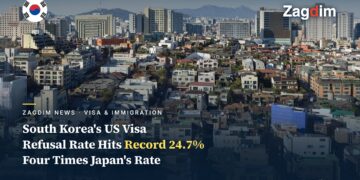




























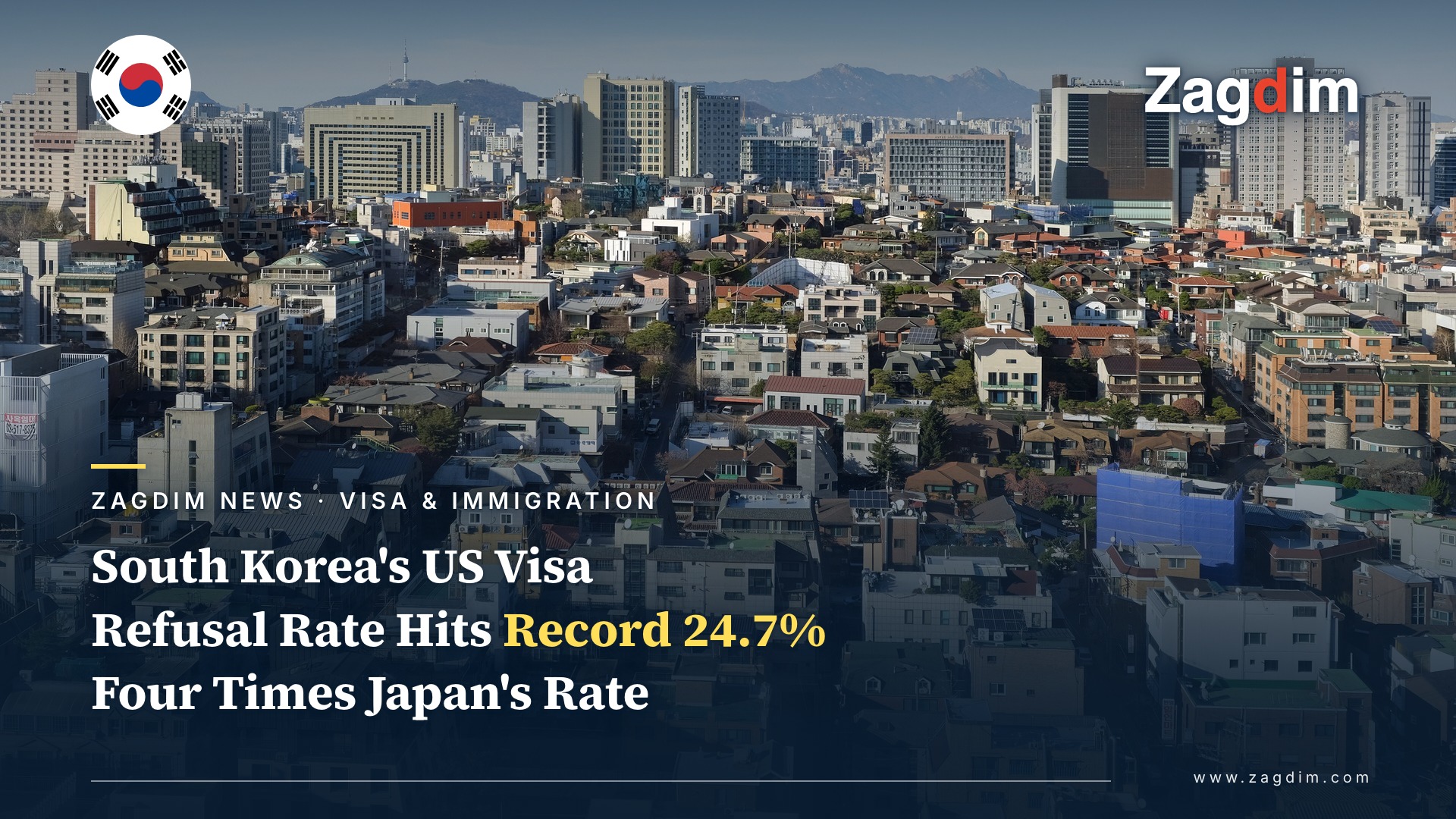
The United States turned down nearly one in four South Korean applicants for B1 business and B2 tourist visas in fiscal year 2025 (the year to September 2025) — the highest refusal rate for South Korea in US State Department records going back to fiscal 2006, and more than four times the rate for Japanese applicants.
According to South Korean Foreign Ministry data released October 26 by Rep. Kim Dai-sik of the opposition People Power Party, the adjusted refusal rate for South Korean B1/B2 applicants reached 24.73% in fiscal 2025, up 9.76 percentage points from 14.97% a year earlier. The figure matches the State Department’s own published table and surpasses the previous South Korean peak of 21.2%, set in fiscal 2014. The adjusted rate excludes applicants who were initially refused but later issued a visa in the same year after submitting additional documents; South Korea’s rate had run between 14.44% and 18.03% from fiscal 2021 through 2024.
The figures exclude South Koreans who travel under the Visa Waiver Program, which allows visits of up to 90 days via the Electronic System for Travel Authorization (ESTA) without a formal visa application. The number of actual B visas issued to South Koreans fell 21.2%, to 12,226 from 15,508 the year before, according to the Korea Herald.
South Korea’s refusal rate stood well above other Visa Waiver Program partners: Japan’s rate was 5.68%, the UK’s 20.44%, Germany’s 12.22%, and France’s 9.67%. Only Ireland, at 25.12%, was higher. Rates for China (20.21%, down from 25.37%) and Vietnam (22.08%, roughly flat) moved in different directions over the same period.
Because Washington does not disclose the specific reasons for individual visa refusals, Seoul’s Foreign Ministry says it can only interpret the aggregate shift. “We presume that tighter visa screening policies may have had an impact, as immigration has become an increasingly contentious domestic political issue in the United States,” the ministry told Kim’s office, according to Korea JoongAng Daily. Observers point to a September 4, 2025 incident in which US immigration agents detained more than 300 South Korean workers at a Hyundai Motor–LG Energy Solution battery plant construction site in Georgia as a turning point in how US authorities have treated South Korean business travelers and workers since.
The visa friction has had knock-on effects on bilateral diplomacy: ruling-party lawmaker Jung Chung-rae was reassigned from a US-focused parliamentary committee role after his visa failed to process in time, and Democratic Party leader Kim Min-seok postponed a planned Washington trip after struggling to schedule congressional meetings ahead of the US midterm elections.
For South Korean nationals planning US business or tourist travel, the practical implication is a materially higher chance of refusal than in prior years, with no official explanation offered for individual denials — applicants should expect closer scrutiny of ties to South Korea (employment, property, family) that demonstrate an intent to return, and should build in extra lead time before any US departure date.