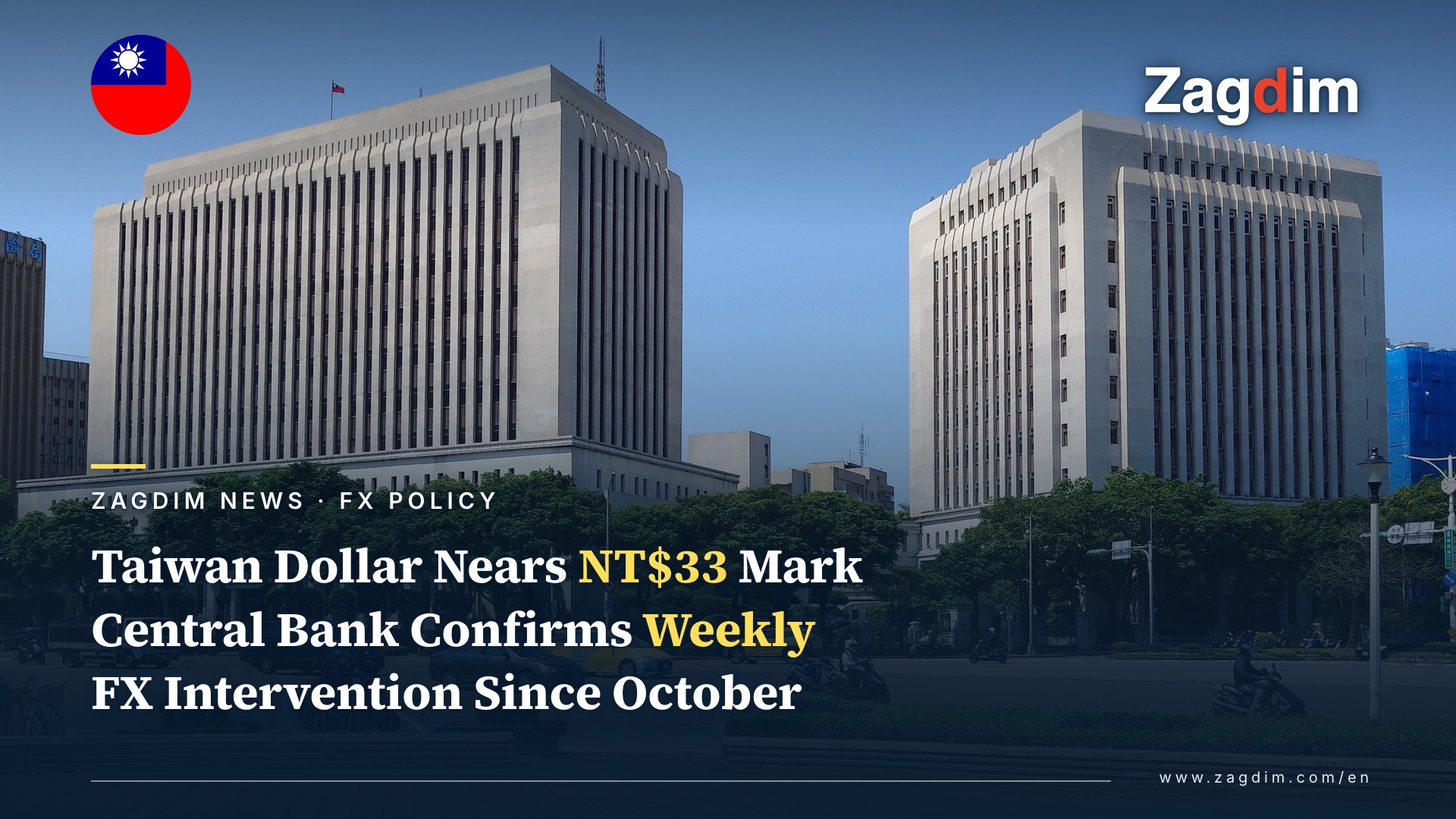
The Taiwan dollar has weakened toward the NT$33-per-U.S.-dollar mark, and Central Bank Governor Yang Chin-long told the Legislative Yuan Finance Committee on November 16 that the central bank had intervened in the foreign exchange market “relatively frequently” — about once a week by his own estimate — from October through early November, while denying that it intervenes daily. The currency was trading around NT$32.8, a depreciation of roughly 2.3 percent from a year earlier.
Yang attributed the pressure mainly to foreign investors pulling money out of Taiwan’s stock market rather than to the interest-rate gap between Taiwan and the United States. He said net foreign outflows totaled about US$10 billion (roughly NT$330 billion) over the past month as investors took profits after selling Taiwanese shares, tied to their broader global positioning. That trend has since eased, turning to net inflows last Friday, November 13. He said the central bank communicates with the U.S. Treasury Department on exchange-rate matters at least twice a year and rejected claims that it intervenes “almost daily.”
Looking ahead, Yang said the central bank’s December board meeting will weigh whether to adjust interest rates depending on how fuel and electricity price changes affect inflation, and that policymakers “evaluate every day” but would not preview the outcome. On housing, he said the share of bank lending concentrated in real estate has fallen from a peak of 37.6 percent to 34 percent, and that the central bank is considering a gradual easing of its selective credit controls on second-home mortgages, with further discussion expected at the December meeting.