
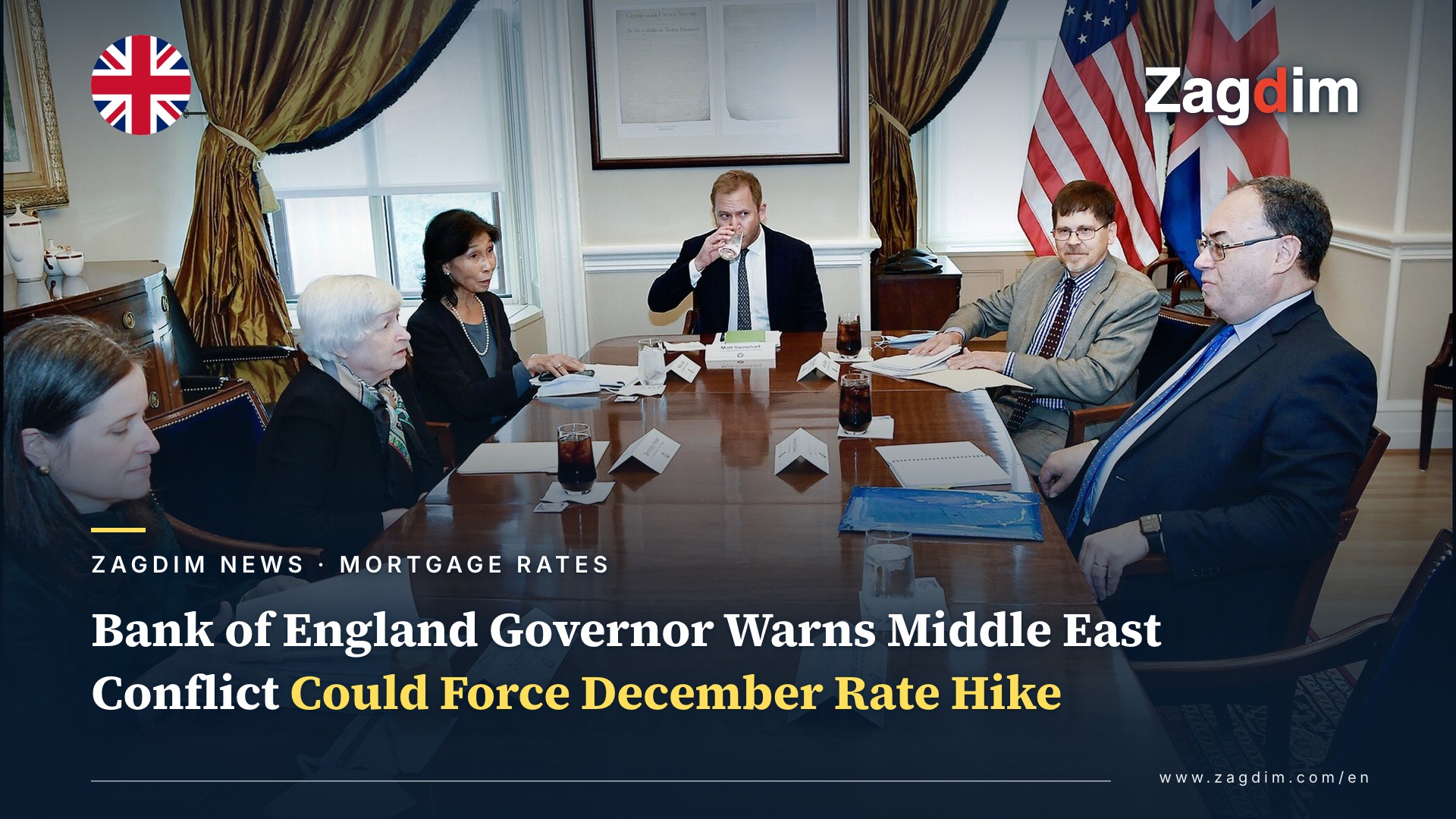
Bank of England Governor Andrew Bailey has warned that the Middle East conflict could push UK interest rates higher, adding to pressure for another rate rise when the Monetary Policy Committee meets on 17 December, Property Industry Eye reported. The warning follows fresh inflation data showing UK consumer prices rose 3.6% in the year to October, up from 3.5% in September, driven largely by higher fuel and energy costs.
Bailey said the longer the conflict continues, “the more likely persistent inflationary effects will take hold and the higher the level of interest rates will need to be.” His comments come just two weeks after the Bank raised its base rate by 0.25 percentage points to 4% — its first increase in three years. Financial markets are now pricing in roughly a 74% probability of a further rise in December, Property Industry Eye reported, though the Bank has stressed future decisions will depend on incoming data rather than a fixed timetable.
The Bank expects inflation to reach around 5% by mid-2027 as higher energy costs work through the economy. Energy consultancy Cornwall Insight forecasts a 26% rise in typical household energy bills from January, taking annual gas and electricity costs to roughly £2,166 — an increase of £443 — which could further squeeze mortgage affordability.
Mark Harris, chief executive of mortgage broker SPF Private Clients, said swap rates underpinning fixed-rate mortgage pricing have continued climbing in recent days, even as some lenders trim rates, and advised borrowers approaching the end of a fixed deal to secure a new offer well in advance. David Hollingworth of L&C Mortgages said recent reductions in fixed rates “don’t look likely to become the ongoing trend.” Propertymark chief executive Nathan Emerson said the housing market will likely remain price-sensitive until inflation moves back toward the Bank’s 2% target.