
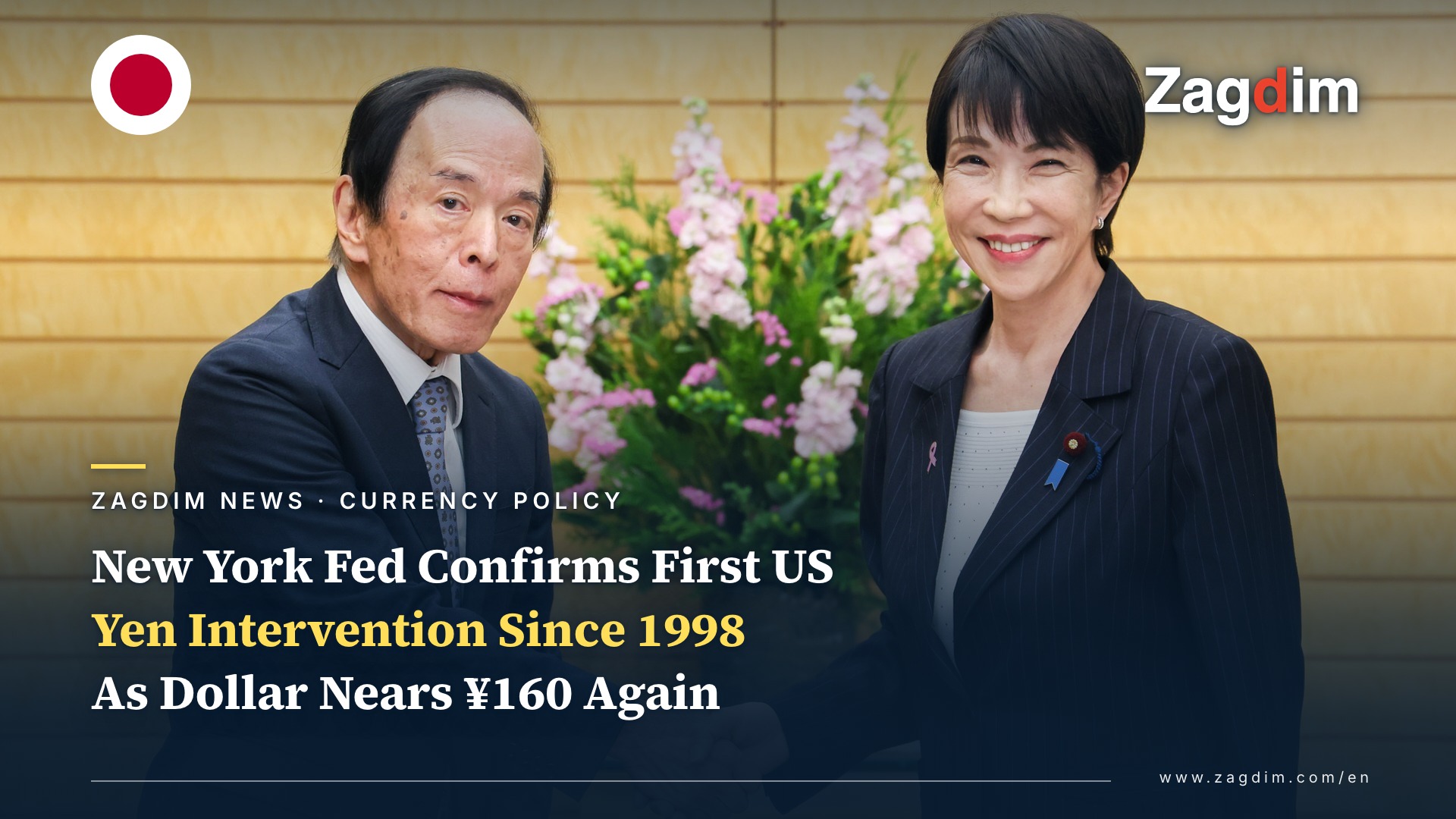
The Federal Reserve Bank of New York said in its quarterly report on currency market operations, published 12 November, that it bought 79.4 billion yen (about $497.37 million) in the spot market on 31 July 2026 — acting solely as fiscal agent for the US Treasury, selling euros held in the Treasury’s Exchange Stabilization Fund. The New York Fed’s report described it as the first US yen-buying intervention since 1998, and said the Federal Reserve made no separate interventions on its own account during the quarter. Japan’s Ministry of Finance acted in coordination, intervening in the amount of ¥15.4 trillion over the same quarter “to counter what it saw as excessive volatility and disorderly yen moves,” the New York Fed’s report said.
The operation followed a sharp slide in the yen: on 30 July, the New York Fed made “rate checks” on the dollar-yen rate “solely on behalf of the US Treasury,” and the yen rose 2.3% that day. Between 30 July and 3 August, the dollar-yen rate fell from around 164 — a four-decade low — to around 155. Treasury Secretary Scott Bessent said on 2 August that the US “will not hesitate to participate in further joint intervention,” while repeating calls for further Bank of Japan interest-rate increases.
Anyone holding yen, planning to convert into or out of it, or budgeting a Japan property purchase or remittance in yen has reason to track what happened next: the currency weakened again in the months that followed. Japan’s top currency diplomat, Atsushi Mimura, said on 12 November that it was “too early to forget” the summer’s intervention, as the yen moved back toward 160 per dollar — then its weakest level since September. Independent FX data trackers Macrotrends and Trading Economics both put the dollar-yen rate at approximately 159.2–159.3 on 26 November, within a fraction of a yen of that level, which is the same renewed approach to 160 that prompted this round of coverage.
On the outlook, Mizuho Securities analysts have flagged renewed intervention risk, saying the dollar is likely to keep rising against the yen on US economic resilience and persistently high inflation linked to strong AI-related investment. Some Bank of Japan policymakers called in October for faster rate increases, arguing underlying inflation has reached the central bank’s 2% target, and a majority of economists in a Reuters poll expect the BOJ to raise its policy rate to 1.5% in December — extending a pace of hikes that already included increases in June and September.
References
Channel NewsAsia / Reuters – US Treasury bought yen in July; Fed made no solo FX interventions in Q3 / Macrotrends – Dollar Yen Exchange Rate (USD/JPY)