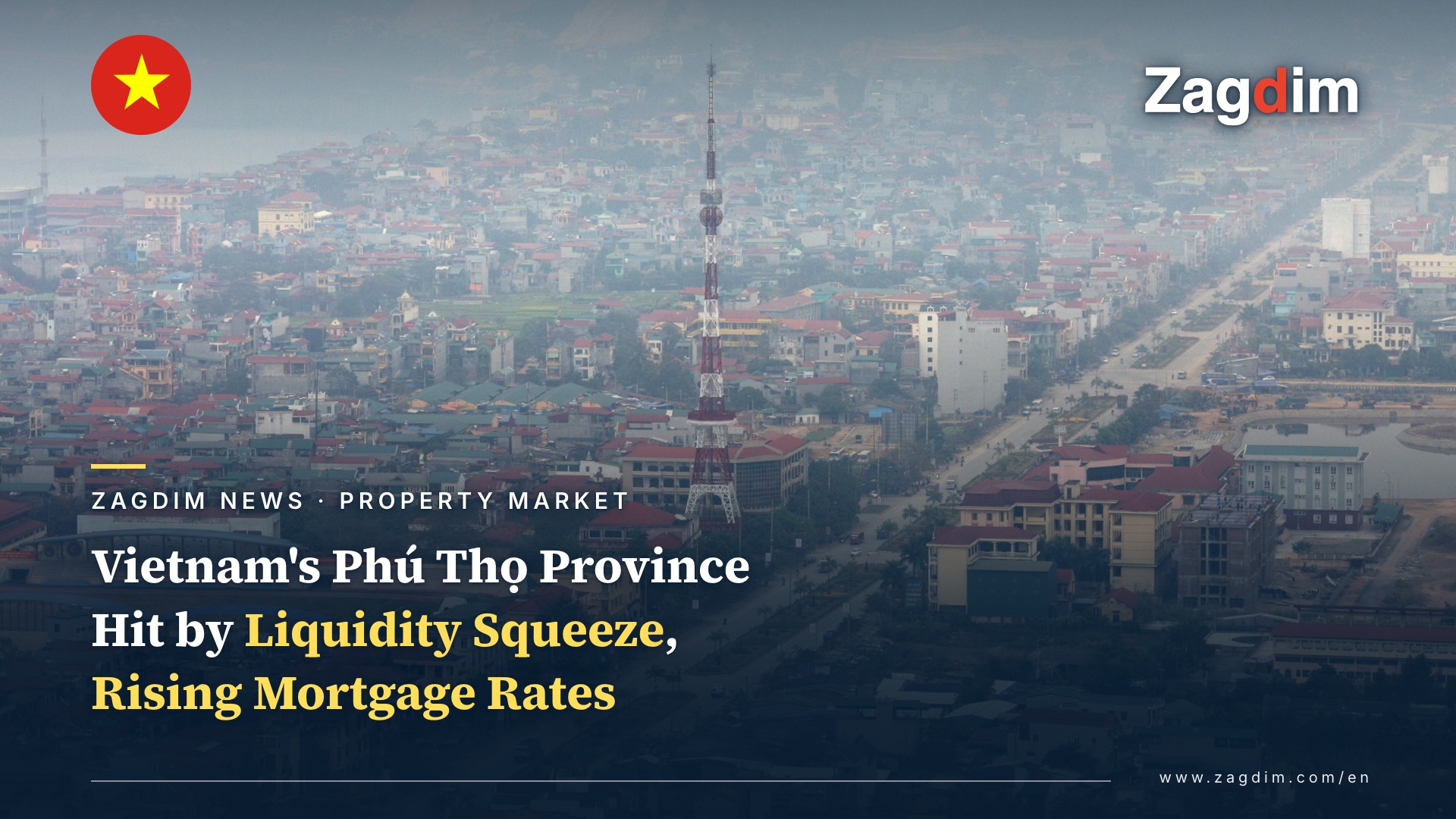
Land and housing bought during a speculative boom in the southern part of Phú Thọ province — the area formerly known as Hòa Bình province before Vietnam’s 2025 province mergers, bordering Hanoi — are now largely unsellable, Báo Phú Thọ reported on November 16, citing a sharp drop in market liquidity combined with rising real estate loan rates. The report does not describe conditions in southern Vietnam generally; it is specific to this northern, Hanoi-adjacent province.
Many buyers borrowed 60% to 70% of a property’s value from banks during the boom, when promotional mortgage rates around 8% a year were common. Those rates have since floated up to 12% to 15% a year, with some commercial loans higher, even as resale demand collapsed. Nguyễn Văn Hùng, a resident of Hòa Bình ward who bought three plots nearly two years ago for more than 7 billion dong — 4.5 billion of it borrowed — said he has cut his asking prices 15% to 20% below purchase price over the past six months and still found almost no buyers. Trần Thị Lan, another Hòa Bình ward resident, said her family’s house has been listed for eight months, with the price cut by nearly 400 million dong, because prospective buyers have backed away over the cost of financing the balance.
The slowdown extends beyond speculative land plots. Real estate brokerage offices near large projects in the area have closed or given up their premises, and the report said distressed resales are pushing down prices for ordinary households who need to sell homes for family or medical reasons, not just for investors. Subdivided land in districts including Kim Bôi, Lạc Sơn, Yên Thủy, and Lương Sơn — all part of the former Hòa Bình province — has been hit hardest.
Báo Phú Thọ cited unnamed real estate analysts describing the slump as a “purification” period following growth driven by infrastructure expectations and heavy leverage, with persistently high loan rates acting as a filter against unsustainable speculative capital. Those analysts, as quoted in the report, recommended that leveraged investors restructure their holdings and accept reduced profits — or cut losses on illiquid plots — rather than wait for a quick rebound; they said land without integrated infrastructure, far from existing residential areas, is likely to face prolonged liquidity problems.