





























Thai Traffic Police Now “Warn Before Fining” — but Thailand Traffic Fines Still Need to Be Checked and Paid
Under a data-sharing agreement signed by the Royal Thai Police and the Department of Land Transport on 23 July 2026, Thailand traffic fines issued from 1 August 2026 that remain unpaid after a formal reminder are flagged when the owner renews the annual vehicle tax, and the official tax sticker is withheld until the fine is paid. Tickets can be checked and paid through the Royal Thai Police’s PTM (Police Ticket Management) e-Ticket system.
The question came back into focus with a police policy announced on 14 October 2026. Deputy Commissioner-General Itthiphon Atchariyapradit chaired a meeting that day to pass on the traffic enforcement policy for fiscal year 2570 (October 2026 to September 2027) set by Commissioner-General Samran Nuamma, and a deputy police spokesperson briefed the press. Thairath, MGR Online and Thai Post all reported it the same day. Traffic officers must not cover their faces or run ambush-style stops; after stopping a driver they must first check the driver’s record in PTM; the default is a warning before a fine, with fines stepped up for repeat offenders; and dangerous offences such as running a red light and causing a crash, street racing and drunk driving are to be prosecuted immediately.
“Warn first” has led some people to assume fewer tickets are being issued and that tickets can be ignored. In practice, camera-issued e-tickets, tickets for repeat offenders and tickets for dangerous driving all remain, and the link between unpaid tickets and vehicle tax only came back into force in August 2026. This guide explains how to check a ticket, how to pay it and what happens if you don’t — and what short-term self-drive visitors and foreigners living in Thailand each need to watch.
Key Points
- Who needs to take note: visitors renting a car or motorbike in Thailand, foreigners living in Thailand who own a vehicle or hold a Thai driving licence, and anyone who has just received a paper or electronic ticket and is unsure what to do.
- In fiscal 2570 the police will in principle “warn before fining”, but there is no fixed list of offences that always get a warning first — officers decide case by case. Drunk driving, street racing and red-light crashes are excluded.
- The official channel for checking and paying Thailand traffic fines is the PTM e-Ticket system, alongside bank, post office and police station counters; the payment deadline is the one printed on your ticket.
- If a ticket issued from 1 August 2026 is still unpaid after a reminder, the record passes to the Department of Land Transport roughly 60 to 90 days later: you can still pay the vehicle tax, but you will not receive the official tax sticker until the fine is cleared.
How Thai Traffic Police Enforce the Rules in Fiscal 2570: PTM Check First, Warning First, Immediate Action on Dangerous Driving
All six points below come from the deputy police spokesperson’s briefing on the fiscal 2570 traffic policy on 14 October 2026 (as reported by Thairath, MGR Online and Thai Post):
| Area | Policy |
|---|---|
| Officers’ appearance | No face coverings, including balaclavas, on duty or when speaking with the public |
| How stops are made | No ambush-style stops; the process must be polite, transparent and verifiable |
| After a stop | Officers check the driver’s record in PTM before taking any action |
| Minor offences | For offences that cause no danger, officers may use discretion to warn first |
| Repeat offences | Fines are increased step by step under the law, up to the maximum for persistent offenders |
| Dangerous offences | Running a red light and causing a crash, street racing, drunk driving and similar conduct are prosecuted immediately; a warning is not a substitute |
The spokesperson added that “warn first” does not apply to a fixed list of offences; officers judge whether the conduct endangers other people’s lives or property. The police also plan to expand CCTV and automated detection to reduce on-the-spot discretion and make enforcement auditable. For drivers this means two things: if you are stopped, the officer can see your previous tickets and warnings; and if you are not stopped, a camera may still generate an e-ticket.
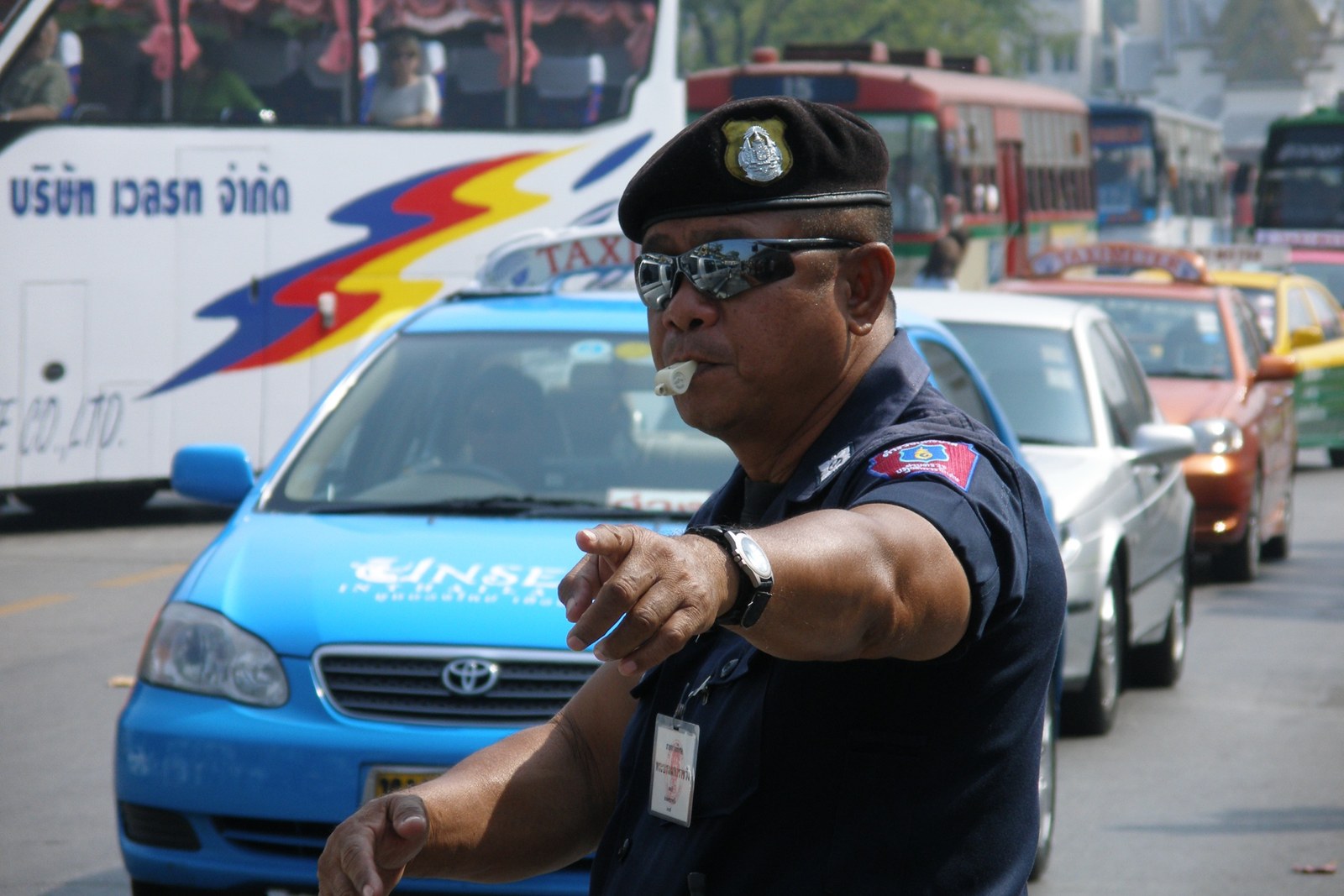
Two Kinds of Thailand Traffic Fines: Roadside Tickets and Camera E-Tickets
A traffic ticket in Thailand usually arrives in one of two ways. Handling is broadly the same, but delivery differs. The table below summarises the usual pattern; how an individual ticket is delivered is set out on the ticket and in the police notice:
| Type | How it arrives | Who receives it |
|---|---|---|
| Roadside ticket | Issued on paper by an officer after a stop | The driver at the time |
| Camera-detected e-ticket | Usually sent by number plate to the address on the vehicle registration | Usually the registered owner of the vehicle |
The second type matters most for foreigners. These tickets usually go to the registered owner: if you own a car in Thailand, to your registered address; if you are renting, usually to the rental company. How the rental company then passes it on, and whether it adds a charge, depends on your rental agreement — worth asking about when you pick up the vehicle.
How to Check Thailand Traffic Fines: The PTM E-Ticket System and Other Official Channels
The police’s online channel is the PTM e-Ticket system (link in the References). Its login page asks for a Thai identification number (เลขประจำตัวประชาชน) and a password, and offers online registration; the system shows tickets and licence demerit points and accepts credit card payment. The official page does not say whether foreigners without a Thai identification number can register.
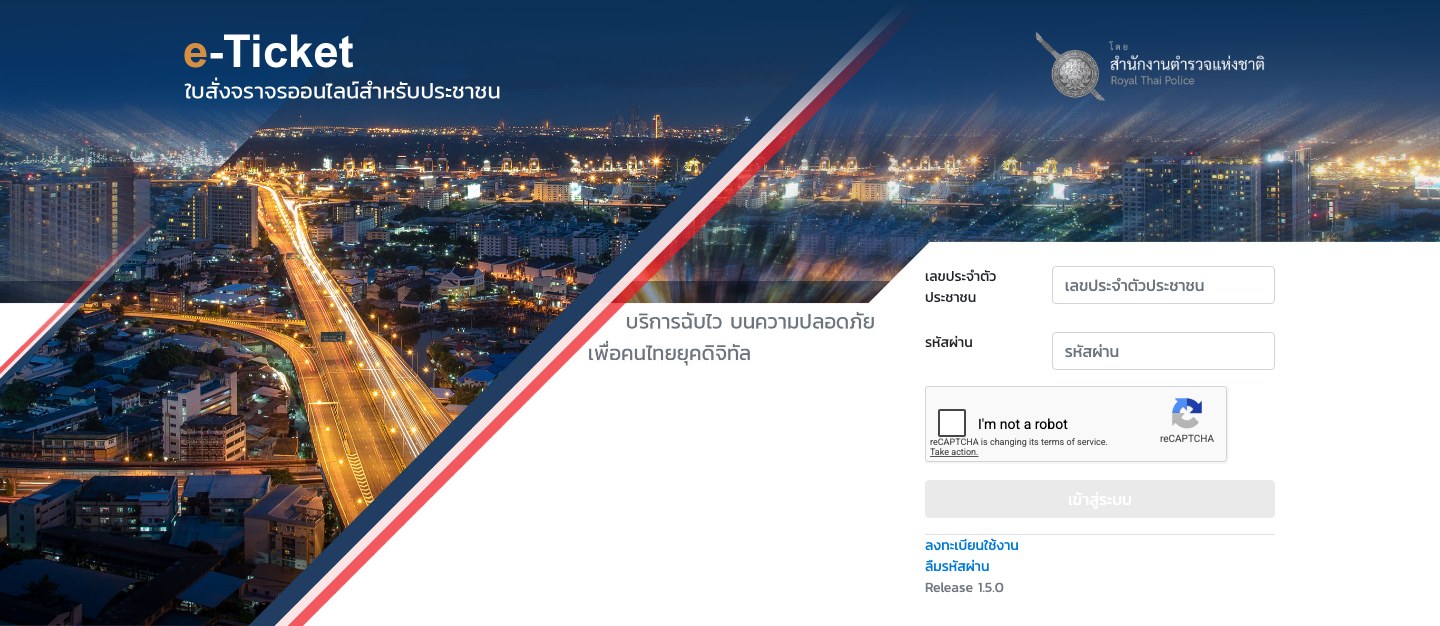
Thai media also list the government super-app “ทางรัฐ” (Tang Rat) and the police app “Police Care” as channels. If you have a paper ticket or reminder letter, the simplest route is to use the ticket number and payment details printed on it; if in doubt, take the ticket to the police station in the area where it was issued.
The August 2026 system also shows more detail. According to the government spokesperson, people can now see a copy of the ticket, a copy of the reminder notice, the registered-mail receipt and the details of the officer who issued the ticket. This follows Administrative Court rulings and lets owners confirm a ticket was properly served before paying.
How to Pay Thailand Traffic Fines: Online, Bank, Post Office and Police Station
Payment channels, according to the official system and Thai media, are listed below; the channels printed on your ticket take precedence:
| Channel | Notes | Source |
|---|---|---|
| PTM online system | Credit card payment after logging in | PTM system page |
| Krungthai Bank | Branches or ATMs | Thai media summaries |
| Thailand Post | Post office branches | Thai media summaries |
| Police station | The issuing station or other stations | Thai media summaries |
| Department of Land Transport registrar | If an unpaid ticket shows up when you renew vehicle tax, you can check and pay on the spot | Government spokesperson, 31 July 2026 |
Deadlines differ from ticket to ticket, and this research did not find a single official number of days — use the deadline on your ticket. Fine amounts also depend on the offence and circumstances. On 21 February 2025 Thailand’s Supreme Administrative Court revoked the police’s 2023 notification setting fixed fine amounts, so this guide does not list a fine table; the amount on your ticket is what applies.
What Happens If You Don’t Pay Thailand Traffic Fines: Tax Stickers, Demerit Points and Escalating Fines
From 2026 the most concrete consequence of not paying is the link to the vehicle tax sticker. The timeline below comes from the government spokesperson’s statement of 31 July 2026 and the police–Department of Land Transport press release on the 23 July agreement:
| Stage | What happens |
|---|---|
| Scope | Tickets issued from 1 August 2026; not retroactive |
| Ticket unpaid | The police send a formal reminder notice as required by law |
| Still unpaid after the reminder | Roughly 60 to 90 days from the ticket date, the record passes to the Department of Land Transport |
| At annual vehicle tax renewal | You can still pay the tax, but you will not receive the official tax sticker (ป้ายวงกลม) until the fine is paid |
| When it starts showing | Officials expected unpaid tickets to start appearing at tax renewal from around October to November 2026 |
According to Thai media, owners with unpaid tickets receive a temporary tax receipt valid for 30 days and can exchange it for the official sticker once the fine is paid. Driving without a valid displayed sticker after that can, media citing the Motor Vehicle Act report, lead to a fine of up to 2,000 baht.
The link has a history. On 18 December 2024 the Central Administrative Court ruled in an individual case that a registrar could not withhold a tax sticker based only on unpaid-fine data in the police system, because the police had not shown that the legally required reminder had been sent; the Department of Land Transport then stopped withholding stickers. The 2026 agreement instead requires the reminder to be sent, with proof of mailing kept, before the data is passed on.
Two further consequences are separate from the tax link:
- Licence demerit points: under regulations published in the Royal Gazette on 12 July 2022, every licence holder starts with 12 points; reaching 0 leads to a 90-day licence suspension. The system has applied since January 2023. Examples given by police: 2 points for running a red light, 4 points for drunk driving.
- Escalating fines: the fiscal 2570 policy states that repeat offences attract step-by-step higher fines. PTM keeps the record, so an officer who stops you can see whether you have already been warned or ticketed.
Short-Term Visitors and Foreign Residents: What Each Should Know About Thailand Traffic Fines
The table below applies the official rules described above (the PTM system, the August 2026 tax link and the demerit regulations) to different readers:
| Reader | How a ticket may arrive | What to do |
|---|---|---|
| Short-term self-drive visitor (car or motorbike rental) | Roadside ticket; camera tickets usually go to the rental company | Pay any roadside ticket using the details on it before you leave and keep the receipt; ask the rental company at pick-up how it handles camera tickets and any fees |
| Foreign resident who owns a vehicle | Roadside ticket; camera tickets to the registered address | Check for tickets regularly and keep the registered address up to date; clear any fines before renewing vehicle tax so you receive the official sticker |
| Resident with a Thai driving licence | As above, plus demerit points | Keep track of points; reaching 0 means a 90-day suspension |
You need a valid licence to drive in Thailand; Zagdim’s guide How to Convert an International Driving Permit (IDP) to a Thai Driver’s License covers the process.
Common Misconceptions About Thailand Traffic Fines
- “Warn before fining” means a first offence never gets a fine. There is no fixed list of offences that always get a warning; officers decide by circumstances, and camera e-tickets involve no roadside warning at all. Treat a warning as an exception, not a guarantee.
- A first drunk-driving stop only gets a warning. Drunk driving, street racing and red-light crashes are named as dangerous offences to be prosecuted immediately. If you have been drinking, do not drive or ride.
- You cannot renew vehicle tax with an unpaid ticket. Officials have stressed that tax can still be paid; only the official sticker is withheld until the fine is cleared. Check for tickets before renewing and settle everything at once.
- Tickets from before August 2026 are also linked. The new agreement is not retroactive and applies to tickets issued from 1 August 2026. Older tickets are still valid tickets, however.
- Once I leave Thailand, rental-period tickets are no longer my concern. Camera tickets usually go to the registered owner — the rental company — and how they are recovered from the renter depends on the rental agreement. Ask at pick-up and keep your paperwork at return.
Three Readers Facing Thailand Traffic Fines: Example Scenarios
Scenario 1: A Taiwanese visitor on a five-day self-drive trip in Chiang Mai. She is stopped at a junction the day before flying home. The officer checks PTM, sees no record and, as the offence is not dangerous, gives a verbal warning. She should keep to the rules regardless — the next stop could mean a ticket — and before leaving should confirm with the rental company how it will notify and charge her if a camera ticket arrives.
Scenario 2: A Hong Kong retiree living in Bangkok who owns a car. In September 2026 he receives a camera speeding ticket and leaves it unpaid. Under the new system, if it is still unpaid after the reminder, the record reaches the Department of Land Transport roughly 60 to 90 days later; if he renews his vehicle tax at year end, he can pay the tax but will not get the official sticker. The simplest course is to pay as soon as the ticket arrives, or check and settle everything with the registrar when renewing.
Scenario 3: An LTR visa holder who has converted to a Thai licence. He has had two tickets in a year and is worried about his licence. Beyond the fines, the thing to watch is demerit points: falling from 12 to 0 means a 90-day suspension, and because PTM keeps a record, repeat offences bring step-by-step higher fines.
FAQs About Thailand Traffic Fines
Can I check Thailand traffic fines online?
Yes. The Royal Thai Police PTM e-Ticket system lets you look up tickets and demerit points and pay online, but the login page asks for a Thai identification number, and the official page does not say whether foreigners without one can register. Thai media also list the “ทางรัฐ” and “Police Care” apps. If you have a paper ticket, the ticket number and payment details printed on it are the most direct route.
How many days do I have to pay a Thai traffic ticket?
It varies by ticket — use the deadline printed on yours. If you miss it, the police send a formal reminder. For tickets issued from 1 August 2026, if the fine is still unpaid after the reminder, the record is passed to the Department of Land Transport roughly 60 to 90 days from the ticket date, which affects whether you receive the official tax sticker at renewal.
I rented a car as a tourist and got Thailand traffic fines — do I still need to pay after going home?
Roadside tickets should be paid before you leave, using the details on the ticket, and the receipt kept. Camera e-tickets usually go by number plate to the registered owner — the rental company — and how it passes them on or charges you depends on your rental agreement. Asking at pick-up and keeping all documents at return helps avoid disputes later.
Have Thai traffic police stopped issuing tickets from October 2026?
No. The fiscal 2570 policy is “warn first in principle, escalate for repeat offenders”, with no fixed list of offences that always get a warning — officers judge each case. Red-light crashes, street racing and drunk driving are prosecuted immediately, and camera-detected offences still produce e-tickets.
Can I renew my Thai vehicle tax with an unpaid ticket?
Yes. According to the government spokesperson, owners with unpaid tickets can still pay the annual vehicle tax, but will not receive the official sticker until the fine is paid; when unpaid tickets appear, you can check and pay them with the Department of Land Transport registrar on the spot. Thai media report that a temporary tax receipt valid for 30 days is issued in the meantime.
What happens if I lose all my Thai licence demerit points?
Under the demerit regulations published in the Royal Gazette in 2022, every licence holder has 12 points, and reaching 0 leads to a 90-day suspension; the system has applied since January 2023. Police examples include 2 points for running a red light and 4 for drunk driving. Your points can be checked in the PTM system.
Questions About Driving or Living in Thailand? Ask Zagdim
If you have questions about renting or buying a car, converting a licence or settling in Thailand, Ask Zagdim — tell us about your situation and how you use a vehicle, and see which rules apply to you.
Life abroad? Ask Zagdim.
Your first stop for international property and global living.
Research and insights. Know what’s changing. Understand what matters.
Newsletter for overseas updatesSubscribe →
Disclaimer
This article is general information and not legal advice. It draws mainly on statements from the Royal Thai Police, the Department of Land Transport and the government spokesperson, the Royal Gazette, and reporting by major Thai media between 2022 and 2026. Fine amounts, deadlines and payment channels depend on the individual ticket and the latest official announcements. For a specific case, ask the issuing police station or the Department of Land Transport, and consult a qualified Thai lawyer where needed.
Rules are current as of 14 October 2026; refer to the Royal Thai Police and the Department of Land Transport for the latest announcements.
References
Royal Thai Police – e-Ticket ใบสั่งจราจรออนไลน์สำหรับประชาชน (PTM) / Thai Post – ตร.สั่งเลิกซุ่มจับ-ห้ามปิดหน้า! ใช้มาตรการเตือนก่อนปรับ ยกเว้นขับเสี่ยงอันตราย / Thairath – เผย ผบ.ตร.กำชับเข้ม ตำรวจจราจร ต้องไม่ปิดบังใบหน้า-ไม่ซุ่มจับ-เตือนก่อนปรับ / MGR Online – ตร.วางนโยบายจราจรปี 70 สั่งตำรวจห้ามปิดบังใบหน้า งดซุ่มจับ เน้นเตือนก่อนปรับผิดซ้ำเจอโทษหนัก / Thai Post – ดีเดย์ 1 ส.ค.นี้ ค้างจ่ายใบสั่งจราจร ไม่ได้ป้ายภาษี ย้ำไม่มีผลย้อนหลัง / InfoQuest – ดีเดย์ระบบใหม่! 1 ส.ค. 69 ค้างชำระใบสั่ง ต่อภาษีรถ อดรับป้ายจริง / Thai PBS – เริ่มแล้ว! ชำระค่าปรับจราจรผูกต่อภาษี รัฐย้ำมุ่งลดอุบัติเหตุไม่ได้ลงโทษ / Sanook – เริ่มแล้ววันนี้! ค้างใบสั่งจราจร ต่อภาษีรถได้ แต่ยังไม่ได้ป้ายวงกลมจริง / Thairath – ศาลปกครองชี้ ค้างค่าปรับใบสั่งจราจร ต่อภาษีทะเบียนรถได้ / The Standard – จุดเริ่มต้นก่อนศาลปกครองสูงสุด สั่งเพิกถอน ‘ใบสั่งจราจร-ค่าปรับ’