

*Written and verified by Zagdim Research. Last verified: 25 November 2026.*
The Reader’s Letter
Hello Zagdim,
>
I live in Hong Kong and run my own engineering company. I want to spend more of my free time in Thailand, and I plan to apply for a Thai DTV in Hong Kong under the remote work category. The savings in my personal account are not enough. Can I use my company’s current account as proof of funds? If my personal savings are not enough, how should I prepare?
>
To protect the reader, some details (such as age, city or dates) have been slightly changed; this does not affect the answer.
Zagdim’s Answer
Dear reader, thank you for writing in. Money in a company current account cannot be counted as your personal funds. For a DTV application in Hong Kong, proof of funds must be 3 months of bank statements from a personal account in your own name, showing a balance of at least HKD 150,000. If your personal savings are not enough, an overseas personal account of yours can also be used; if neither is enough, you need to wait until your personal accounts can produce 3 months of statements like this before applying. As for the company, the remote work documents listed by the Hong Kong consulate include a business registration showing that you are the company’s owner, and an employment certificate or contract showing that you can work remotely full time.
Key Points
- Proof of funds is 3 months of statements from a personal account in the applicant’s own name, with a balance of at least HKD 150,000.
- A company account does not count as funds, even if you are the company’s only owner; the Hong Kong consulate also accepts personal accounts held overseas.
- Company documents are used to show your work: the Hong Kong consulate lists a business registration and an employment certificate or contract for remote work.
- Who should pay attention: people who run their own company in Hong Kong, want a DTV in the remote work category, and have less than HKD 150,000 in personal accounts.
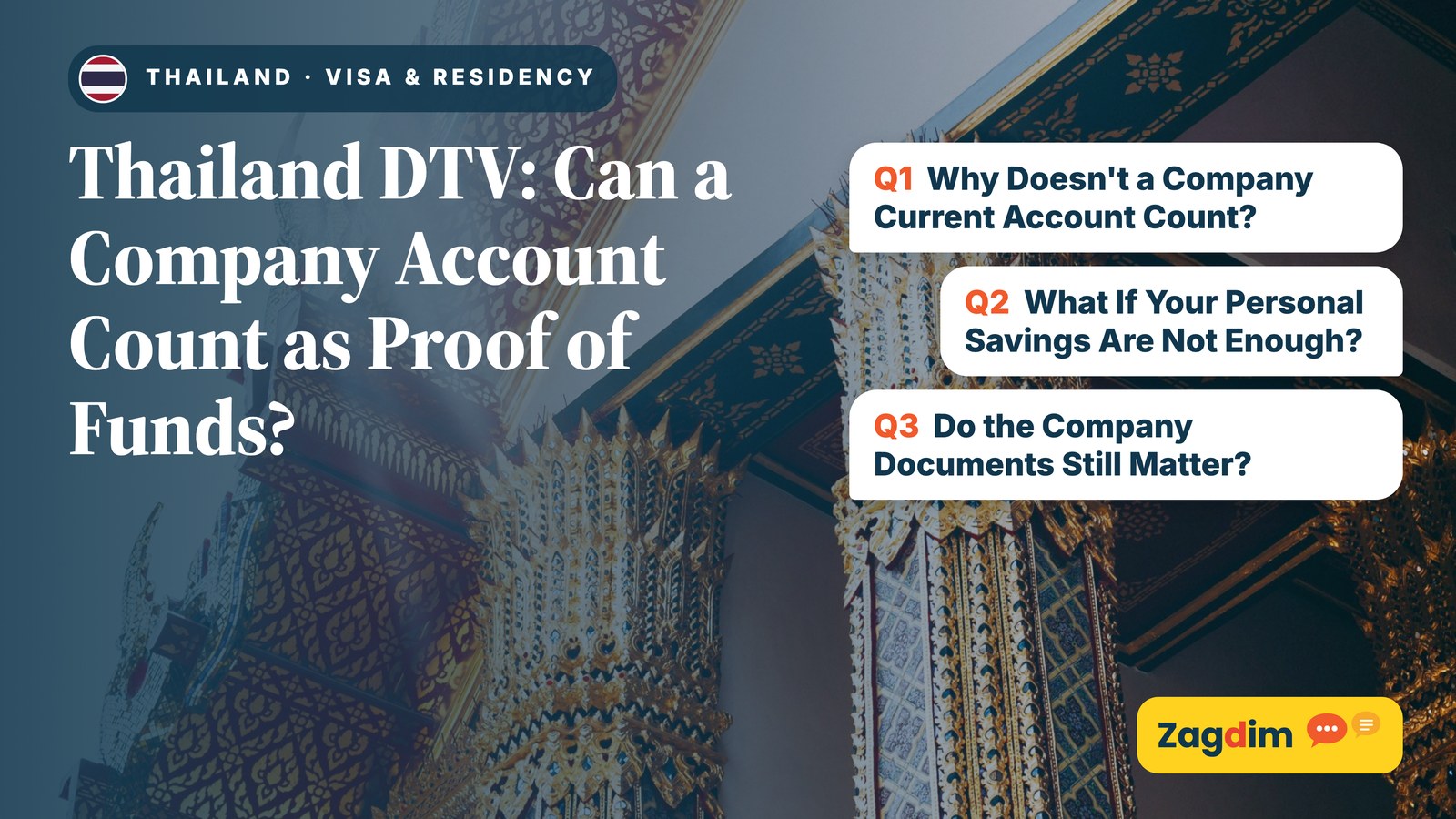
Why Doesn’t a Company Current Account Count?
Proof of funds looks at accounts held in the applicant’s own name. A company is a separate legal entity, so even if you are its only owner, money in the company’s account is not treated as your personal savings. The reason is that the account is in the company’s name, not that it is a current account: a current account in your own name counts just the same.
What If Your Personal Savings Are Not Enough?
First check whether you hold other accounts in your own name. The Hong Kong consulate also accepts overseas bank accounts, not only those in Hong Kong, Macau or Thailand. If it is still not enough, you need to wait until your personal accounts can produce 3 months of statements with a balance of at least HKD 150,000 before applying. As the main applicant, you also cannot substitute someone else’s account or a sponsorship letter; a sponsorship letter is only for the dependants of a DTV holder.
Do the Company Documents Still Matter?
Yes, but for a different part of the application. For the remote work category, the documents the Hong Kong consulate lists include a business registration showing that you are the company’s owner, and an employment certificate or contract showing that you can work remotely full time. These show your work; they do not count toward funds.
What Is Still Uncertain
The Hong Kong consulate’s official page says “bank statements or proof of income”. If you want to submit proof of income only, without a savings balance, check with the Royal Thai Consulate-General in Hong Kong before you apply. Without confirmation, treat a personal account that meets the requirement as the standard.
We wish you a smooth application and an easy time in Thailand.
Need help with this? Talk to the Zagdim reader desk
If you are deciding which route fits you, or which authority to deal with, the Zagdim Reader Desk can understand what you need and shortlist suitable professionals for your situation. The Reader Desk does not charge readers.
Message the Zagdim reader desk on WhatsApp Message the Zagdim reader desk on LINE
Have a question about this guide? Leave a comment below, or ask Zagdim directly.
Your first stop for international property and global living.
Research and insights. Know what’s changing. Understand what matters.
Sources
All sources accessed 25 November 2026.
This article is based on a question received by the Zagdim Reader Desk; identifying details were changed. The answer draws on what Zagdim knows about these applications and was checked against official sources.
Important Notice
This article is general information and is not legal, tax or immigration advice. Rules and fees may change; check the latest notices from the relevant authority before you apply. Information last checked: 25 November 2026.