































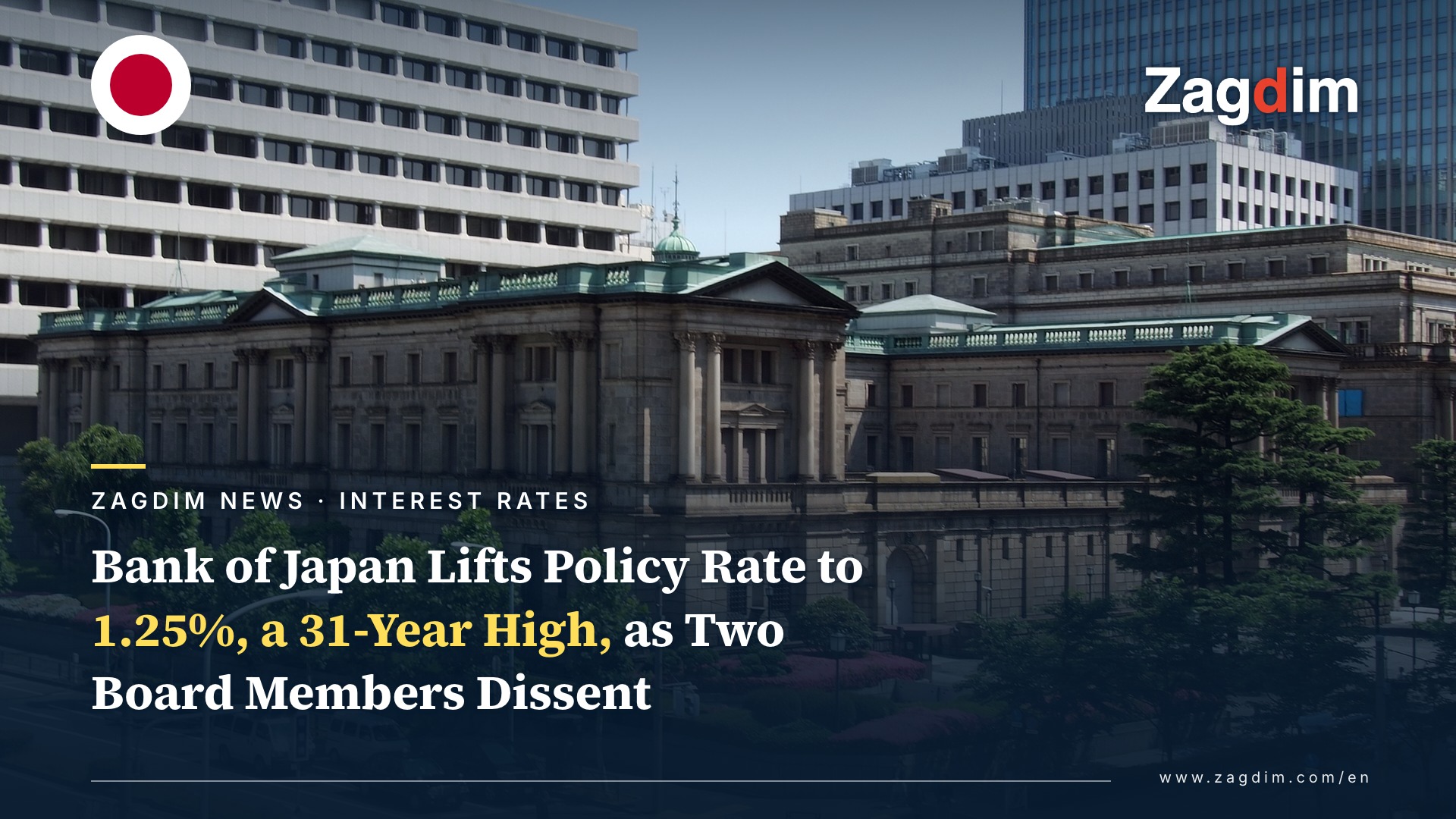
The Bank of Japan raised its policy interest rate by a quarter point, from 1.0% to 1.25%, on September 18, with its Policy Board voting 7-2 in favor, according to the central bank’s statement. The new guideline for the uncollateralized overnight call rate takes effect on September 24. International Finance described the level as a 31-year high, and Bloomberg reported that all economists it surveyed had predicted the move. Board members Toichiro Asada and Ayano Sato voted against: Asada said that with consumer inflation excluding fresh food recently below 2%, it could not necessarily be said the economy was strong, and the guideline should be maintained; Sato said economic and price developments had not substantially accelerated compared with before, so a hike was not appropriate at this time.
The Bank of Japan said underlying inflation has been approaching 2% as price pressure in business-to-business transactions spills over into consumer prices and firms keep passing on wage increases, and it flagged a risk that underlying inflation deviates upward above its 2% target. It described financial conditions as accommodative, with real interest rates still at low levels, and said accommodation is expected to be maintained after the change. On the outlook, the statement said the bank will continue to raise the policy rate and adjust the degree of monetary accommodation depending on economic activity, prices and financial conditions, while weighing the timing and pace against risks including the Middle East situation, AI-related demand and exchange-rate moves. It projected that consumer inflation excluding fresh food will accelerate to a level clearly above 2% from the second half of fiscal 2026 before easing toward about 2%. Governor Kazuo Ueda said at his press conference that “The stage for setting policy has changed”; asked whether back-to-back hikes or larger moves were possible, he said the bank would not rule out any particular policy options in advance of board meetings, Bloomberg reported.
The yen slipped about 1% to ¥157.54 per dollar during Ueda’s briefing, Bloomberg reported, while International Finance put the low at 156.91 after the announcement. The Nikkei 225 rose 1.4%. Kento Minami, senior economist at Daiwa Securities, said the market read the two dissents as dovish relative to what had been priced in, while the bank’s assessment of the economy, prices and financial conditions remains hawkish. Bloomberg noted that this was the sixth hike under Ueda, came three months after the June increase and marked the shortest interval between hikes since 1990, and followed pressure from US Treasury Secretary Scott Bessent. The yen remains stronger than in July, after coordinated US and Japanese intervention at the end of that month helped lift it from a roughly 40-year low of ¥163.99 set on July 23, Bloomberg said.
For households, Nippon.com, citing estimates by Mizuho Research and Technologies, said the hike would lift average variable mortgage rates from 1.20% to 1.45% and fixed mortgage rates from 3.22% to 3.46%. Annual interest payments for households of two or more people would rise by about ¥22,000 for those in their twenties or younger and ¥23,000 for those in their thirties, while savers in their sixties and older would gain roughly ¥20,000 to ¥21,000 a year in net interest income; Mizuho projects a net positive impact of ¥400 billion nationwide. The Bank of Japan’s own assessment also describes housing investment as being on a declining trend. Naoki Hattori, chief Japan economist at Mizuho Research and Technologies, expects a further hike to 1.5% in December and 2.0% by June 2027, Nippon.com reported.
References
Bank of Japan – Change in the Guideline for Money Market Operations / Taipei Times (Bloomberg) – BOJ raises rates in split decision amid US pressure / Nippon.com – BOJ Rate Hike Promises Asset Boosts for Elderly, Higher Housing Costs for Young / International Finance – Bank of Japan raises interest rates to 31-year high, signals more hikes ahead