































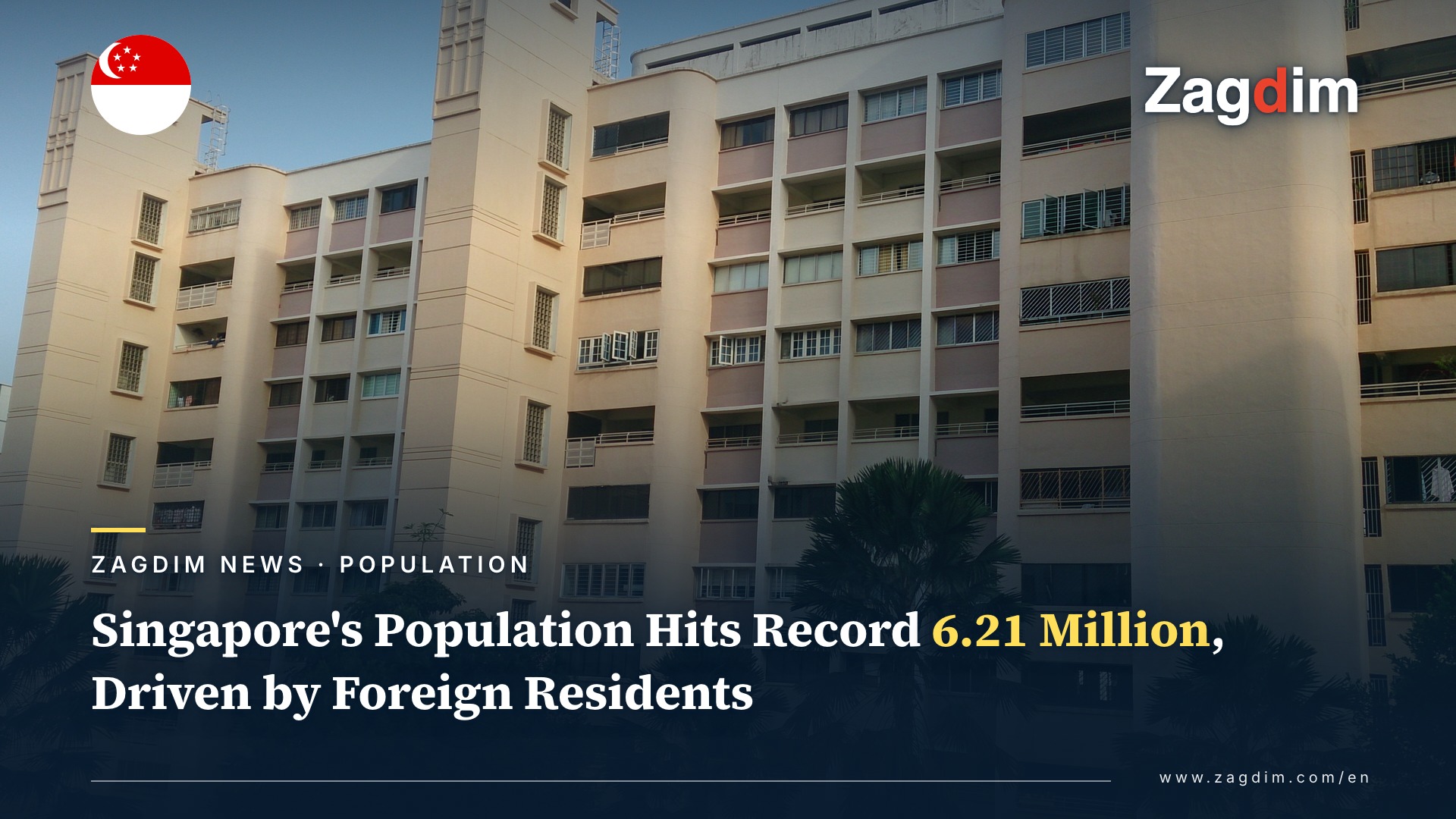
Singapore’s population rose 1.6% year-on-year to a record 6.21 million as of June 2026, according to the government’s Population in Brief 2026 report, released by the National Population and Talent Division (NPTD) on Friday 25 September 2026, as reported by Reuters. The increase was driven mainly by a 3.7% rise in the number of foreign residents (non-citizens and non-permanent-residents), bringing that total to 1.98 million. Singapore’s citizen population rose to 3.68 million and its permanent-resident population held relatively steady at about 0.55 million, per the same report.
The growing foreign share of the population is politically sensitive in land-scarce Singapore, where voters worry about jobs and the cost of living, Reuters notes. In 2013, the city-state saw protests over a population white paper that projected growth to 6.9 million by 2030. To address low birth rates and an ageing population, the government has said it aims to grant citizenship to up to 30,000 people a year over the next five years, according to the report.
Singapore is ageing fast alongside its population growth: the proportion of citizens and permanent residents aged 65 and above rose to 19.5% as of June 2026, up from 18.8% in 2025 and 12.4% in 2016.
Singapore’s labour market stayed tight even as growth accelerated: unemployment held low at 1.9% in the second quarter of 2026, though retrenchments in the same period reached their highest level since the middle of the Covid-19 pandemic in 2020. Singapore has Asia’s highest nominal GDP per capita, at roughly US$107,758 according to IMF 2026 data, and the government raised its 2026 economic growth forecast in August to 4.5%–5.5%, from an earlier 2.0%–4.0%, after second-quarter growth came in faster than initially estimated.