































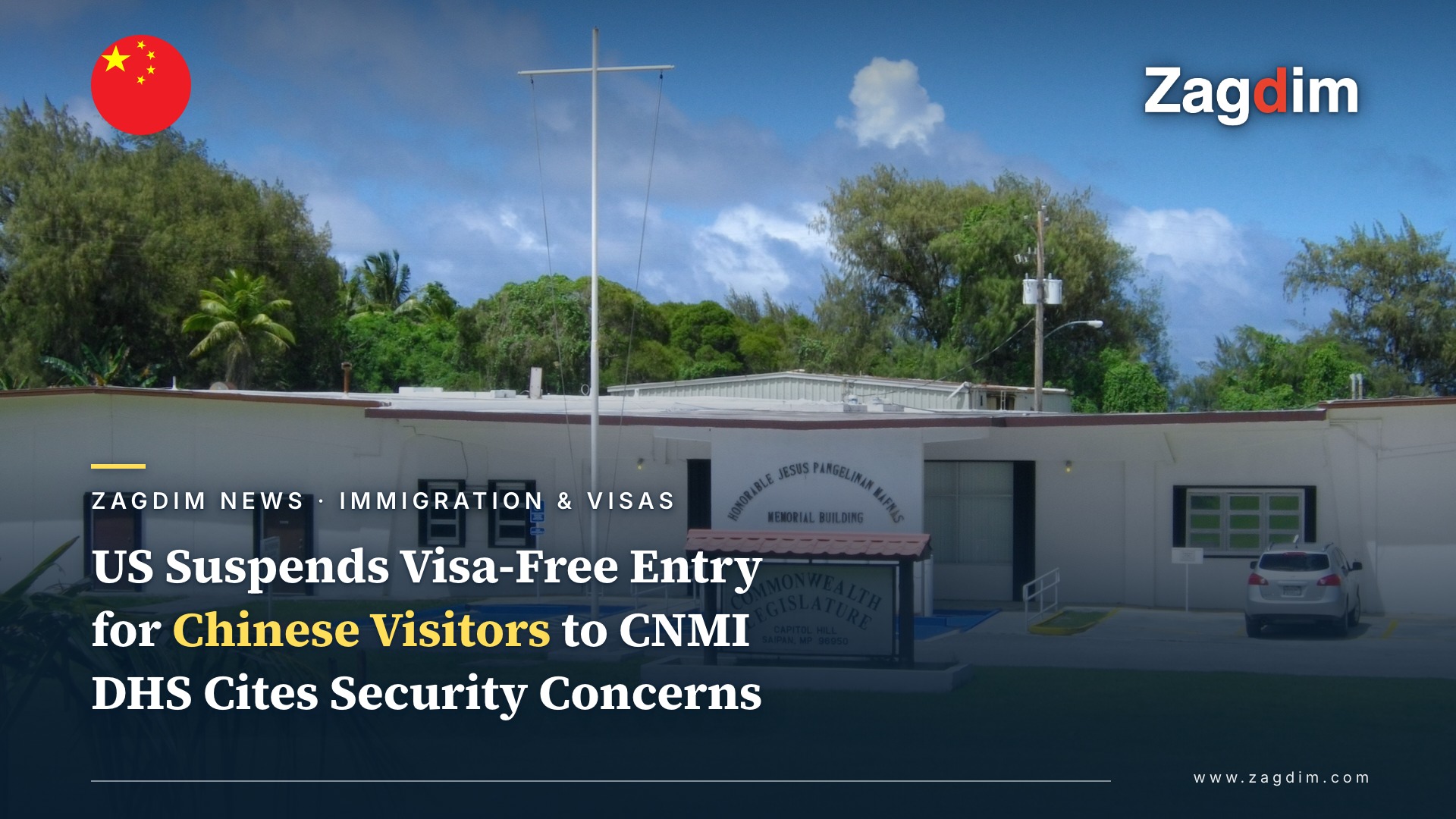
The US Department of Homeland Security (DHS) is suspending the Economic Vitality and Security Travel Authorization Program, which has let approved Chinese nationals visit the Northern Mariana Islands (CNMI) without a visa for stays of up to 14 days for business or pleasure. The suspension applies to both new applicants and travelers who already hold approval under the program.
DHS said the move is driven by security concerns — including fears that the program could be used as a route to illegally reach nearby Guam, which hosts major US military sites — along with concerns about birth tourism. The department cited a case in which a Chinese national was sentenced for helping smuggle seven other Chinese nationals from the CNMI to Guam, most of whom were later found in or near sensitive military locations.
According to the DHS notice, scheduled for publication in the Federal Register, the suspension takes effect at 2:00 p.m. ET three days after publication. Chinese nationals already lawfully in the CNMI under the program can complete their current, approved stay, but will need a standard visa for any future visit once the suspension begins; another legal exception could still apply in individual cases. The suspension does not restore the earlier, pre-2024 case-by-case entry policy — DHS says it will review the program jointly with the State and Interior departments while it remains paused, without giving an end date for that review.
More than 3,000 Chinese nationals used the program in fiscal year 2025, based on Customs and Border Protection records cited by DHS. Unlike a standard US visitor visa, entry under the program is screened by CBP officers at the border rather than vetted in advance by a State Department consular officer — a gap DHS argues no longer matches the current threat environment.
The action sits alongside a broader federal push against birth tourism: the State Department’s Birth Tourism Prevention Task Force, formed August 12, says nearly 900 visas were revoked in the first 10 days after the task force was created. DHS acknowledged the suspension could hurt Northern Mariana Islands businesses that depend on Chinese visitors, and cause financial losses for travelers with existing plans, but said the security considerations outweighed those costs. Affected travelers can still apply for a standard US visa through normal consular channels.
For Chinese nationals who had been relying on the program for short CNMI trips — including those connecting through the territory for broader Pacific travel — the practical takeaway is to apply for a standard visitor visa well ahead of any planned trip once the suspension takes effect, rather than assuming visa-free entry remains available.
References
NTD – DHS Suspends Visa-Free Travel Program for Chinese Visitors to Northern Mariana Islands