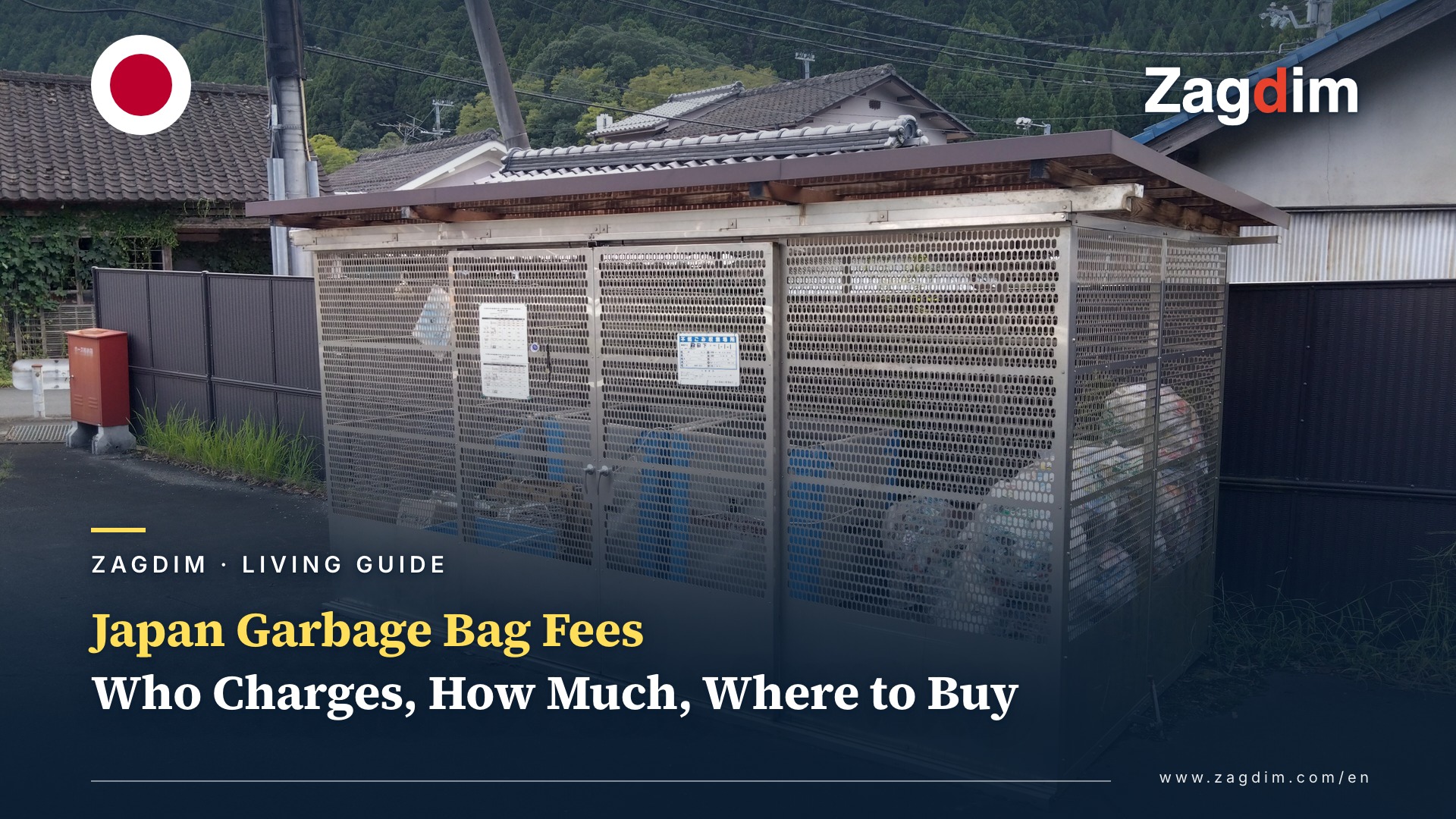
A Hokkaido Town May Raise Bag Prices 4.5 Times: Whether You Pay Depends on Your Municipality
Japan garbage bag fees are set by each municipality: according to the Ministry of the Environment survey for fiscal 2024, published in March 2026, 1,172 of Japan’s 1,741 cities, towns, villages and Tokyo wards (67.3%) charge for household garbage excluding bulky items, while most of the rest do not.
On 19 October 2026, NHK reported that Nanae, a town in southern Hokkaido, plans to raise the price of a 10-pack of its 45-litre designated garbage bags (shitei gomi bukuro, 指定ごみ袋) from ¥385 to ¥1,735, about 4.5 times. The Hokkaido Shimbun reported on 7 October that the town had told residents it was aiming for October 2027. The trigger was a fire on 29 April 2026 that shut down Clean Oshima (クリーンおしま), the incinerator in Hokuto that Nanae shares with neighbouring towns.
This guide uses Nanae as a starting point to explain how garbage charging works in Japan: who charges, what Japan garbage bag fees look like in practice, where to buy designated bags, and what happens if you do not follow the rules.
Key Points
- Who should pay attention: foreign residents living in or moving to Japan, people on longer stays, and overseas owners who rent out property in Japan and need to explain local rules to tenants.
- There is no national answer to whether garbage disposal costs money in Japan. In fiscal 2024, about 67.3% of municipalities charged for household garbage (excluding bulky items), usually by building the fee into the price of designated bags.
- A designated bag is not the same as a fee. Under the Ministry of the Environment definition, selling standard bags without a processing fee does not count as charging. Nanae is currently in that position; the debate is about whether to start charging.
- Garbage put out in the wrong bag or at the wrong time may be left uncollected, and dumping garbage in the street or on empty land can breach the Waste Management Act (廃棄物処理法).
Why Nanae Wants to Raise Its Bag Price: The Cost of a Burnt-Out Incinerator
According to NHK’s 19 October report, since Clean Oshima stopped operating, Nanae’s burnable garbage has been sent to 10 sites, including Sapporo and Tomakomai, for incineration. Sapporo is about 250 km away, a journey of about 5 hours by freight train. The extra transport and incineration bill is about ¥470 million for this fiscal year alone, and repairs to the facility are expected to cost about ¥2.1 billion over the next 10 years.
A notice on the Nanae Town website dated 1 October says the town is considering partly charging for garbage processing, in practice by raising the price of garbage bags, to cut waste, increase recycling and keep collection stable. Residents’ briefings were held at three venues from 7 to 9 October.
However, a town notice dated 9 October stresses that charging is still under consideration, and that whether it will happen, how much it will cost and when it would start have not been decided. It also says there is no need to rush out and stockpile designated bags. In other words, ¥1,735 is a proposal, not a price in force.
Based on the reported figures, the current ¥385 works out at about ¥38.5 per bag, while the proposed ¥1,735 would be about ¥173.5 per bag, or about ¥3.9 per litre (Zagdim’s calculation from the reported prices).
How Japan Garbage Bag Fees Work: Paying a Fee Is Different From Just Buying a Bag
The Ministry of the Environment’s guide to charging for municipal waste (一般廃棄物処理有料化の手引き, revised March 2022) defines charging as a municipality collecting a fee for processing garbage. It states that asking residents to use designated bags of a set standard, without adding a fee to the bag price, does not count as charging.
So when you see “designated bags” after moving within Japan, the following three cases, based on the ministry’s definition, are worth separating:
| Type | What you pay for | Examples (from official or ministry data) |
|---|---|---|
| Fee-charging designated bags | Bag price includes a processing fee | Sapporo, Kyoto, Fukuoka |
| Designated bags with no fee | Only the cost of the bag itself | Nanae (ministry data for fiscal 2024: designated bags in use, burnable garbage not charged) |
| No fee and no designated bag | Your own clear or semi-clear bag | Koto and Setagaya wards in Tokyo (burnable garbage not charged, no designated bags) |
The 23 wards of Tokyo are not all the same: in the same ministry data, Chiyoda and Shinjuku list burnable garbage as partly charged. Do not assume that garbage is free everywhere in Tokyo; check your own ward before you move.
Japan Garbage Bag Fees in Practice: Prices in Selected Cities
The prices below come from each city’s official website, checked on 20 October 2026; Nanae’s figures are the current and proposed prices reported by the media:
| Place | Size | Price |
|---|---|---|
| Nanae, Hokkaido (current) | 45 litres, pack of 10 | ¥385 |
| Nanae, Hokkaido (proposal, not final) | 45 litres, pack of 10 | ¥1,735 |
| Sapporo, Hokkaido | 40 litres, pack of 5 | ¥400 (¥80 per bag) |
| Kyoto (burnable garbage) | 45 litres, per bag | ¥45 (sold in packs of 10) |
| Fukuoka (burnable garbage) | 45 litres, per bag | ¥45 |
| Koto ward, Tokyo | No designated bag | Free |
For a national range, the ministry’s guide looks at 63 municipalities that introduced charging between 2010 and 2018. For large bags (30 to 50 litres), prices in the ¥30 to ¥59 range were the most common, with an average size of 46 litres, an average price of ¥48 per bag and about ¥1.11 per litre; some municipalities in Hokkaido and the Kanto region charged in the ¥80s per large bag. The average for new adopters in Hokkaido was ¥1.82 per litre. This is a sample from a specific period, not a picture of every municipality today.
Sapporo’s website also explains that the roughly ¥3.3 billion it collects through designated bags funds separate collection, recycling, improvements to collection points and the production of the bags themselves.
Where to Buy Designated Garbage Bags in Japan, and How to Check Your Local Rules
Where to buy: Sapporo says its designated bags are sold at supermarkets, convenience stores, drugstores and home centres in the city, with a sticker marking each stockist. Kyoto sells its bags through registered retailers (指定袋販売店). Designated bags are generally issued for use within one municipality, so bags from your old city usually cannot be used after you move. Sapporo also notes that bags cannot be refunded, so check the size and quantity before buying.
How to check: the most reliable source is your city, town or ward website. Search for “gomi no wakekata, dashikata” (ごみの分け方・出し方, how to sort and put out garbage) or “shitei gomi bukuro”. The website usually explains:
- which bag to use for burnable, non-burnable and recyclable garbage, with the bag colour and size
- collection days and times: in Nanae, garbage must be out by 8am on collection day, with up to 5 bags at a collection point at one time; in Koto ward, also by 8am, with up to three 45-litre bags at a time
- how to apply for bulky garbage (粗大ごみ) collection and pay the fee
- whether there is a foreign-language version: Nanae, for example, publishes an English sorting guide
Practical Tips for Moving, Short Stays and Rental Property
- The week you move: check the collection calendar for your new address before buying designated bags; leftover bags from your old city are usually no use in the new one.
- Apartments and shared buildings: some buildings have their own garbage storage and rules, so ask the management company or landlord where, when and how to put garbage out.
- Short stays and monthly rentals: even a short stay means following the local municipality’s rules. If in doubt, ask the landlord or management company, and never leave garbage anywhere other than the designated collection point.
- Landlords: giving tenants the local sorting guide, ideally in a language they read, helps avoid disputes at the collection point.
What Happens If You Do Not Follow the Rules: Uncollected Bags and Legal Penalties
The wrong bag may be left behind. Sapporo’s website states that burnable and non-burnable garbage put out in anything other than a designated bag will not be collected. Kyoto, Fukuoka and other fee-charging cities also require designated bags. Uncollected garbage remains your responsibility.
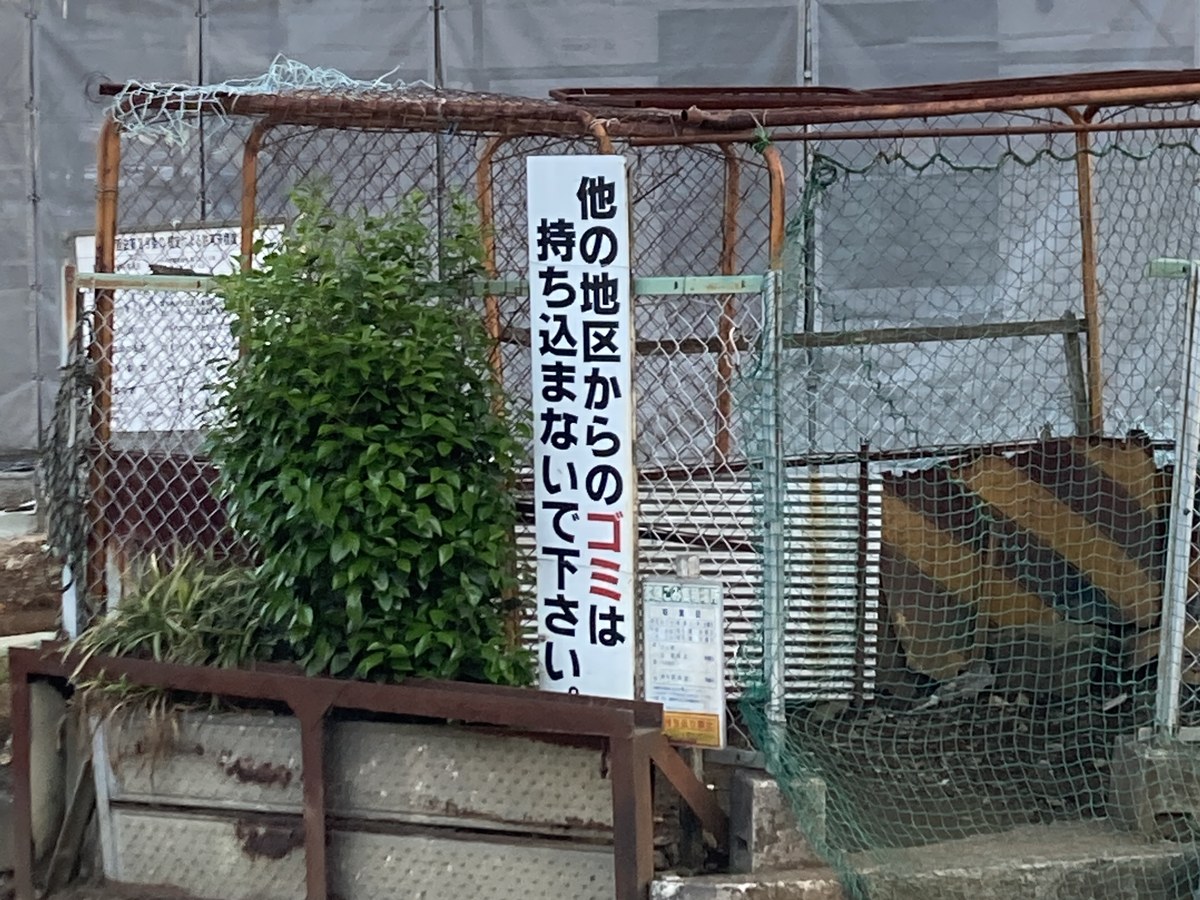
Another area’s collection point is off limits. Many collection points serve only local residents, and some carry signs asking people not to bring garbage from other areas.
Dumping is illegal. Article 16 of the Waste Management Act bans anyone from dumping waste without good reason. Under Article 25, breaking this rule can lead to imprisonment (拘禁刑) of up to 5 years, a fine of up to ¥10 million, or both, and companies can be fined up to ¥300 million. Nanae’s website also reminds residents that dropping plastic bottles, plastic bags or cigarette ends counts as illegal dumping.
The ministry’s guide also notes that setting fees without regard to what residents will accept can encourage illegal dumping or improper disposal, which is why municipalities usually consider residents’ views and neighbouring towns’ prices when setting a level.
Common Misconceptions About Japan Garbage Bag Fees
- Misconception: you must buy bags to throw away garbage anywhere in Japan. About 67.3% of municipalities charge for household garbage (excluding bulky items), but places such as Koto ward in Tokyo charge nothing and have no designated bag. Tip: go by your own municipality’s website.
- Misconception: a designated bag always means a fee. Under the ministry’s definition, standard bags sold without a fee do not count as charging; Nanae is currently in that position. Tip: look for the word “tesuryo” (fee) on the official page.
- Misconception: Nanae has confirmed a ¥1,735 price from October 2027. The town’s 9 October notice says whether, how much and when have not been decided. Tip: follow Nanae’s official announcements.
- Misconception: garbage is free in all 23 Tokyo wards. Ministry data list Koto and Setagaya as not charging for burnable garbage, but Chiyoda and Shinjuku as partly charging. Tip: check each ward separately.
- Misconception: one pack of bags works wherever you live. Designated bags are issued municipality by municipality, and Sapporo says they cannot be refunded. Tip: use up old bags before moving and do not stockpile.
Scenarios: What Three Kinds of Residents Need to Know
Scenario 1: a foreign office worker moving from Koto ward in Tokyo to Sapporo. In Koto, clear bags are fine. In Sapporo, burnable and non-burnable garbage must go in designated bags, at ¥400 for five 40-litre bags. Check Sapporo’s collection days and sorting rules in the first week, and buy the right size at a supermarket or convenience store.
Scenario 2: a longer-stay visitor renting a monthly apartment in Kyoto for three months. Kyoto’s burnable garbage goes in yellow semi-clear designated bags, ¥45 for a 45-litre bag, sold in packs of 10. A short stay still means following the rules; if unsure where to put garbage, ask the landlord or management company.
Scenario 3: an overseas owner renting out property in Hokkaido. If the property is in Nanae, current prices still apply, but the town has proposed an increase. Owners can tell tenants to watch the town’s notices and not to stockpile bags, then update their guidance if the change is formally adopted.
Japan Garbage Bag Fees: Frequently Asked Questions
Do Japan garbage bag fees apply everywhere, or is throwing away garbage free in some places?
It depends on where you live. According to the Ministry of the Environment survey for fiscal 2024, 1,172 of 1,741 municipalities (67.3%) charge for household garbage excluding bulky items, usually through the price of designated bags. Others, such as Koto ward in Tokyo, charge nothing and accept clear or semi-clear bags.
How much are Japan garbage bag fees in a typical city?
Prices vary widely. On official websites, Sapporo charges ¥400 for five 40-litre bags (¥80 each), while Kyoto and Fukuoka charge ¥45 for a 45-litre bag. The ministry’s guide, looking at 63 municipalities that introduced charging between 2010 and 2018, found large-bag prices most often in the ¥30 to ¥59 range, averaging ¥48 per bag.
Where can I buy designated garbage bags in Japan?
Usually at supermarkets, convenience stores, drugstores or home centres in the municipality that issues them. Sapporo says stockists display a sticker, and Kyoto sells its bags through registered retailers. Designated bags are generally for use within one municipality, so buy new ones after moving and check the size and quantity before buying.
What happens if I do not use a designated bag?
Where designated bags are required, garbage in other bags may not be collected; Sapporo’s website, for example, states that non-designated bags will not be collected. Leaving garbage by the roadside or on empty land counts as illegal dumping under the Waste Management Act, punishable by up to 5 years’ imprisonment or a fine of up to ¥10 million.
Will Nanae’s garbage bags really cost ¥1,735?
For now it is a proposal. NHK and the Hokkaido Shimbun reported that the town is aiming for October 2027 to raise a 10-pack of 45-litre bags from ¥385 to ¥1,735. But Nanae’s 9 October notice says charging is still under consideration, that whether, how much and when have not been decided, and that there is no need to stockpile bags.
How can foreign residents check garbage rules where they live?
Search your city, town or ward website for “gomi no wakekata, dashikata” or “shitei gomi bukuro” to find the bag types, collection days and times, and how to arrange bulky garbage collection. Many municipalities publish foreign-language guides; Nanae, for example, has one in English. Apartment residents can also ask the management company.
Moving to or Living in Japan? Ask Zagdim
If you have questions about local rules when moving, renting or owning property in Japan, tell us about your situation through Ask Zagdim.
Life abroad? Ask Zagdim.
Your first stop for international property and global living.
Research and insights. Know what’s changing. Understand what matters.
Newsletter for overseas updatesSubscribe →
Important Disclaimer
This article is general information and is not legal or other professional advice. It is based mainly on Ministry of the Environment publications, municipal websites and legislation from 2022 to 2026, and on media reports from October 2026. Municipal garbage rules and prices can change at any time, so always follow the latest announcements from your own municipality.
Garbage bag prices and rules in this article are current as of 20 October 2026; follow the latest announcements from the Ministry of the Environment and each municipality.
References
Ministry of the Environment – 一般廃棄物の排出及び処理状況等(令和6年度)について / Ministry of the Environment – 一般廃棄物処理有料化の手引き(令和4年3月改訂) / Ministry of the Environment – 一般廃棄物処理実態調査結果(令和6年度) / Nanae Town – 町指定ごみ袋の購入について(お願い) / Nanae Town – ごみ処理施設の現状等に係る町民説明会及び意見交換会を開催します / Nanae Town – クリーンおしま<焼却場> / Nanae Town – ごみを出す際の注意点 / Nanae Town – 不法投棄・ポイ捨ては犯罪です / Nanae Town – How to divide and put out garbage (English) / City of Sapporo – 指定ごみ袋について / City of Kyoto – 家庭ごみ有料指定袋制について / City of Fukuoka – 燃えるごみの出し方 / Koto City – よくあるご質問(ごみ・リサイクル) / e-Gov – 廃棄物の処理及び清掃に関する法律 / NHK – ごみ袋が大幅値上げ 4.5倍の1735円に いったいなぜ? / Hokkaido Shimbun – 七飯町がごみ処理手数料を有料化へ クリーンおしま火災で負担増