































Thailand Floods in 2026: ฿5,000–฿9,000 per Household in Government Aid and up to ฿100,000 from National Disaster Insurance
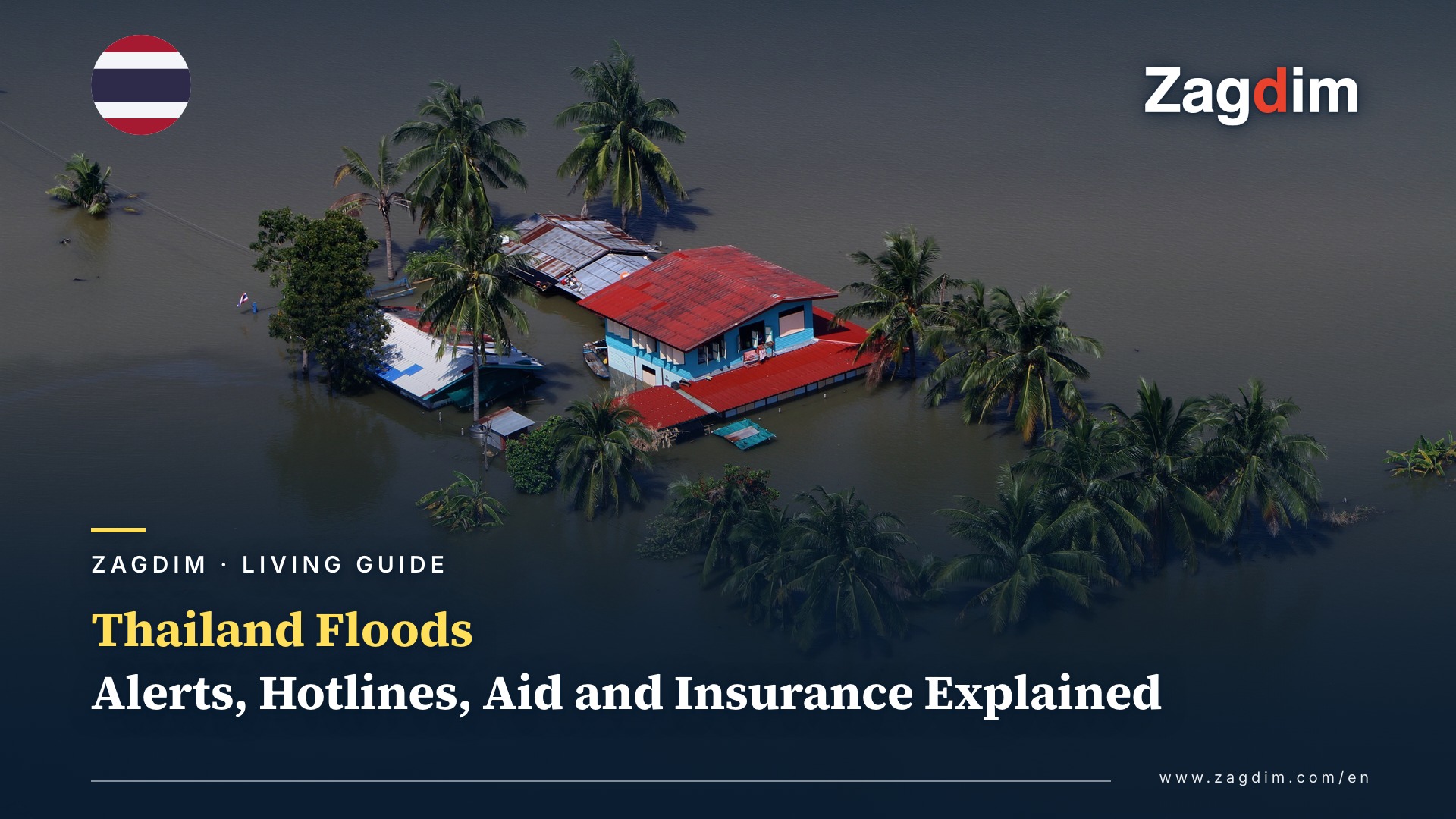
After Thailand floods, households in declared disaster zones that flooded between 15 May and 30 September 2026 can receive ฿5,000 or ฿9,000 in government aid, according to Thai media reports of the government criteria, and under the ThaiNatCat national disaster insurance scheme a flooded home receives a first payment of ฿10,000, up to ฿100,000 per household per event.
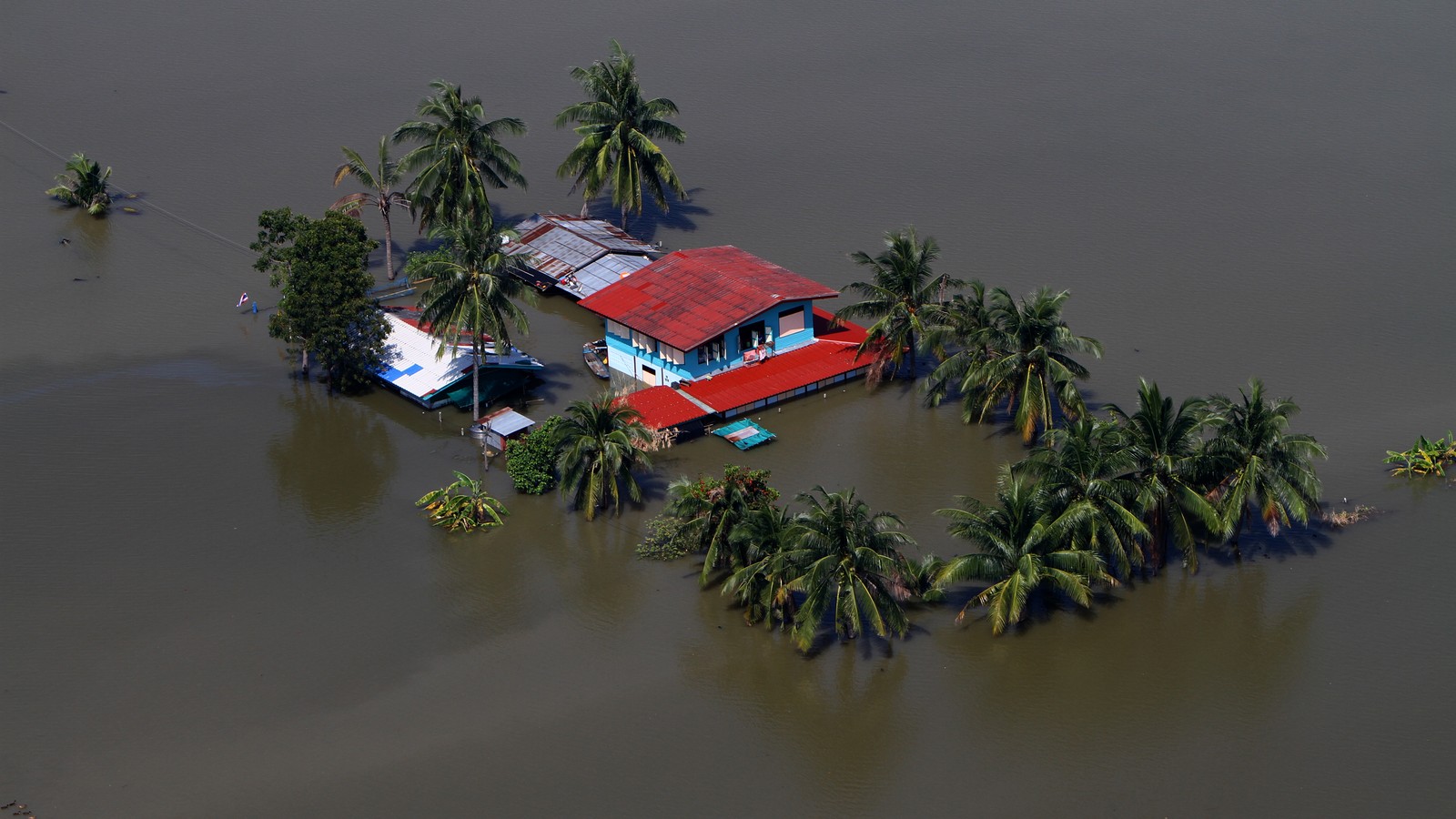
According to Thairath on 20 October 2026, Thailand’s Department of Disaster Prevention and Mitigation (DDPM) submitted a request on 19 October, for Cabinet consideration on 20 October, to use ฿10.5 billion from the central budget for further flood relief. The evening before, on 19 October, Thairath also reported that Tha Thung Na Dam in Kanchanaburi had increased its release, and that the DDPM, working with mobile operators AIS, True and NT, sent a Cell Broadcast alert straight to the phones of residents along the Khwae Yai river.
This guide does not cover the disaster itself. It uses these two reports as a starting point to explain what people living in Thailand can do before, during and after Thailand floods: how to receive official alerts, who to call, which aid and insurance you can claim, and how far each one applies to foreign residents.
Key Points
- Who should pay attention: foreign residents in Thailand, including retirees, DTV holders and people on work permits, anyone renting a home, and overseas owners of Thai condominiums.
- Before a flood: Cell Broadcast alerts need no app and no registration; any phone in the alert area receives them. For help, call the DDPM hotline 1784.
- After a flood there are two separate payments: government household aid (฿5,000 or ฿9,000, claimed through the Thang Rath app or a local government office) and ThaiNatCat national disaster insurance (฿10,000 first payment for flooding, up to ฿100,000, claimed by the owner). You can receive both.
- Foreigners: the household aid criteria do not say whether foreigners can apply. ThaiNatCat’s death benefit is for Thai nationals only; its housing claims are made by the property owner.
Before Thailand Floods: Set Up Alerts, Water-Level Sources and Insurance
Keep emergency alerts switched on
Thailand’s Cell Broadcast system pushes alerts from mobile base stations to every phone in the target area. According to a 2024 Thai government explainer, it needs no registration, covers all mobile operators, has five alert levels, and was planned to support Thai, English, Chinese, Japanese and Russian. The 19 October 2026 alert about the Kanchanaburi dam release was sent this way.
The one thing to do: check that emergency or government alerts are not turned off in your phone’s notification settings.
Check water levels on two official platforms
| What you want to know | Platform | Operator |
|---|---|---|
| River levels, reservoirs, rainfall | Thaiwater.net | National Hydroinformatics Data Center |
| Satellite-mapped flood extent | Disaster Platform | Geo-Informatics and Space Technology Development Agency (GISTDA) |
| Disaster alerts and rescue | DDPM website and hotline 1784 | Department of Disaster Prevention and Mitigation |
These are based on each agency’s official website. If you live near a river, in a low-lying area or downstream of a dam, bookmark both platforms for the rainy season.
Check elevation and insurance before you rent or buy
For Bangkok’s elevation, flood defences and official flood risk points by district, see Zagdim’s Bangkok Flood Map guide (linked in the references), which also lists questions to ask at viewings. On insurance, the standard Thai residential fire policy includes natural-disaster cover capped at ฿20,000 a year in total; higher cover needs an add-on.
During Thailand Floods: Hotlines and What to Do on the Spot
The numbers below are from the emergency contact list on the ThaiNatCat website; the Bangkok hotline is from Nation Thailand’s explainer:
| Situation | Number |
|---|---|
| Report a disaster or ask for help (DDPM, 24 hours) | 1784 |
| Injury or medical emergency | 1669 |
| Trapped and need evacuation, fire, electrical leak | 199 |
| Police emergency | 191 |
| Bangkok Metropolitan Administration services | 1555 |
What to do on the spot:
- Move vehicles, valuables and important documents (passport, lease, property papers) to higher ground. The DDPM advice reported by Thairath also warns about electric shock.
- Start taking photos while the water is still there: the outside of the building, the house number, damaged rooms and belongings, and water marks on the walls. You will need them for both aid and insurance claims.
- The ThaiNatCat website advises asking for help first and dealing with claims once you are safe.
After Thailand Floods: Government Aid and National Disaster Insurance
Government household aid: ฿5,000 or ฿9,000
The official notice itself could not be accessed directly, so the following is based on Thai PBS, Thairath and Nation Thailand reports of the government criteria (floods between 15 May and 30 September 2026, in declared disaster zones):
| Situation | Per household |
|---|---|
| Primary residence flooded for up to 7 days, with damaged belongings | ฿9,000 |
| Primary residence flooded continuously for more than 7 days | ฿9,000 |
| Home cut off by water for more than 7 days, preventing normal life | ฿5,000 |
| High-rise residents whose floor was not flooded but were affected for more than 7 days (reported by Thai PBS) | ฿5,000 |
How claims work:
- Channels: the Thang Rath (ทางรัฐ) app, open from 08:00 on 2 October 2026, or the local government office where the home is; in Bangkok, the district office.
- One payment per dwelling. According to Nation Thailand, the app checks applications against Thai civil registration records, and approved payments are made by the Government Savings Bank to a PromptPay account linked to a Thai national ID number.
- According to Thairath, for a rented home the tenant applies and receives the money; a home without a registered house number can also qualify if it is the occupant’s regular residence.
- Bangkok: according to Thairath on 19 October 2026, the city and the DDPM extended the deadline to 30 November 2026. Claims can also be filed at claim.bangkok.go.th or by email or LINE to the district office. Residents of government housing are not eligible.
Separately, local authorities pay emergency assistance under Ministry of Finance rules, such as home repairs up to ฿88,600 based on actual damage (reported by Thai PBS and Thairath), after an inspection by the local office or Bangkok district office.
ThaiNatCat national disaster insurance: owners do not need to buy it
ThaiNatCat is a government-funded scheme that insures around 30 million homes nationwide with non-life insurers, administered by the Thai General Insurance Association. Owners do not buy it or register in advance. Everything in this table is from the ThaiNatCat FAQ (accessed 20 October 2026):
| Item | Rule |
|---|---|
| Hazards covered | Floods (including storm-driven floods, flash floods and mudslides), windstorms (including lightning), earthquakes |
| Condition | An authority such as the provincial governor has declared a disaster zone, and the home inside it is damaged |
| Flooding | ฿10,000 first payment, then up to ฿90,000 more based on actual damage |
| Home surrounded by water for more than 7 days | ฿10,000 |
| Cap | ฿100,000 per household per event |
| Who can claim | The owner of the home, or someone with the owner’s consent; proof of ownership is required, such as the condominium title deed (Or.Chor.2) for a condo unit |
| Payment | First payment within 15 days of the insurer receiving complete documents, to PromptPay or a bank account |
| Not covered | Cars and property other than the home |
| Death | ฿2,000,000 to the heirs of a Thai national who dies in a covered disaster; Thai nationals only |
The ThaiNatCat FAQ also states that people who already have their own home insurance, or who have received government aid, can still claim. Claims go through thainatcat.org, the LINE account @thainatcat, the call centre on 0 2012 5555, or service points in affected areas. The scheme charges no fees and never asks for OTPs or passwords. According to Thai PBS, the cover runs from 1 October 2026 to 1 October 2027.
Thailand Floods and Foreign Residents: What Applies to You
Putting it together, this is how each item applies to foreign residents. Sources differ by row:
| Item | Position for foreigners | Source |
|---|---|---|
| Cell Broadcast alerts | Received by any phone in the area, regardless of nationality | Thai government explainer, 2024 |
| Hotlines 1784, 1669, 199, 191 | Anyone can call | ThaiNatCat website |
| Government household aid | Criteria do not say whether foreigners can apply; online claims are checked against Thai civil records and paid to PromptPay linked to a Thai ID number | Thai PBS, Thairath, Nation Thailand reports |
| ThaiNatCat housing claim | Made by the owner or someone with consent; the listed documents are a Thai ID card, so foreign owners should ask 0 2012 5555 directly | ThaiNatCat website |
| ThaiNatCat death benefit | Thai nationals only | ThaiNatCat website |
Because the household aid criteria are silent on foreigners, this guide does not say either “yes” or “no”. The practical step is to take your passport and lease or title deed to the local government office or Bangkok district office for the property and ask. If you are employed in Thailand and insured under the Social Security Office’s Section 33, check with the office about unemployment benefit if a flood stops you working without pay.
Common Misconceptions About Thailand Floods and Aid
Misconception 1: “You need an app to get flood alerts”
Why it is incomplete: Cell Broadcast is pushed from base stations and needs no app or registration.
Practical tip: what matters is that emergency alerts are not switched off on your phone.
Misconception 2: “If you receive government aid, you cannot claim disaster insurance”
Why it is incomplete: the ThaiNatCat FAQ says people who have received government aid or have their own insurance can still claim.
Practical tip: the two are separate claims with separate documents.
Misconception 3: “Renters get nothing”
Why it is incomplete: according to Thairath, government household aid for a rented home is claimed by the tenant; ThaiNatCat is claimed by the owner or someone with the owner’s consent.
Practical tip: agree with your landlord who claims what, so nothing is missed or duplicated.
Misconception 4: “ThaiNatCat covers everything”
Why it is incomplete: it covers the home only, not cars or other belongings, and the home must be in a declared disaster zone.
Practical tip: for your car and contents, check your own motor and home policies.
Scenarios: Thailand Floods for Three Kinds of Foreign Residents
Scenario 1: A retiree renting a house in Chiang Mai
Background: on a retirement visa, renting a detached house; the ground floor flooded for two days and furniture was damaged.
What to do: photograph everything and agree with the landlord who applies for the household aid. Since the rules are silent on foreigners, take your passport and lease to the local government office and ask. Repairs depend on the lease and discussion with the landlord.
Watch out: without your own contents insurance, neither government aid nor ThaiNatCat pays for furniture at its value.
Scenario 2: An overseas owner of a Bangkok condominium
Background: living abroad; the building’s area flooded and lower floors were affected for more than 7 days.
What to do: ThaiNatCat housing claims are made by the owner with the title deed; ask 0 2012 5555 how foreign owners verify their identity. Damage to common areas is usually handled by the juristic person’s policy.
Watch out: if the unit is let, the tenant living there may be the one who claims the household aid.
Scenario 3: A foreign employee working by the river in Kanchanaburi
Background: employed by a Thai company and insured under social security; the company closes while the dam releases water.
What to do: keep emergency alerts on and move the car and documents to higher ground when an alert comes. If you receive no wages during the closure, ask the Social Security Office about unemployment benefit for force majeure.
Watch out: if the company keeps paying wages, that benefit does not apply.
Thailand Floods: Frequently Asked Questions
Can foreigners receive Cell Broadcast alerts during Thailand floods?
Yes. Cell Broadcast is pushed from base stations to every phone in the area. According to a 2024 Thai government explainer, it needs no registration, covers all operators, and was planned to support Thai, English, Chinese, Japanese and Russian. Just check that emergency alerts are not turned off in your phone settings.
Who do I call for help during Thailand floods?
Call the DDPM disaster hotline 1784, staffed 24 hours. For injuries or medical emergencies call 1669; if you are trapped and need evacuation, or there is a fire or electrical leak, call 199; for police emergencies call 191. In Bangkok you can also call the city hotline 1555.
Can foreigners claim Thailand flood aid?
The official criteria do not say. According to Thai media, online claims are checked against Thai civil records and paid to PromptPay linked to a Thai ID number, so people without a Thai ID number may not be able to use the online route. Take your passport and lease or title deed to the local government office or Bangkok district office and ask.
Can I receive both Thailand flood aid and national disaster insurance?
Yes. The ThaiNatCat FAQ says people who have received government aid, or who have their own home insurance, can still claim. They are separate systems with separate claims: household aid through the Thang Rath app or the local office, and disaster insurance through thainatcat.org, LINE @thainatcat or 0 2012 5555.
Who claims Thailand flood aid for a rented home?
According to Thairath, government household aid for a rented home is claimed and received by the tenant, while ThaiNatCat housing claims are made by the owner or someone with the owner’s consent. Agree the split with your landlord after a flood; repair responsibility follows the lease.
What is the deadline for Bangkok flood aid claims?
According to Thairath on 19 October 2026, the Bangkok Metropolitan Administration and the DDPM extended the deadline to 30 November 2026. You can apply at a district office, through the government app, at claim.bangkok.go.th, or by email or LINE to the district office. Other provinces follow their own local announcements.
Living in Thailand and Worried About Floods? Ask Zagdim
If you want to know how to read flood data for an area, or what to check when renting or buying in Thailand, Ask Zagdim.
Life abroad? Ask Zagdim.
Your first stop for international property and global living.
Research and insights. Know what’s changing. Understand what matters.
Newsletter for overseas updatesSubscribe →
Important Disclaimer
This article is general information only and is not legal, insurance or financial advice. It is based on material from Thai government agencies, the ThaiNatCat website and Thai media reports published between 2024 and 2026. The household aid criteria are mainly as reported by the media; eligibility, documents and deadlines may change, so check the latest notices from the DDPM, your local government office, the Bangkok Metropolitan Administration and ThaiNatCat before applying, and consult a qualified professional in Thailand where needed.
Information is current as of 20 October 2026; please check the latest official notices from the DDPM and ThaiNatCat.
References
ThaiNatCat – National Disaster Insurance Claims Centre / ThaiNatCat – Frequently Asked Questions / Department of Disaster Prevention and Mitigation – Official website / Government Public Relations Department – Stay Alert, Stay Safe! Cell Broadcast Service (8 August 2024) / National Hydroinformatics Data Center – Thaiwater.net / GISTDA – Disaster Platform / Bangkok Metropolitan Administration – Claim Bangkok / Thairath – DDPM requests ฿10.5 billion central budget for further flood relief (20 October 2026) / Thairath – DDPM sends Cell Broadcast alert as Tha Thung Na Dam increases release (19 October 2026) / Thairath – Flood relief claims extended to 30 November 2026 (19 October 2026) / Thairath – How to claim 2026 flood relief / Thai PBS – Three types of 2026 flood relief / Nation Thailand – DDPM’s 9,000-baht flood aid and separate BMA assistance for Bangkok explained / Zagdim – Bangkok Flood Map 2026: 12 Expat Areas Rated by Flood Risk