






























Dubai Shared Housing Is Legal Only in Approved Areas and Permitted Buildings: 44 Areas Named, and Tenants Cannot Sublet
Dubai shared housing is lawful under Law No. (4) of 2026 only when the building or villa stands in one of the more than 44 areas approved by Dubai Municipality and holds a shared housing permit; the same law allows only the owner or a licensed establishment to let a shared unit, and bars tenants from subletting any part of it, including a room or a bed space.
On 7 October 2026, Dubai Municipality issued the Planning and Building Requirements Guide for Shared Housing and Permitted Areas. The Government of Dubai Media Office published the announcement the same day, and Khaleej Times and Gulf News reported on it across 7 and 8 October. The Guide is the implementing document for Law No. (4) of 2026, announced on 11 March 2026, and it is the first text to set out in writing which areas may host shared housing, how many square metres each occupant must have, how many people may share a bathroom and how a permit is applied for.
Shared housing is the most common way expatriate workers live in Dubai, and it has also been the source of the illegal partitions and overcrowding that authorities have pursued in recent years. This guide turns the law and the Guide into a practical reference: first what counts as shared housing and who regulates it, then the approved areas, space standards, permits and contract registration, the compliance deadline and the penalties, and finally what each of three kinds of reader should do.
Key Points
- Who needs to take note: expatriate workers in Dubai who are looking for, or already living in, a shared room or bed space; foreign owners and investors who hold a Dubai apartment or villa and want to let it to several tenants; and tenants who currently rent a whole unit and sublet it to others.
- Dubai shared housing now has three gates: the building must be in a Municipality-approved area, the whole building must be designated as either individual or family accommodation, and a shared housing permit must be obtained before tenancy contracts are registered electronically with the Dubai Land Department.
- Existing shared housing buildings have one year to regularise, counted from 8 September 2026, so until 8 September 2027; building violations, unauthorised changes of use and conditions that endanger public safety are not covered by that grace period.
- Fines run from Dh500 to Dh500,000 (Dh = UAE dirham), doubled for a repeat violation within a year up to Dh1,000,000, and the Land Department may also suspend the activity for up to six months, cancel the permit or order an eviction.
What the Dubai Shared Housing Law Is: Law No. (4) of 2026 and the Municipality Guide
The full title of Law No. (4) of 2026 is the Law Regulating the Occupancy and Management of Shared Housing in the Emirate of Dubai. It was issued by Sheikh Mohammed bin Rashid Al Maktoum in his capacity as Ruler of Dubai, and the Government of Dubai Media Office announced it on 11 March 2026. The law states that it takes effect 180 days after publication in the Official Gazette; Dubai Municipality’s press release of 7 October 2026 gives the law’s effective date as 8 September 2026.
The law itself sets the framework: who needs a permit, who may let, and how violations are punished. The detail is delegated to Dubai Municipality, and the Guide of 7 October supplies it: approved areas, the two categories, space per person, bathroom ratios and the application platform.
What Counts as Shared Housing: Individual and Family Accommodation
According to the Municipality’s circular, as reported by Khaleej Times on 7 October 2026, Dubai shared housing falls into two categories:
| Category | Definition | What is shared |
|---|---|---|
| Individual accommodation | Several individuals living together in one unit, or in one room | Kitchen, dining room, bathrooms and external spaces |
| Family accommodation | More than one family living in one unit, each family with its own bedroom | Kitchen, dining room and external spaces; each family’s bedroom has its own bathroom |
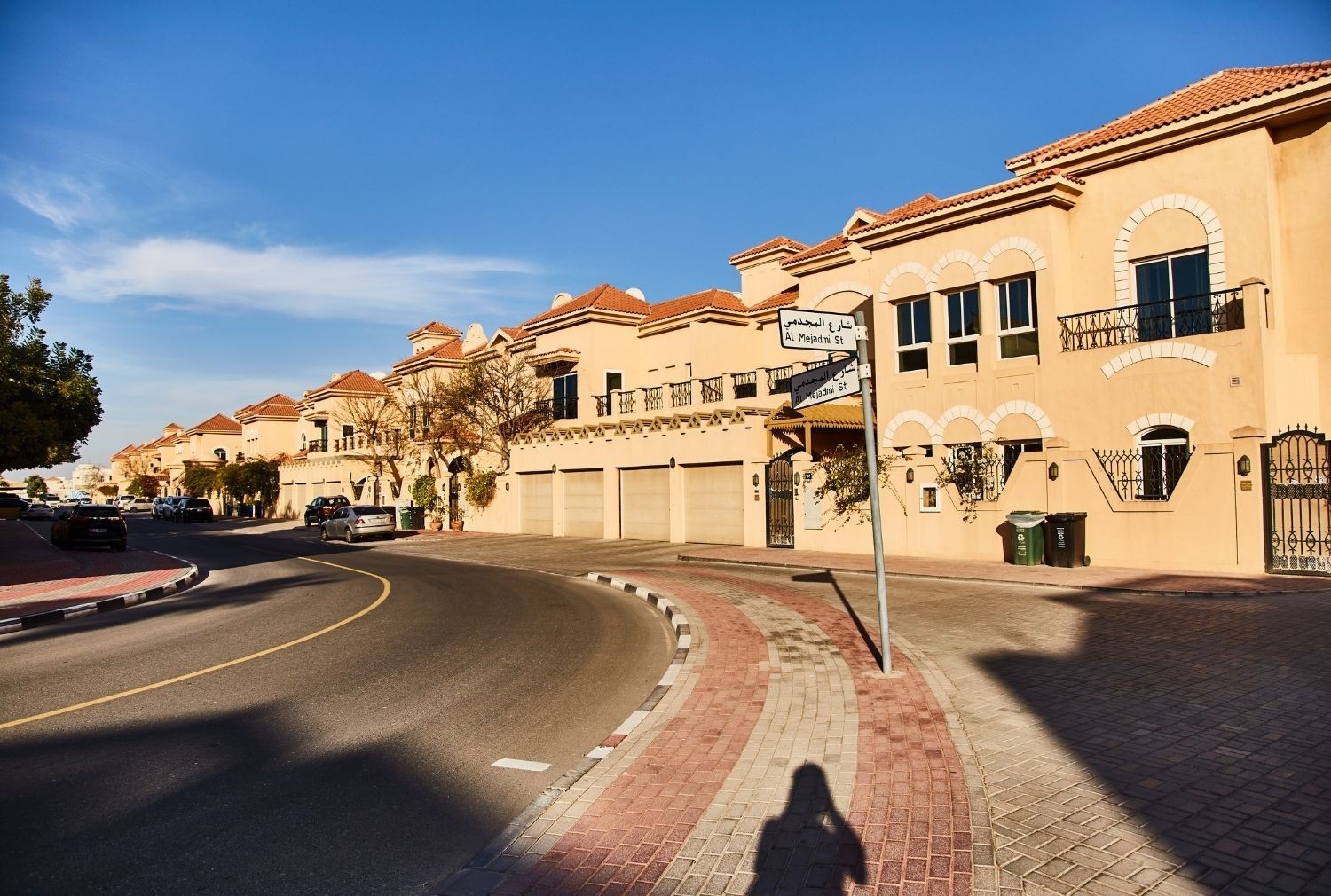
Shared housing may be provided in buildings containing residential apartments and in detached or attached villas. The law applies across Dubai, including private development zones and free zones; units designated for collective labour accommodation are excluded and governed by separate legislation.
Who Regulates What: the Municipality, the Land Department, Civil Defence and SIRA
The division of responsibilities below is taken from the Government of Dubai Media Office announcements of 11 March and 7 October 2026:
| Authority | Responsibility |
|---|---|
| Dubai Municipality | Sets policy, maximum occupancy and space per resident, shared-facility requirements and the approved areas; issues and renews shared housing permits; runs the unified digital platform |
| Dubai Land Department (DLD) | Manages the electronic shared housing registry, sets what tenancy and management contracts must contain, provides standard contract templates, builds a rent index for shared housing and imposes additional measures on violators |
| Dubai Civil Defence | Checks fire alarm and firefighting systems before a permit is issued |
| Security Industry Regulatory Agency (SIRA) | Checks CCTV systems before a permit is issued |
| Rental Disputes Center | Has exclusive jurisdiction over all disputes under the law |
Dubai Shared Housing Approved Areas: 44 Named So Far, Four Main Roads Family-Only
Dubai Municipality said on 7 October that it had so far identified more than 44 areas where buildings and villas may be allocated for shared housing, naming Al Souq Al Kabeer, Al Ras, Al Warqa 1, Al Barsha 1, Al Muraqqabat and Al Rigga among them; further areas will be announced once approved. Areas are chosen on the basis of planning studies and urban analysis, and the law lists the considerations as urban planning, population density, infrastructure and the social character of neighbourhoods.
There is one further restriction. Properties on major tourist and commercial streets may be used only for family accommodation, not individual accommodation. According to the Municipality’s circular as reported by Khaleej Times, those streets include Baniyas Road, Sheikh Zayed Road, Jumeirah Road and Al Wasl Road. In practice, a building on one of those four roads will not be approved for single workers sharing rooms.
The full list of approved areas is as published by Dubai Municipality; this article lists only the areas the Municipality has named. A building outside an approved area cannot be registered for shared housing.
Dubai Shared Housing Space Standards: 5 Square Metres per Person, One Bathroom per Four Occupants
The Guide of 7 October sets the space and facility requirements for shared housing buildings. Each existing building must be allocated to one category, individual or family, and the two cannot be mixed. The standards are listed below; the sources differ line by line, so each is shown:
| Item | Standard | Applies to | Data basis |
|---|---|---|---|
| Bedroom area | At least 5 square metres per person | Both categories | Media Office, 7 Oct 2026 |
| Family bedroom | A separate bedroom for each family, with an en-suite bathroom | Family | Media Office, 7 Oct 2026 |
| Occupants per room | More than one person may share a bedroom, subject to the approved maximum occupancy and health and technical requirements; a living room may be repurposed for residential use | Individual | Khaleej Times, 7 Oct 2026, citing Municipality requirements |
| Kitchen area | At least 1 square metre per occupant; new individual-accommodation buildings may have a communal kitchen on each floor, and apartments may have the kitchen inside the unit | Both | Khaleej Times, 7 and 8 Oct 2026 |
| Bathroom (combined) | Where washbasin, toilet and shower are in one room, at least one bathroom for every four occupants | Both | Khaleej Times, 7 Oct 2026 |
| Bathroom (separate) | One toilet for every four occupants and one shower for every six | Individual only | Khaleej Times, 7 Oct 2026 |
| Dining, recreation, laundry | Designated areas required; individual-accommodation buildings must have multipurpose halls sized for the occupants and facilities for washing and drying clothes | Both (halls for individual) | Media Office, 7 Oct 2026; Khaleej Times, 7 Oct 2026 |
| Car parking | Exempt from the minimum car parking requirement; use of adjacent areas and parking in the road reserve needs RTA approval | Both | Khaleej Times, 7 Oct 2026 |
| Bicycle parking | At least 10 per cent of the building’s total occupants; may be provided in the road reserve with RTA and other approvals | Both | Khaleej Times, 7 and 8 Oct 2026 |
The requirements apply to new buildings and to existing buildings modified for shared housing within approved areas, and they sit alongside the Dubai Building Code and public health and safety rules. Five square metres is roughly enough for a single bed and a small desk with little room to move; it is the legal floor, not a comfort standard.
How to Get a Dubai Shared Housing Permit: Platform, Pre-Checks and Contract Registration
The law prohibits any person or entity from allocating a unit for shared housing without a permit. Permits are issued by Dubai Municipality under rules set by its Director General, in coordination with the Land Department and other authorities. Everything in the table below comes from the Government of Dubai Media Office announcements of 11 March and 7 October 2026:
| Item | Rule |
|---|---|
| Permit validity | One year, renewable; the owner may request a two-year permit |
| Renewal | Application at least 30 days before expiry |
| Platform | The Build in Dubai platform (Khaleej Times refers to it as the Dubai Building Platform) |
| Pre-checks | Dubai Civil Defence requirements for fire alarm and firefighting systems, and SIRA requirements for CCTV, must be met first |
| Tenancy contracts | Registered through electronic integration with the Land Department, based on the Municipality’s permit data |
| Grace period for existing buildings | One year from the law’s effective date of 8 September 2026; the Director General of Dubai Municipality may grant a one-time extension |
The Owner’s Application Steps
Khaleej Times set out the application process on 8 October 2026, based on the Municipality’s circular. The main steps are:
- Confirm the building or villa is in an approved area; if it is not, it cannot be registered.
- Choose one category for the whole building or villa, individual or family; the two cannot be mixed.
- Check bedroom area, kitchen, bathroom ratios and bicycle parking against the table above.
- Apply for a shared housing building permit through the platform, for new buildings and for existing buildings to be modified; the application must be submitted by an appointed engineering consultancy, which files the plans, building, apartment and room numbers, areas, occupant category and occupancy, and confirms fire safety, sanitary, environmental and security requirements.
- Once the completion certificate is issued, the shared housing permit is granted; its data allows the Land Department to issue tenancy contracts.
- Renew annually, or apply for a two-year permit.
Who May Let: the Owner or a Licensed Establishment, Never a Tenant
The law allows leasing in three ways only: the owner lets directly to occupants; a licensed establishment manages and lets on the owner’s behalf; or an establishment leases the unit from the owner and sublets it to occupants. Tenants and any other party may not sublet any part of the unit. Tenancy and management contracts must record the landlord’s details, the number of occupants, the unit information and the space allocated to each occupant; the Land Department provides standard templates on its website and will establish a rent index specific to shared housing units (its launch date and method have not been published).
Dubai Shared Housing Penalties: From Dh500 to Dh1,000,000 for Repeat Violations
The penalties below are taken from the Government of Dubai Media Office announcement of the law on 11 March 2026:
| Measure | Detail |
|---|---|
| Fine | Dh500 to Dh500,000 |
| Repeat violation within one year | Fine doubled, up to Dh1,000,000 |
| Additional measures by the Land Department | Suspension of the activity for up to six months, cancellation of the permit, revocation of the commercial licence, disconnection of public services until the violation is rectified, or eviction from units that fail to meet permit requirements |
The fine for each type of violation will be set in executive regulations. Dubai Municipality told Gulf News that enforcement specific to this law will begin in line with the official timeline once the relevant procedures are finalised, while routine inspections for overcrowding and illegal partitions have never stopped. The background, as The National reported, is the June 2025 fire in a Dubai Marina block housing more than 3,800 people, which exposed the risks of illegal partitions.
What Each Reader Should Do Under the Dubai Shared Housing Law
Expatriate workers looking for a shared room in Dubai
- Before viewing, ask three things: is the building in a Municipality-approved area, is it designated individual or family accommodation, and does it hold a shared housing permit (or have a plan to regularise before 8 September 2027)?
- Confirm who is letting. Only the owner, a licensed management company or a licensed establishment that has leased the whole unit from the owner may do so; renting a room or bed space from another tenant is the subletting the law prohibits.
- Your contract should be registrable with the Land Department and state the number of occupants and the space allocated to you; a messaging-app exchange giving a price and a move-in date is not a lawful arrangement on its own.
- Single workers should note that properties on Baniyas Road, Sheikh Zayed Road, Jumeirah Road and Al Wasl Road are family-only.
- For the notice periods and tenant rights that apply to ordinary leases, see Zagdim’s guide to a Dubai landlord selling and the 12-month notice.
Foreign owners and investors holding Dubai property
- Check the approved areas first: a property outside the list cannot be registered for shared housing, and one on the four main roads can only be family accommodation.
- Pick one category for the whole building or villa.
- Do the arithmetic: 5 square metres of bedroom per person, 1 square metre of kitchen per person, one combined bathroom per four occupants, bicycle parking for 10 per cent of occupants.
- Appoint an engineering consultancy to apply through the platform, clear the Civil Defence and SIRA checks, and collect the permit after the completion certificate; renew annually or take a two-year permit, applying at least 30 days before expiry.
- If the building is already let as shared housing, the grace period runs to 8 September 2027, but partitions, unauthorised changes of use and other building violations are outside it and must be corrected first.
- If you hand the letting to a management company, it must be a licensed establishment, and the contracts should follow the Land Department templates.
Sub-letters: tenants who rent a whole unit and let rooms to others
- The law expressly prohibits tenants from subletting any part of a unit. Renting a whole flat as a tenant and letting bed spaces or rooms to others has no lawful form under the new rules.
- There are two routes to continue: the owner lets to each occupant directly, or you set up a licensed establishment that leases from the owner and sublets as an establishment. Both require a shared housing permit first.
- The grace period runs to 8 September 2027, and the Municipality has described it to Gulf News as a warning period before penalties apply; it does not make subletting lawful in the meantime, only delays enforcement.
Common Misunderstandings About Dubai Shared Housing: Five Things People Get Wrong
One: “The law took effect on 26 August”
In August 2026, Gulf News quoted Dubai Municipality as saying the law was published in the Official Gazette on 27 February and took effect on 26 August. The Municipality’s press release of 7 October states the law’s effective date as 8 September, with the one-year grace period counted from that day. This article follows the 7 October official release, and Khaleej Times likewise gives 8 September 2027 as the deadline.
Two: “Nothing has to change during the grace period”
The grace period gives existing shared housing buildings one year to obtain a permit and meet the standards. Building violations, unauthorised changes of use and conditions that endanger public safety are not covered and must be corrected under existing rules. Routine inspections for overcrowding and illegal partitions have never paused.
Three: “I rented the whole flat, so letting rooms is my business”
The law allows only the owner or a licensed establishment to let a shared unit; tenants may not sublet any part of it. Renting a whole unit and then letting rooms is precisely what the new law prohibits.
Four: “If the rent is low and the room is big enough, there’s no problem”
Whether shared housing is lawful depends on the permit, not on the rent or the size of the room. A building without a permit is not lawful shared housing even if every occupant has more than 5 square metres, and the contract cannot be registered against permit data.
Five: “These rules apply across the UAE”
Law No. (4) of 2026 is a Dubai law. It applies across the Emirate of Dubai, including private development zones and free zones. Abu Dhabi, Sharjah and the other emirates have their own rules, which this article does not cover.
Worked Examples: Three Everyday Dubai Shared Housing Situations
One: New to Dubai, a bed space in Al Rigga
- Background: single, on a modest salary, looking at a bed space in Al Rigga offered by another tenant who lives in the flat.
- How to read it: Al Rigga is among the areas the Municipality has named, so the location is fine; but the person letting is a tenant, not the owner or a licensed establishment, which is the subletting the law prohibits. Ask who the owner or management company is, whether the building has a permit and whether the contract can be registered.
- Risk not to ignore: enforcement is not yet in full force during the grace period, but if the building is inspected or the head lease ends, rent paid to a middleman carries no registered contract behind it.
Two: A foreign owner of a villa on Jumeirah Road
- Background: wants to divide the villa into rooms and let them to single workers.
- How to read it: Jumeirah Road is one of the four roads the Guide names as family-only, so individual accommodation will not be approved. Family accommodation would require a separate bedroom with en-suite bathroom for each family and at least 1 square metre of kitchen per person.
- Risk not to ignore: unauthorised partitions are a building violation outside the grace period; have an engineering consultancy assess the villa before applying.
Three: A tenant in Al Barsha 1 who sublets to four colleagues
- Background: has leased a three-bedroom flat in his own name and collects rent from four colleagues.
- How to read it: Al Barsha 1 is an approved area, but subletting as a tenant is not lawful under the new law. The workable options are for the owner to let to each occupant directly, or for a licensed management establishment to take over, with the whole building designated as individual accommodation and permitted.
- Risk not to ignore: one combined bathroom is required for every four occupants, so five people need at least two; exceeding the approved occupancy is itself a violation.
Dubai Shared Housing Law: Frequently Asked Questions
Is shared housing legal in Dubai?
Yes, with conditions. Under Law No. (4) of 2026 the building or villa must be in a Municipality-approved area (more than 44 so far), hold a shared housing permit and be let by the owner or a licensed establishment, with the tenancy contract registered electronically with the Dubai Land Department. Shared housing without a permit, or sublet by a tenant, does not comply with the law.
How do I apply for a Dubai shared housing permit, and how long does it last?
Through Dubai Municipality’s Build in Dubai platform. An appointed engineering consultancy submits the plans, room numbers, areas and occupancy, the building passes Civil Defence fire checks and SIRA CCTV checks, and the permit is issued after the completion certificate. The permit is valid for one year, a two-year permit may be requested, and renewal must be applied for at least 30 days before expiry.
How much space must each person have in Dubai shared housing?
At least 5 square metres of bedroom area per person and at least 1 square metre of kitchen per occupant. Where the bathroom is combined, one is required for every four occupants; where toilet and shower are separate, one toilet per four and one shower per six, and the separate arrangement is allowed only in individual accommodation. In family accommodation each family must have its own bedroom with an en-suite bathroom.
I rent a whole flat in Dubai. Can I sublet rooms to other people?
No. The law allows only the owner or a licensed establishment to let a shared unit; tenants and other parties may not sublet any part of it. Shared housing may be let only by the owner directly, by a licensed establishment managing it on the owner’s behalf, or by an establishment that leases the unit from the owner and sublets it.
By when must existing shared housing comply?
Owners and property management and leasing companies have one year from the law’s effective date of 8 September 2026, so until 8 September 2027; the Director General of Dubai Municipality may grant a one-time extension. The grace period does not cover building violations, unauthorised changes of use or conditions that endanger public safety.
What are the fines for breaking the Dubai shared housing law?
Fines range from Dh500 to Dh500,000, doubled for a repeat violation within one year up to Dh1,000,000. The Land Department may also suspend the activity for up to six months, cancel the permit, revoke the commercial licence, disconnect public services until the violation is rectified, or order eviction from units that do not meet permit requirements. The amount for each violation will be set in executive regulations.
Which areas allow shared housing? What about a building on Sheikh Zayed Road?
Dubai Municipality has approved more than 44 areas, naming Al Souq Al Kabeer, Al Ras, Al Warqa 1, Al Barsha 1, Al Muraqqabat and Al Rigga, with more to be announced once approved. Properties on Baniyas Road, Sheikh Zayed Road, Jumeirah Road and Al Wasl Road may be used only for family accommodation, not individual accommodation. The full list is as published by the Municipality.
Planning to Share a Flat in Dubai, or to Let Out Your Dubai Property? Ask Zagdim
If you are unsure whether a building is in an approved area, whether your arrangement counts as subletting, or how to let a Dubai apartment lawfully to several tenants, Ask Zagdim with the details of your situation and we will help you work out how the new rules apply.
Life abroad? Ask Zagdim.
Your first stop for international property and global living.
Research and insights. Know what’s changing. Understand what matters.
Newsletter for overseas updatesSubscribe →
Important Disclaimer
This article is a general information guide and does not constitute legal, tax or property investment advice. It is based on the Government of Dubai Media Office announcement of Law No. (4) of 2026 on 11 March 2026, its announcement of the Dubai Municipality Guide on 7 October 2026, and reports by Khaleej Times, Gulf News and The National between March and October 2026. The list of approved areas, the executive regulations and the schedule of fines may be updated; for any individual situation, rely on the latest announcements from Dubai Municipality and the Dubai Land Department and seek qualified professional advice where needed.
The rules described are current as of 8 October 2026, subject to the latest official announcements from Dubai Municipality and the Dubai Land Department (DLD).
References
Government of Dubai Media Office – Dubai Municipality Issues Planning and Building Requirements Guide for the Regulation, Occupancy and Management of Shared Housing / Government of Dubai Media Office – Mohammed bin Rashid issues Law regulating the management and occupancy of shared housing in Dubai / Dubai Municipality (via Zawya) – Dubai Municipality issues Planning and Building Requirements Guide for the regulation, occupancy and management of shared housing / Khaleej Times – Dubai shared housing: Step-by-step guide to registering a property / Khaleej Times – Dubai shared housing: Bachelor accommodation not allowed in tourist, commercial areas / Khaleej Times – Dubai shared accommodation: Minimum room space per person, bathroom, kitchen rules / Khaleej Times – Dubai shared housing: Are landlords required to provide parking? / Gulf News – Dubai approves 44 areas for shared housing buildings and villas, some revealed / Gulf News – Dubai’s new shared housing law: A complete guide for residents and owners / Gulf News – Revealed: When Dubai’s shared housing law with fines of up to Dh1 million takes effect / Gulf News – Dubai’s shared housing law with up to Dh1m fines comes into effect: Will there be inspections, evictions now? / The National – Dubai shared housing rules come into effect in bid to curb dangerous accommodation / Zagdim – Dubai Landlord Selling the Flat? Your 12-Month Notice and Tenant Rights Explained