





























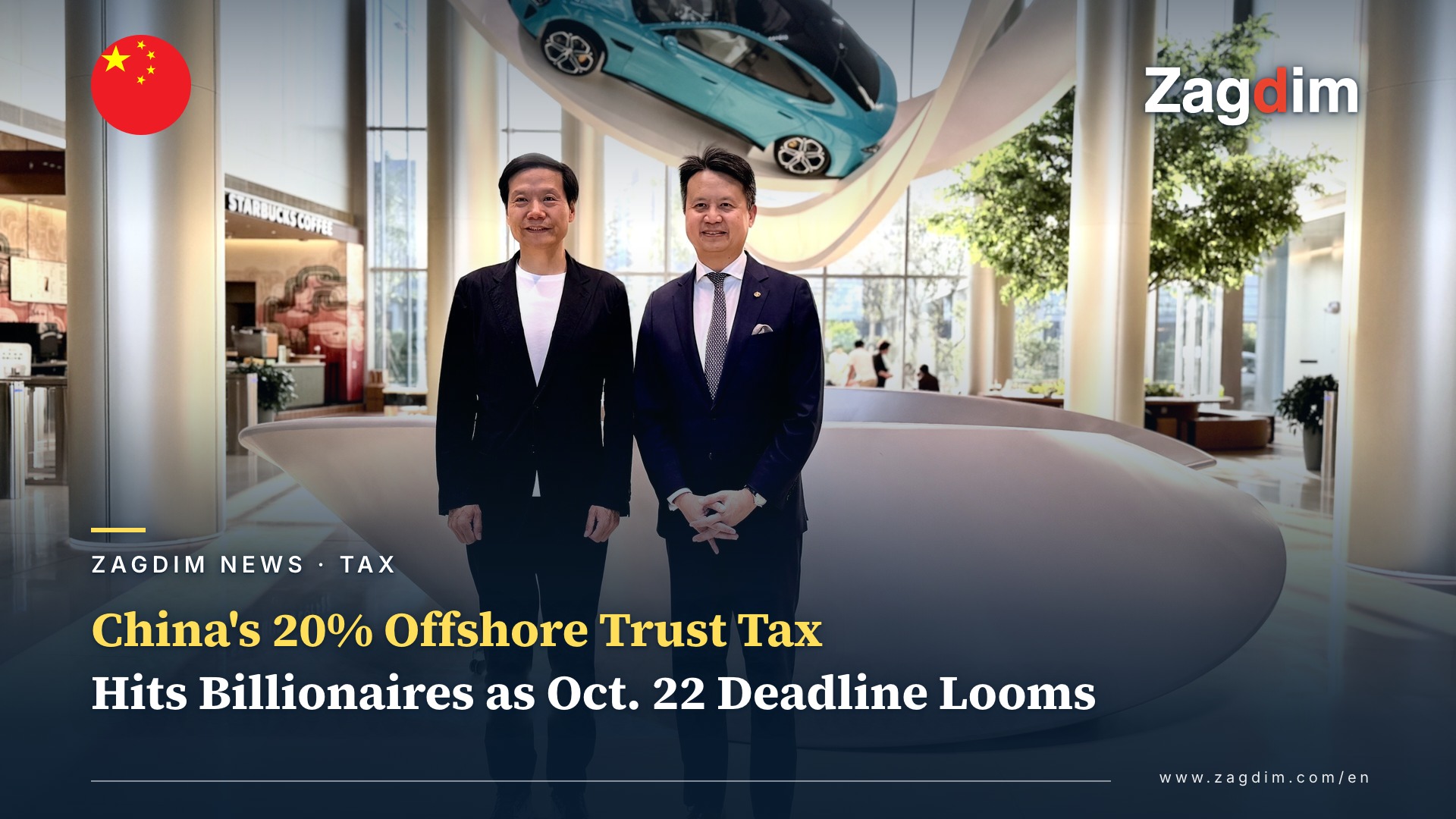
Eight Chinese billionaires holding an estimated US$140.2 billion through offshore trusts face a 20% individual income tax on trust gains, with a payment deadline of October 22, Bloomberg reported.
What Happened
China’s State Taxation Administration (STA) is enforcing a 20% individual income tax on certain income from offshore trusts, including dividends and interest, with holders required to declare and settle unpaid liabilities by October 22, NTD News reported, citing Reuters. The STA on Monday reminded taxpayers with existing offshore trusts to declare and pay back taxes by that date to avoid late fees, and separately clarified the threshold for extended retroactive collection while exempting employee stock incentive trusts from the tax, Caixin Global reported.
Bloomberg identified eight Chinese billionaires and their beneficiaries, among the world’s 500 richest people, holding assets through offshore trusts in jurisdictions such as the British Virgin Islands and the Cayman Islands, together worth about US$140.2 billion as of October 16, according to Bloomberg’s documents and the Bloomberg Billionaires Index, The Standard (Hong Kong) reported. The eight named were NetEase founder and CEO William Ding Lei (about US$37 billion in offshore assets), Pinduoduo founder Colin Huang Zheng (about US$29 billion), Xiaomi chairman Lei Jun (about US$20.7 billion), Hansoh Pharmaceutical founder and chairwoman Zhong Huijuan (about US$15.8 billion), China Hongqiao chairman and CEO Zhang Bo and his family (about US$15.4 billion), Pop Mart chairman Wang Ning (about US$10.2 billion), SITC International shareholder Yang Shaopeng (about US$6.9 billion), and Anta Sports chairman Ding Shizhong (about US$5.2 billion).
A China Hongqiao spokesperson told Bloomberg that linking founder Zhang Bo and company management to changes in tax policy is “unfounded and misleading.”
Who It Affects
The tax applies to Chinese tax residents’ returns from offshore trusts generated since January 2023, not to any single named individual’s full net worth — the eight billionaires are named in Bloomberg’s reporting and the Bloomberg Billionaires Index, not in any official Chinese government list, and one aggregator outlet, NewsBytes, separately noted that Beijing “has not publicly named any individuals” itself. Beyond the eight highest-profile cases, the tax reaches any Chinese tax resident who holds income-generating assets inside an offshore trust structure, a vehicle Reuters previously reported is widely used by shareholders of Hong Kong- and US-listed Chinese companies. According to the Oct. 16 Reuters report cited by NTD, the STA has instructed local tax officials to identify liable individuals using the Hurun China Rich List, corporate filings and other public information, so exposure is not limited to those named in press reports so far.
Background So Far
China’s Ministry of Finance and State Taxation Administration first announced in July 2026 that individual income tax would apply to offshore trust assets and income, with a 90-day grace period for existing arrangements that closes on October 22 — the deadline this story is anchored to. Zagdim covered that announcement and deadline, along with a separate US-tax-exposure angle for Hong Kong families with US ties (green cards, gifts, FBAR/FATCA filings), in an October 14 report. Today’s reporting adds, for the first time, the specific 20% rate, the US$140.2 billion total scale of assets involved, and named individuals and companies.
Oscar Liu, CEO of wealth adviser JLT Legacy Group, told Reuters that individual tax bills “could range from several million to hundreds of millions” of dollars, and that tax authorities in some provinces and cities with large concentrations of wealthy entrepreneurs have set up special teams to collect information on offshore trusts and demand cash payments. One technology billionaire’s family office told Reuters it was selling about half of its stock portfolio after being asked to pay taxes in cash within three months. Boston Consulting Group has estimated China’s total offshore wealth at about US$1.7 trillion, of which offshore trusts are one widely used holding structure.
Outlook
Kevin Woo, a partner at Hong Kong law firm Ince & Co, said the tax policy adjustment “impacts established trust funds more severely,” The Standard reported. Kylie Luo, practice leader of BDO Singapore’s asset and wealth management tax practice, said some families are already considering simplifying their offshore financial arrangements, or studying restructuring or terminating certain structures, and that the number of families setting up family offices has increased this year, according to The Standard. Separately, wealth advisers told NewsBytes that some wealthy Chinese are reviewing or restructuring trusts in jurisdictions such as the British Virgin Islands and the Cayman Islands ahead of the deadline, while others may sell shares to cover their tax bills.
References
The Standard (Hong Kong) – China’s Offshore Trust Tax Push Hits Xiaomi Founder, 7 More Billionaires, Bloomberg Reports / Caixin Global – China Clarifies Offshore Trust Tax Rules Ahead of Oct. 22 Deadline / NTD News – China’s Tax Deadline Sends the Super-Rich Scrambling to Sell Assets and Unwind Offshore Trusts / NewsBytes – China Rolls Out 20% Tax on Gains From $140.2B Trusts