

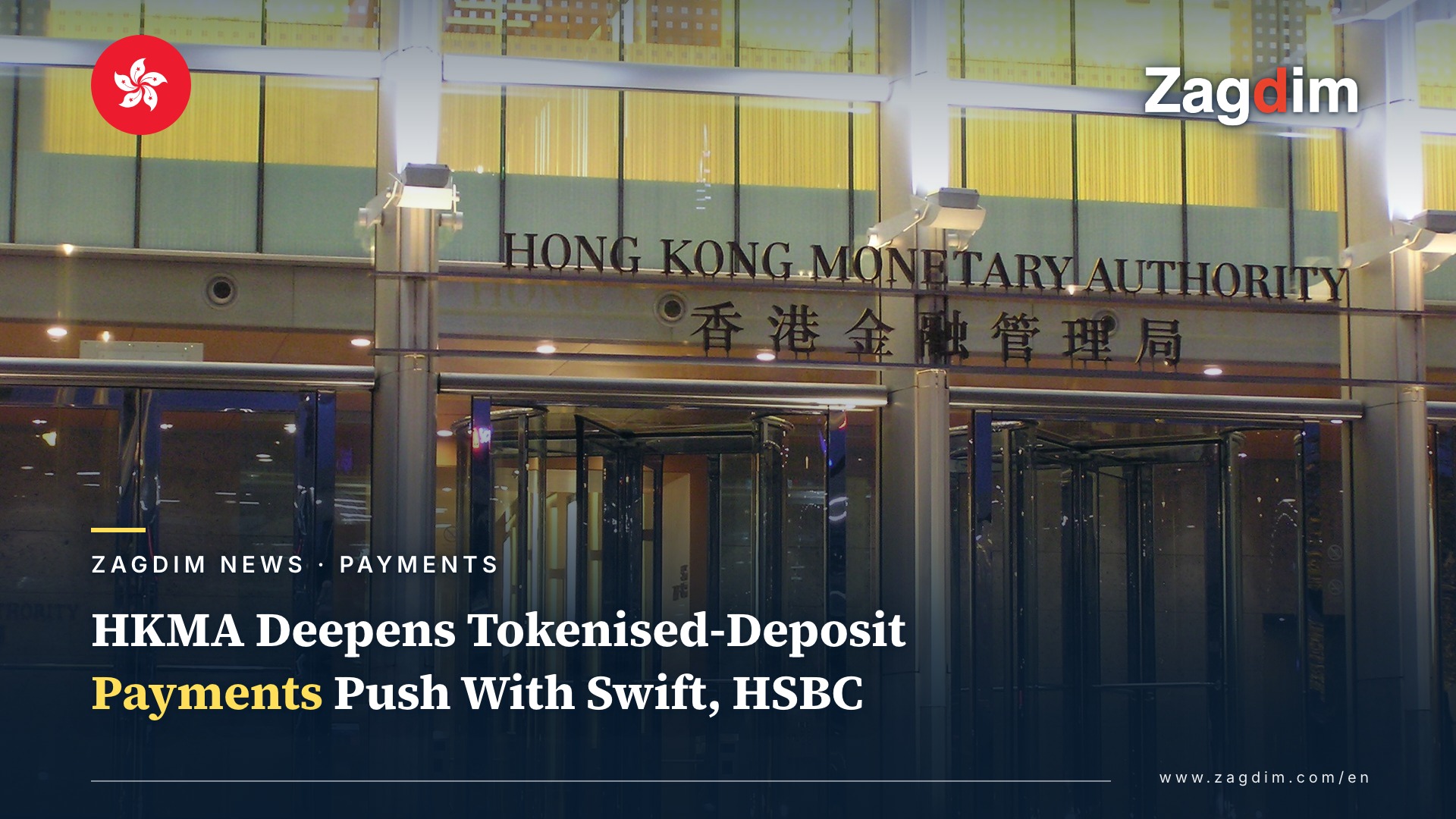
The Hong Kong Monetary Authority (HKMA) has announced a deeper collaboration with global payments network Swift to explore cross-border payment interoperability using tokenised deposits. The two sides will work to link the Swift ledger with the settlement layer of the HKMA’s Project Ensemble sandbox, aiming to build cross-border payment mechanisms that use multi-currency tokenised deposits. Three banks are named as participants: Bank of China (Hong Kong), Standard Chartered Bank (Hong Kong), and The Hongkong and Shanghai Banking Corporation Limited (HSBC’s Hong Kong arm).
People and businesses who send or receive cross-border payments through banks in Hong Kong are the group this work ultimately targets. The HKMA and Swift say the goal is to connect Hong Kong’s local payment infrastructure with international settlement through Swift’s global network, which already lets institutions settle in 150 different currencies, according to Swift. Project Ensemble itself is a sandbox, not a live production system, and the HKMA has not published a rollout date or timeline for when tokenised-deposit cross-border payments might reach the public — so no change to how cross-border payments are actually sent or received today.
The HKMA and Swift have examined interoperability between central bank digital currency (CBDC) systems through the Project Ensemble Sandbox since 2023. The new collaboration extends that existing sandbox work rather than launching a new scheme, and builds on the HKMA’s broader push to position Hong Kong in global tokenisation.
Howard Lee, the HKMA’s Deputy Chief Executive, said the initiative — which he described as EnsembleTX — “has entered a new chapter to advance the tokenisation ecosystem,” and that bringing Swift in extends Project Ensemble’s reach to international institutions. Thierry Chilosi, Swift’s Chief Business Officer, said Swift’s role is connecting market infrastructures so institutions can settle transactions in different currencies, and described the aim as building “a practical, responsible path to interoperability.” Neither official gave a date for when the work might move beyond the sandbox stage.