






























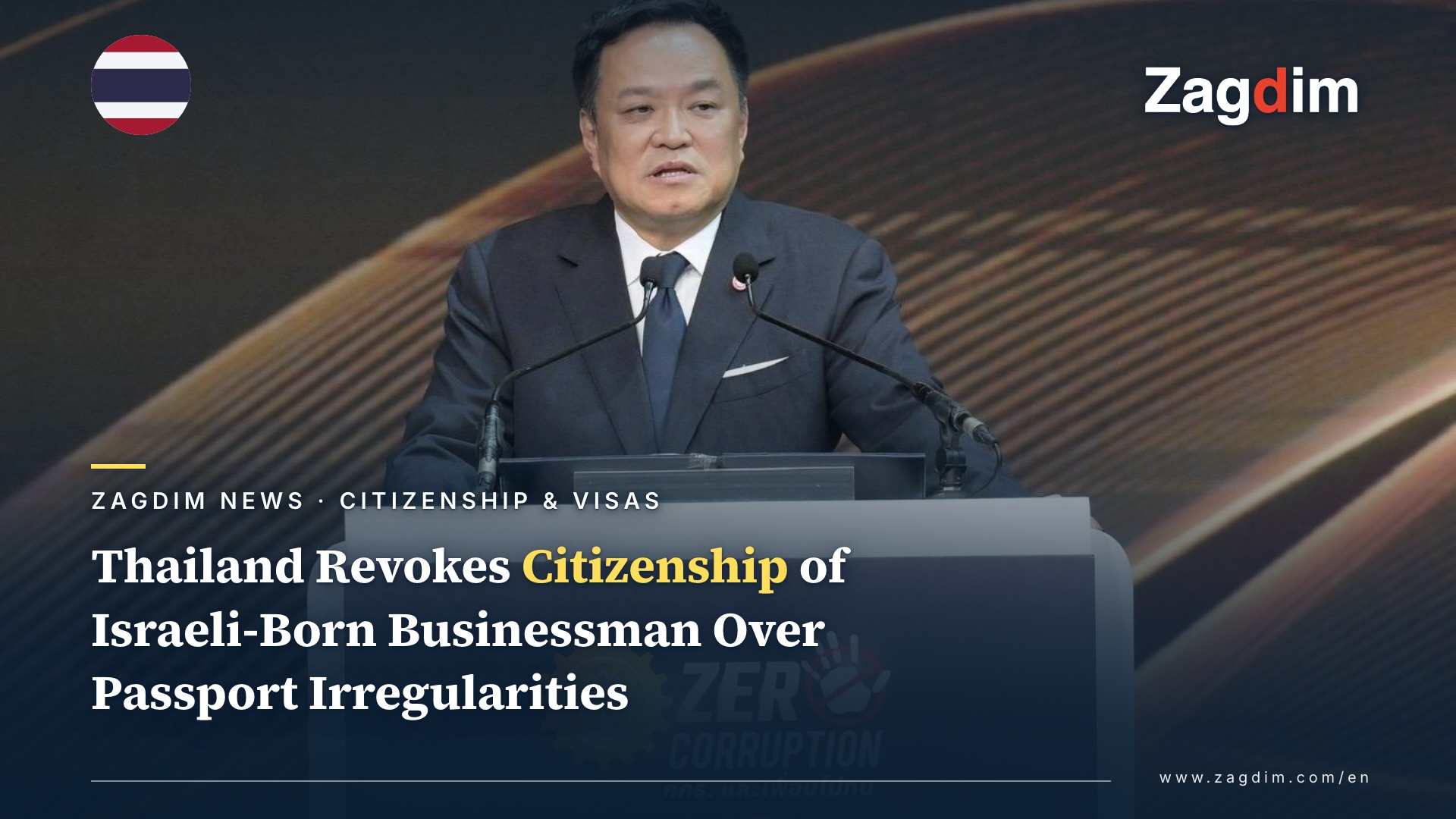
Prime Minister Anutin Charnvirakul, acting in his capacity as interior minister, signed an order on October 1, 2026 revoking the Thai citizenship of Ariel Blustein, a Bangkok-based gem and jewellery entrepreneur originally from Israel. Per The Thaiger (citing Thairath), Anutin exercised his authority under Section 19, paragraph one, of the Nationality Act — the same law under which Blustein had naturalised in 2019, under Sections 10 and 11(1).
Officials said Blustein continued to hold and use his original Israeli passport after becoming a Thai citizen: on the same day his Thai national ID card was issued, he travelled to Hong Kong on the Israeli document, returning to Thailand on it on June 23, 2019. Separately, he had not disclosed holding Uruguayan citizenship during his naturalisation application, nor renounced it, and later used the Uruguayan passport to travel abroad several times. Thai rules allow a naturalised citizen to retain a second passport if their country of origin permits dual nationality — but require that person to enter and exit Thailand on the Thai passport. Both the continued use of the Israeli passport for entry and exit, and the undisclosed Uruguayan nationality, were cited as grounds for the revocation.
Blustein had been naturalised after a notice published in the Royal Gazette on April 3, 2019, with his first Thai national ID card issued June 14, 2019. Per Bangkok Post, the naturalisation route he used is itself narrow: permanent residency — a naturalisation prerequisite — is capped at 100 approvals per nationality a year (roughly 200 to 300 total approvals across all nationalities annually), applicants must hold permanent residency for five consecutive years before they can apply, and final ministerial approval can take a further three to five years.
For long-term foreign residents in Thailand, the case is a concrete illustration of how citizenship, once granted, remains conditional: non-disclosure of a second nationality and continued use of a foreign passport for travel are treated as statute-backed grounds for after-the-fact revocation, not merely administrative irregularities. The Interior Ministry’s stated justification, per The Thaiger, was that “allowing the matter to remain unresolved could cause serious damage to the public and the state” — a case-specific rationale for invoking Section 19, not a general forward-looking policy statement. Neither source carries an on-record statement from officials about future enforcement volume, so none is implied here.
References
Bangkok Post – PM revokes Thai citizenship of Israeli businessman / The Thaiger – Thailand revokes Israeli-born man’s Thai citizenship