
































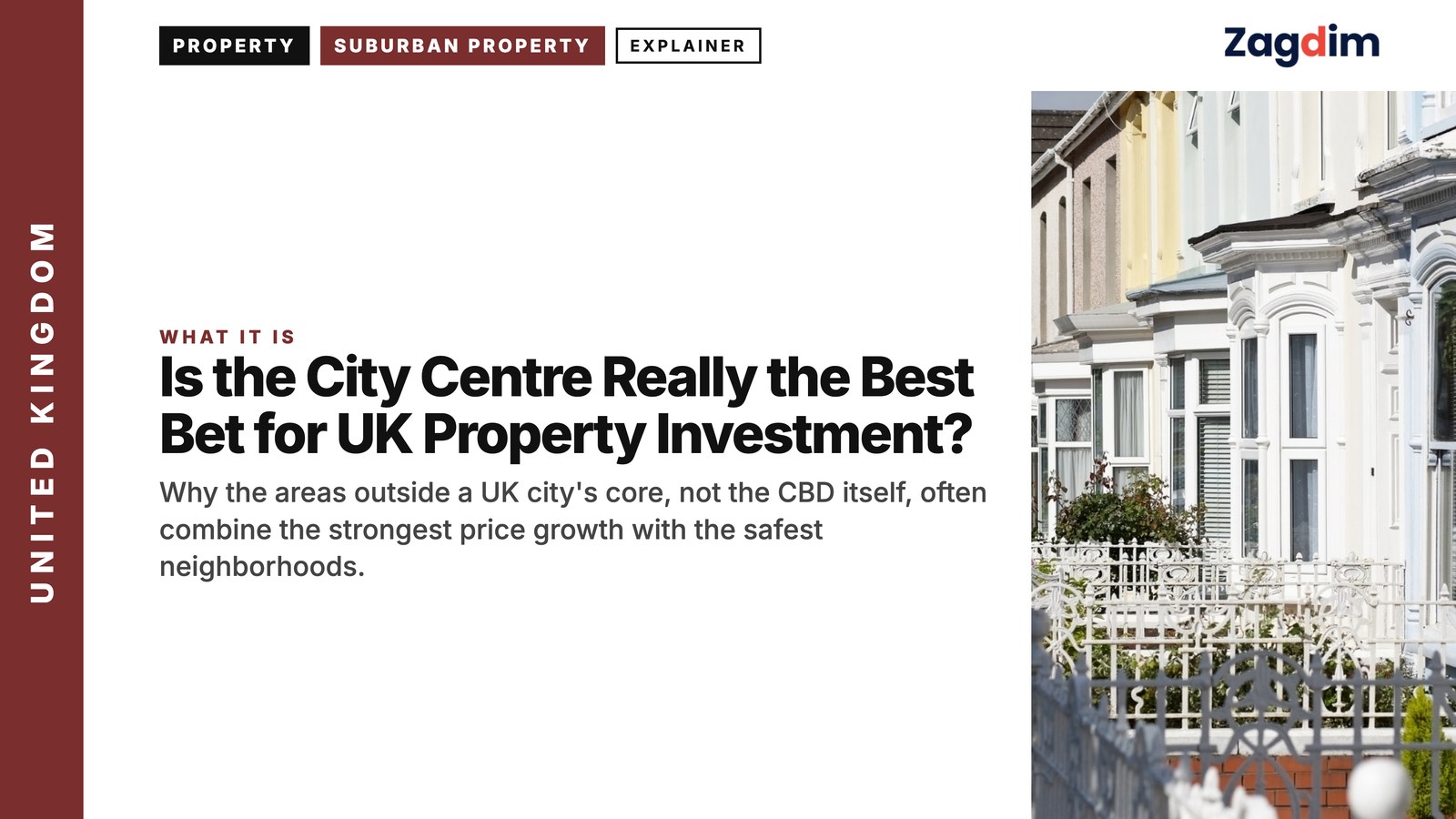
Many overseas buyers of UK property are drawn to the city center, or CBD, the way some markets divide a city into a “prime core” and its surrounding areas, and assume that buying close to the core guarantees strong performance. Outside London, though, that assumption does not hold up well. The areas that combine good safety with strong price growth are often not the city-center districts at all.
Liverpool illustrates the point. The city’s average house price is around 1.6 million, and prices there rose only 10 percent over the past decade. The cheapest transactions, within a 1-kilometer radius of the city center, have gone through from as little as £100,000, with growth of just 2 percent since 2009. By contrast, postcode L23, about a 20-minute drive from the center, has seen growth of 67 percent over the same period — nearly four times the increase seen in the center itself.
Looking at price data for postcodes averaging £400,000 or more across twelve cities outside London, a clearer pattern of comparative growth emerges:
| Area | Postcode | 2009 Price | 2019 Price | Area Growth | City-Wide Growth |
|---|---|---|---|---|---|
| Liverpool | L23 8 | £290K | £487K | 67% | 10% |
| Manchester | M20 2 | £240K | £405K | 68% | 41% |
| Birmingham | B74 3 | £261K | £424K | 62% | 41% |
| Leeds | LS14 3 | £351K | £540K | 53% | 31% |
| York | YO26 9 | £347K | £486K | 40% | 27% |
| Sheffield | S17 3 | £315K | £490K | 55% | 25% |
Where the £400,000-Plus Postcodes Actually Sit
More than 80 percent of postcodes with an average price above £400,000 sit 6 to 15 kilometers from the city center, roughly a 15- to 25-minute drive. Examples include Solihull, a suburb southeast of Birmingham; Stockport, a suburb of Manchester; and Formby, north of Liverpool, where prices are generally £400,000 or above. That runs against the assumption that the CBD is automatically the premium location. One clue to why comes from age data: in areas priced above £400,000, the average resident is 36 to 44 years old, generally 9 to 13 years older than the average resident of the city center.
What Is Driving Demand in These Areas
Why the 36-to-44 age band? By this stage of a career, many people have moved into management roles, and the UK has in fact seen rapid growth in management and professional employment. Comparing “major group 1 to 3” job categories (management and professional roles) since 2004, management-level positions have grown by 4 to 19 percent across different regions, while administrative and skilled-trade roles have fallen by 4 to 14 percent, reflecting a broader shift of jobs and career progression. On pay, the median weekly wage is highest for the 40-to-49 age group, at £678, and weekly pay above £600 is concentrated mainly among people aged 30 to 59.
What the Middle Class Is Looking For
Homeownership in the UK is highest among the 30-to-59 age group, who own 47 percent of all owner-occupied property. Most people in this bracket are of an age to marry or are already married — the average UK marriage age is 37 for men and 35 for women — and are starting to think about building a family. This age group typically has the strongest buying power, backed by savings and a stronger credit profile, and tends to weigh quality of life and school access against proximity to the city center, often preferring quieter, safer areas further out. Price is the most direct signal of demand: buyers with strong purchasing power in these areas have pushed local prices up further, and over the past decade, price growth in these areas has run 13 to 57 percent ahead of the wider city average. These areas tend to be owner-occupier-led markets, though as prices have risen in recent years, more families rent before buying, and the tenants renting in these areas tend to be higher quality.
For investors targeting these suburban and outer areas specifically, units of two bedrooms or more are generally the better choice.
Why Second- and Third-Tier City Centers Often Underperform the Outskirts
Why does the CBD in second- and third-tier cities often underperform the surrounding areas on price? The main reason is suburbanization, a pattern common in heavily industrialized, urbanized Western economies that have already been through a phase of dense city-center development. As the UK shifted from industry toward commercial services from the 1980s onward, second-tier city centers developed faster, jobs multiplied, and population poured in. Over time this brought scarce land, high prices, traffic congestion, dense population, and declining environmental quality to the center, pushing people to move out to the near suburbs, which gradually became new centers of daily life in their own right. That said, the pendulum can swing back — city-center regeneration is a real and separate trend of its own, though which city ends up benefiting most from it is a different question.
For guidance on how this applies to a specific city or area, ask Zagdim.
Have a question about this guide? Leave a comment below, or ask Zagdim directly.
Your first stop for international property and global living.
Research and insights. Know what’s changing. Understand what matters.