






























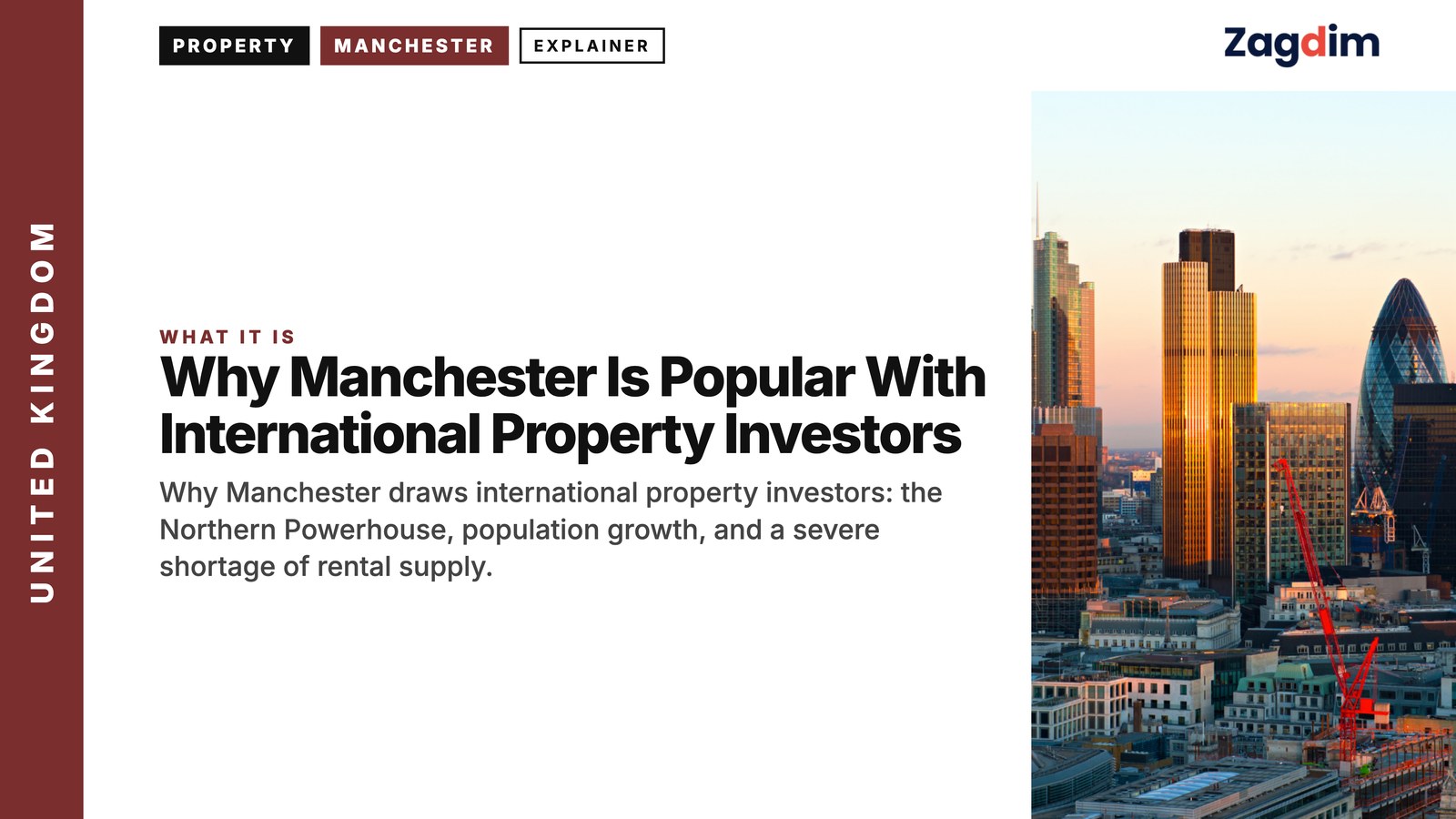
Manchester is a hotspot for property purchases among Hong Kong buyers. According to statistics published last year by Oxford University, Manchester is the second most popular city for Hong Kong emigrants to settle in, after London. Among the client enquiries the author receives, the largest share by far ask about the Manchester property market.
Football lovers are, of course, drawn in by the city’s two rival clubs, Manchester City and Manchester United — but Manchester’s appeal goes well beyond football.
In recent years, Manchester has been taking off, driven by the UK government’s Northern Powerhouse initiative. On one hand, it has attracted major companies including Google and Amazon to set up UK headquarters or offices in the city. The Northern Powerhouse initiative has also energised infrastructure — beyond airport expansion, the most closely watched project was the HS2 high-speed rail line, though its Birmingham-to-Manchester leg was cancelled by the government in October 2023; the project’s confirmed scope is now London (Old Oak Common) to Birmingham only, with no dedicated high-speed line to Manchester and no confirmed journey time between the two cities. On education, Manchester is home to five well-known universities with more than 100,000 students between them, and twenty-five Nobel laureates have come out of the city’s institutions — Manchester is, without question, a place that produces talent.
Every article the author writes makes the same point: property comes down to supply and demand, and that is exactly why the author remains optimistic about Manchester’s outlook. Large-scale development plans in the city have drawn in large numbers of professionals, with population growth running at three times the national UK average, boosting demand for property and housing. At the same time, however, supply remains extremely tight — by the end of August, the number of new homes under construction had fallen further to 14,269, only a slight increase of 442 on the figure a year earlier.
Manchester’s rental stock is even more strikingly thin. According to the data, only 360 rental listings were available by the end of August — a record low. The previous record low was set in September the year before, when 427 rental listings were available. The numbers show that Manchester’s severe rental shortage is a structural trend. As the chart below shows, the shortage spans the whole market — large, medium and small units alike are all in short supply, with studio and open-plan units particularly scarce, at only 12 listings available.
Strong population growth and a fast-developing city, combined with an unusually tight supply, are together fuelling an unmistakable upward pressure on prices and rents. By the end of September, Manchester house prices had risen 11.5% year on year, ahead of the national average gain of 9.2%. Rental growth has been even sharper — over the first eight months of the year, rents across studio to three-bedroom units rose between 8.2% and 29.8% cumulatively, with one-bedroom units breaking the £1,000-a-month average rent mark for the first time, and two-bedroom units seeing the largest rise, at close to 30%.
Manchester’s average property price is around £250,000 — only half of London’s average — leaving plenty of room for further growth. Developer Salboy is preparing to launch Viadux, a five-star project in the city centre; readers interested in learning more are welcome to leave a message below to get in touch and discuss the details.
Have a question about this guide? Leave a comment below, or ask Zagdim directly.
Your first stop for international property and global living.
Research and insights. Know what’s changing. Understand what matters.