






























Malaysia’s Budget 2027, Tabled on 9 October 2026, Proposes Income Tax Cuts: Whether Foreigners Benefit Depends on Tax Residence
Malaysia income tax for foreigners turns on tax residence: anyone who spends 182 days or more in Malaysia in a year is generally a tax resident, taxed at progressive rates of 0% to 30% with personal reliefs, while non-residents pay a flat 30% on employment income with no reliefs. These are the rules published by the Inland Revenue Board of Malaysia (Lembaga Hasil Dalam Negeri, LHDN), and they apply regardless of nationality.
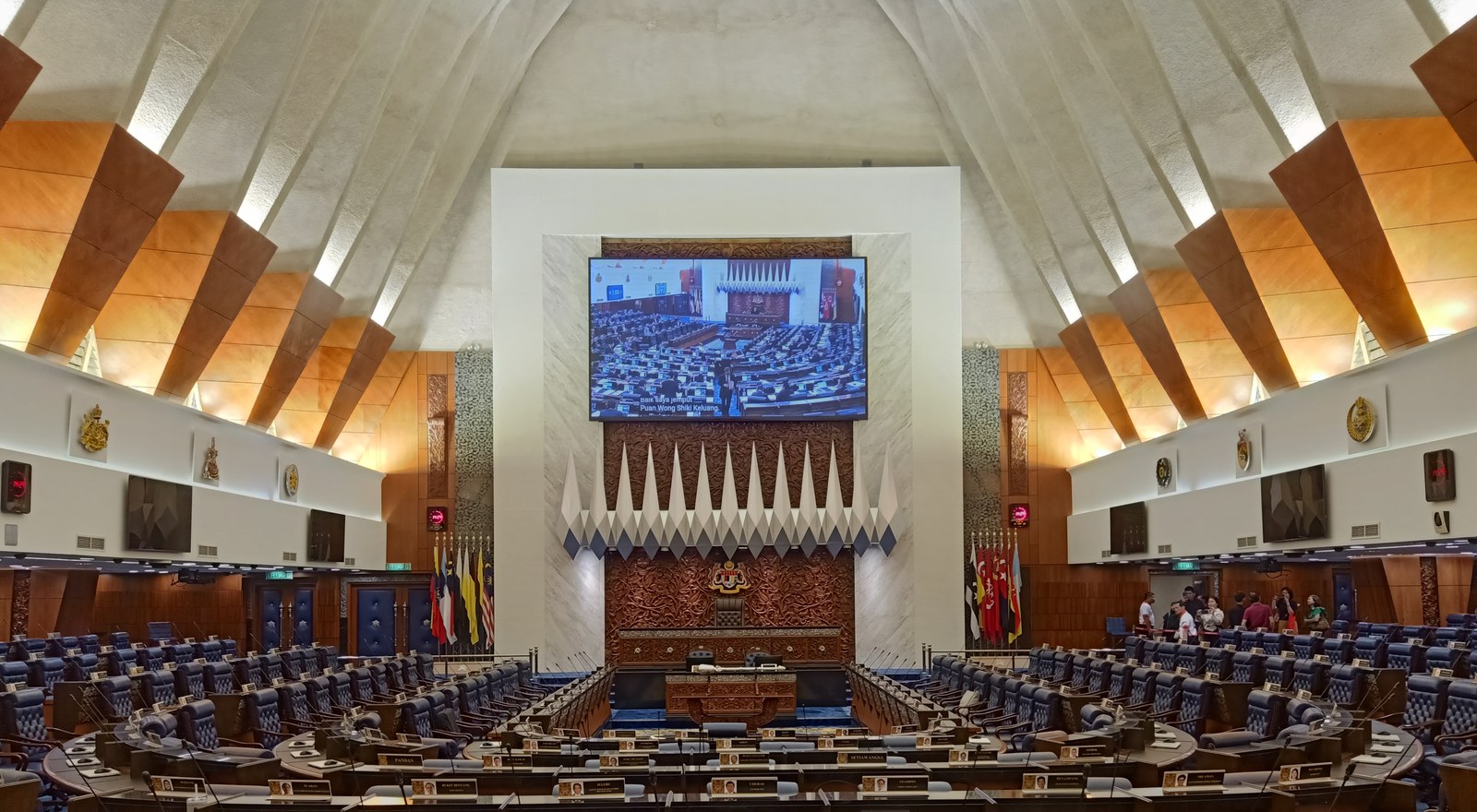
On 9 October 2026, Prime Minister and Finance Minister Anwar Ibrahim tabled Budget 2027 in the lower house of Parliament, the Dewan Rakyat. According to the Ministry of Finance’s published speech, the personal relief for resident individuals rises from RM9,000 to RM12,000, the rate on chargeable income between RM70,001 and RM100,000 falls from 19% to 18%, the band from RM100,001 to RM150,000 is set at 24%, and income above RM1 million will be taxed at 30%. The Star reported the measures the same day. The speech describes these cuts as applying to resident individuals, so whether a foreigner living in Malaysia pays less starts with the residence test.
This guide explains how tax residence is decided, sets out the current rates beside the rates proposed for year of assessment 2027, and then looks at what foreign employees, senior executives, dependant spouses and digital nomads should each watch for.
Key Points
- Who should pay attention: foreign employees working in Malaysia on an Employment Pass; highly paid foreign executives; foreign spouses holding a Dependant Pass who may start working from 2027; remote workers holding a DE Rantau digital nomad pass.
- Malaysia income tax depends on tax residence, not nationality or pass type: residents pay progressive rates and can claim reliefs, while non-residents pay 30% on employment income.
- The Budget 2027 income tax changes are proposals that take effect only once the Finance Bill 2027 is passed by Parliament; professional firms read them as applying from year of assessment 2027 (income earned in 2027, filed in 2028).
- The SARA cash aid and the subsidised petrol price of RM1.99 a litre are limited to eligible Malaysian citizens and do not apply to foreigners.
How Malaysian Tax Residence Is Decided: The 182-Day Rule and Three Others
Tax residence is defined in section 7 of the Income Tax Act 1967, and LHDN’s residence status page sets out four routes. All four rows below come from LHDN’s explanation of section 7(1); meeting any one makes you a tax resident for that year:
| Provision | Condition | Typical case |
|---|---|---|
| Section 7(1)(a) | 182 days or more in Malaysia in the year | People working or living in Malaysia all year |
| Section 7(1)(b) | Fewer than 182 days, but linked to a period of 182 or more consecutive days in Malaysia in the year before or after | Assignees who arrive or leave mid-year |
| Section 7(1)(c) | 90 days or more in the year, and resident or in Malaysia for 90 days or more in any three of the four preceding years | People who spend part of every year in Malaysia |
| Section 7(1)(d) | Resident in the following year, and resident in each of the three preceding years, regardless of days in the year itself | Long-term residents who are away for most of one year |
For the linking test in section 7(1)(b), certain temporary absences count as part of the period: absences for work, conferences or seminars, medical treatment for yourself or an immediate family member, and social visits totalling no more than 14 days, provided you are in Malaysia immediately before and after.
So an assignee who arrives in September and spends just over 120 days in Malaysia in the first year is not automatically a non-resident. If they then stay 182 or more consecutive days into the next year and the two periods are linked, the first year can also count as resident. Tax residence is also separate from permanent residence and from your pass: holding an Employment Pass does not make you a tax resident by itself.
Malaysia Income Tax Rates for Residents: Current Rates and the Budget 2027 Proposal
Resident rates are progressive and apply to chargeable income, meaning annual income after allowable expenses and personal reliefs. Each rate applies only to the slice of income within that band.
The current rates in the table below are LHDN’s published resident rates for years of assessment 2023, 2024 and 2025 (checked on 17 October 2026, when the page did not yet list a separate 2026 table), which the budget documents also use as the current baseline. The changed bands in the proposal column come from the Ministry of Finance speech, and the remaining bands follow Emerhub’s summary of the budget’s tax measures appendix. The proposed rates take effect only once the Finance Bill is passed:
| Annual chargeable income (RM) | Current rate | Budget 2027 proposal |
|---|---|---|
| 0–5,000 | 0% | 0% (unchanged) |
| 5,001–20,000 | 1% | 1% (unchanged) |
| 20,001–35,000 | 3% | 3% (unchanged) |
| 35,001–50,000 | 6% | 6% (unchanged) |
| 50,001–70,000 | 11% | 11% (unchanged) |
| 70,001–100,000 | 19% | 18% |
| 100,001–150,000 | 25% | 24% |
| 150,001–400,000 | 25% | 25% (unchanged) |
| 400,001–600,000 | 26% | 26% (unchanged) |
| 600,001–1,000,000 | 28% | 28% (unchanged) |
| 1,000,001–2,000,000 | 28% | 30% |
| Above 2,000,000 | 30% | 30% (unchanged) |
Using LHDN’s cumulative figures, tax under the current scale is RM3,700 on chargeable income of RM70,000, RM9,400 on RM100,000 and RM136,400 on RM600,000. The Ministry of Finance estimates that the higher relief and lower rates together will give about 5 million taxpayers up to RM1,600 more in disposable income.
Malaysia Income Tax for Non-Residents: A Flat 30% on Employment Income With No Reliefs
According to LHDN’s non-resident page, non-residents pay 30% on business, employment and rental income from year of assessment 2020, with separate rates of 15% on interest and 10% on royalties. LHDN’s introduction to individual income tax also states that non-residents cannot claim any personal reliefs.
The Budget 2027 speech refers only to resident individuals, and the budget summaries from EY, Deloitte and Emerhub do not mention any change to non-resident rates. In other words, two foreigners on the same salary can be taxed very differently: a tax resident gets the RM12,000 relief and the lower middle-band rates, while a non-resident still pays 30%.
LHDN’s non-resident page also lists situations where no tax is charged, such as employment in Malaysia of less than 60 days. The short-term employment exemption has further conditions, including how periods across two years are combined, so check each condition rather than relying on day counts alone.
Common Malaysia Income Tax Reliefs: Personal Relief, EPF and Insurance
Only tax residents can claim personal reliefs. All amounts below come from LHDN’s published relief table for year of assessment 2025:
| Relief | Limit for YA 2025 (RM) |
|---|---|
| Individual and dependent relatives (personal relief) | 9,000 (proposed 12,000 from YA 2027) |
| Mandatory contributions to approved schemes or voluntary EPF contributions | 4,000 |
| Life insurance premiums or family takaful contributions | 3,000 (combined limit of 7,000 with the row above) |
| Education or medical insurance premiums | 4,000 |
| SOCSO contributions | 350 |
| Lifestyle (books, computers and phones, internet, courses) | 2,500 |
EPF is the Employees Provident Fund (Kumpulan Wang Simpanan Pekerja). Contribution obligations for foreign employees follow EPF’s own rules and are not covered here. LHDN also notes that residents with chargeable income of RM35,000 or less can claim an individual rebate of RM400.
The budget also proposes widening several reliefs while keeping their limits: medical relief would cover postnatal care, relief for parents and grandparents would cover all care expenses, sports equipment would include sports shoes, education relief would cover all fields of study and children’s tuition, and lifestyle relief would include AI software subscriptions and pet vaccination and adoption costs.
Malaysia Income Tax From 2027 by Situation: Employees, Executives, Dependant Spouses and Digital Nomads
Foreign employees: residents benefit
A foreign employee working in Malaysia all year on an Employment Pass is usually a tax resident under section 7(1)(a) and uses the same rates and reliefs as Malaysians. Emerhub’s budget summary notes that resident rates apply to foreign employees who qualify as Malaysian tax residents. People with chargeable income between RM70,001 and RM150,000 gain from the middle-band cuts, and the RM3,000 increase in personal relief lowers every resident’s chargeable income.
Highly paid foreign executives: more tax above RM1 million
Income above RM1 million is currently taxed at 28% up to RM2 million; the budget proposes 30%. The savings from the middle-band cuts are small by comparison, so the higher the chargeable income, the more extra tax is due. The scenarios below include a worked example.
Dependant Pass spouses: allowed to work from 1 January 2027
According to the Ministry of Finance speech, from 1 January 2027 the spouses of foreigners holding a Category I Employment Pass, who themselves hold a Dependant Pass, will be allowed to work in Malaysia, subject to prescribed conditions. Once a spouse starts working, their tax residence is decided on their own days in Malaysia; it does not follow the Employment Pass holder automatically. A spouse living in Malaysia all year with their partner will usually be resident through the 182-day rule.
DE Rantau digital nomads: the pass can continue, tax residence is separate
The speech says existing DE Rantau Nomad Pass holders who reach the two-year limit will be allowed to keep staying and working remotely in Malaysia, subject to eligibility criteria. DE Rantau is an immigration pass, not a tax status; days in Malaysia still decide tax residence. For work performed while in Malaysia, the source of income depends on where the work is done, even if the employer or bank account is overseas, and needs case-by-case assessment.
Benefits Foreigners Do Not Get: SARA Cash Aid and RM1.99 Subsidised Petrol
Income tax relief depends on tax residence, but the budget’s cash aid and fuel subsidy depend on citizenship:
| Item | 2027 detail | Who qualifies | Source |
|---|---|---|---|
| SARA aid | Up to RM150 a month, RM1,800 a year | All STR cash aid recipients | Ministry of Finance speech |
| SARA MADANI | RM100, paid twice | Malaysians aged 18 and above who are not STR recipients | Ministry of Finance speech |
| BUDI95 subsidised petrol | RM1.99 a litre | Eligible Malaysian citizens | The Star, citing the weekly Ministry of Finance announcement |
| Unsubsidised RON95 petrol | RM4.62 a litre for 15–21 October 2026 | Foreigners and others not eligible | The Star, citing the weekly Ministry of Finance announcement |
The unsubsidised price is announced every week, so check the current week’s figure before you fill up. The speech also notes that fuel subsidies had partly leaked to foreign nationals and large companies, one of the reasons given for targeted subsidies.
Common Misconceptions About Malaysia Income Tax
- Misconception: the new rates apply as soon as the budget is announced. Budget tax measures become law only when the Finance Bill 2027 is passed, and professional firms read them as starting from year of assessment 2027. Tip: income earned in 2026 is still filed at current rates.
- Misconception: foreigners are always taxed at 30%. Thirty per cent is the non-resident rate on employment income; a foreigner who meets any section 7 test is a resident with progressive rates and reliefs. Tip: confirm your residence status before estimating tax.
- Misconception: fewer than 182 days always means non-resident. Sections 7(1)(b), (c) and (d) can make someone resident with fewer than 182 days. Tip: in your arrival and departure years, review entry and exit records for the years on either side.
- Misconception: a top rate of 30% means all income is taxed at 30%. Resident rates are progressive, and each rate applies only to income within its band. Tip: add up the tax band by band.
- Misconception: a working spouse’s tax status follows the Employment Pass holder. Each person’s tax residence is decided on their own presence in Malaysia. Tip: once a spouse starts work, they need to handle their own withholding and filing.
Malaysia Income Tax From 2027: Worked Scenarios
The tax figures in these three scenarios are Zagdim’s own band-by-band calculations using the table above. They include only the personal relief and leave out EPF, insurance and other reliefs, the RM400 rebate, monthly tax deductions by employers (PCB) and tax treaties. The proposed rates still depend on the Finance Bill, and LHDN’s assessment is final.
Scenario 1: a foreign engineer earning RM150,000 a year and working in Kuala Lumpur all year. He spends more than 182 days in Malaysia, so he is a tax resident. Under current rules, chargeable income after the RM9,000 personal relief is RM141,000 and tax is RM19,650. Under the proposal, chargeable income after RM12,000 relief is RM138,000 and tax is RM18,220, a saving of RM1,430. If he had spent only 150 days in Malaysia that year and met none of the other section 7 tests, he would be a non-resident, taxed at 30% on RM150,000, or RM45,000. Residence is only certain once the year ends, so people arriving or leaving mid-year should revisit withholding and filing.
Scenario 2: a foreign regional executive with chargeable income of RM1.5 million. Under current rules tax is RM388,400; under the proposal, the slice between RM1 million and RM1.5 million is taxed at 30%, giving RM397,600, or RM9,200 more. The middle-band cuts offset only RM800 of the increase. Pay packages at this level often involve share awards, foreign income and treaty questions that need individual advice.
Scenario 3: a Dependant Pass spouse who starts work in 2027 on RM60,000 a year. She lives in Penang all year with her partner, who holds a Category I Employment Pass, and spends more than 182 days in Malaysia in 2027, so she is a tax resident. Under the proposal, chargeable income after the RM12,000 relief is RM48,000 and tax is RM1,380. Whether she can take the job, and on what conditions, depends on rules the authorities have yet to publish; before starting, check whether her employer will run monthly tax deductions for her.
Malaysia Income Tax for Foreigners: Frequently Asked Questions
Are foreigners working in Malaysia always taxed at 30%?
No. Thirty per cent is the non-resident rate on employment income. Under LHDN’s residence rules, anyone who spends 182 days or more in Malaysia in a year, or meets another section 7 test, is a tax resident regardless of nationality, taxed at progressive rates from 0% to 30% and able to claim personal reliefs. An Employment Pass does not make you resident automatically; residence is decided year by year.
Do the Budget 2027 Malaysia income tax cuts apply to foreigners?
The cuts are for resident individuals. A foreigner who is a tax resident for the year gets the same RM12,000 personal relief and lower middle-band rates as Malaysians, while non-residents continue to pay 30% without reliefs. The measures take effect only when the Finance Bill 2027 is passed, and professional firms expect them to apply from year of assessment 2027.
When will the new rates affect me?
Professional firms read the new rates as applying from year of assessment 2027, which covers income from January to December 2027, filed in 2028. Income earned in 2026 is taxed at current rates and filed in 2027. When monthly employer deductions change depends on the withholding rules LHDN publishes later.
How is tax residence decided if I arrive in Malaysia mid-year?
Spending fewer than 182 days in your first year does not automatically make you a non-resident. Under section 7(1)(b), if that period is linked to 182 or more consecutive days in the following year, the first year can also be resident; temporary absences for work, medical treatment or social visits totalling up to 14 days count towards the linked period. Keep two years of entry and exit records before settling your first-year status.
Will a Dependant Pass spouse who starts work in 2027 pay Malaysia income tax?
Salary from employment carried out in Malaysia is generally Malaysian-sourced income and taxable under the usual rules. The spouse’s tax residence depends on their own days in Malaysia; a spouse living there all year with their partner and spending more than 182 days in the country is usually a tax resident and can claim personal reliefs. The specific conditions for working are set by the authorities.
Can foreigners receive SARA or buy RM1.99 subsidised petrol?
No. According to the Ministry of Finance speech, SARA is paid to STR cash aid recipients, and SARA MADANI to Malaysians aged 18 and above who are not STR recipients. The BUDI95 price of RM1.99 a litre is for eligible citizens only; foreigners pay the unsubsidised price announced each week, which was RM4.62 a litre for 15–21 October 2026.
Planning to Work or Live in Malaysia? Ask Zagdim
If you want to know how your tax residence is likely to be decided, what to prepare before taking a job in Malaysia, or how different long-stay options compare, Ask Zagdim.
Life abroad? Ask Zagdim.
Your first stop for international property and global living.
Research and insights. Know what’s changing. Understand what matters.
Newsletter for overseas updatesSubscribe →
Important Disclaimer
This article is general information and does not constitute tax, legal or financial advice, nor does it represent the position of any government body. Current rates, residence rules and reliefs are based on the Inland Revenue Board of Malaysia website; Budget 2027 details are based on the Ministry of Finance speech of 9 October 2026, with the full proposed band structure and start year taken from professional firms’ summaries. All proposed measures depend on the Finance Bill 2027 being passed by Parliament, and the final law may differ. The scenarios are simplified calculations; rely on LHDN’s assessment and a qualified tax adviser for your actual liability.
Information is current as of 17 October 2026; please check the latest official notices from the Inland Revenue Board of Malaysia and the Ministry of Finance.
References
Ministry of Finance Malaysia – Speech: The Fifth MADANI Budget 2027 (9 October 2026) / LHDN – Individual Tax Rate / LHDN – Residence Status / LHDN – Non-Resident Individuals / LHDN – Introduction to Individual Income Tax / LHDN – Tax Relief / EY – Tax Snapshots: Malaysia Budget 2027 (9 October 2026) / Emerhub – Malaysia Budget 2027 Cuts SME and Individual Income Tax Rates From YA2027 / Deloitte – Malaysia Budget 2027 Snapshot / The Star – PM Anwar Tables Record RM510bil Budget 2027 (9 October 2026) / The Star – Fuel Prices Oct 15-21 (14 October 2026)