






























Loud Music on UK Trains Can Mean a £1,000 Fine, and New Bus Byelaws Allow £100 Penalties: What Changed on 19 October 2026
UK public transport fines rest mainly on byelaws: under the Railway Byelaws published by the Department for Transport (DfT), playing music aloud, vaping where smoking is banned or dropping litter on a train can lead to a fine of up to £1,000 on conviction, and since 5 August 2026 English councils can make bus byelaws with fixed penalties of up to £100.
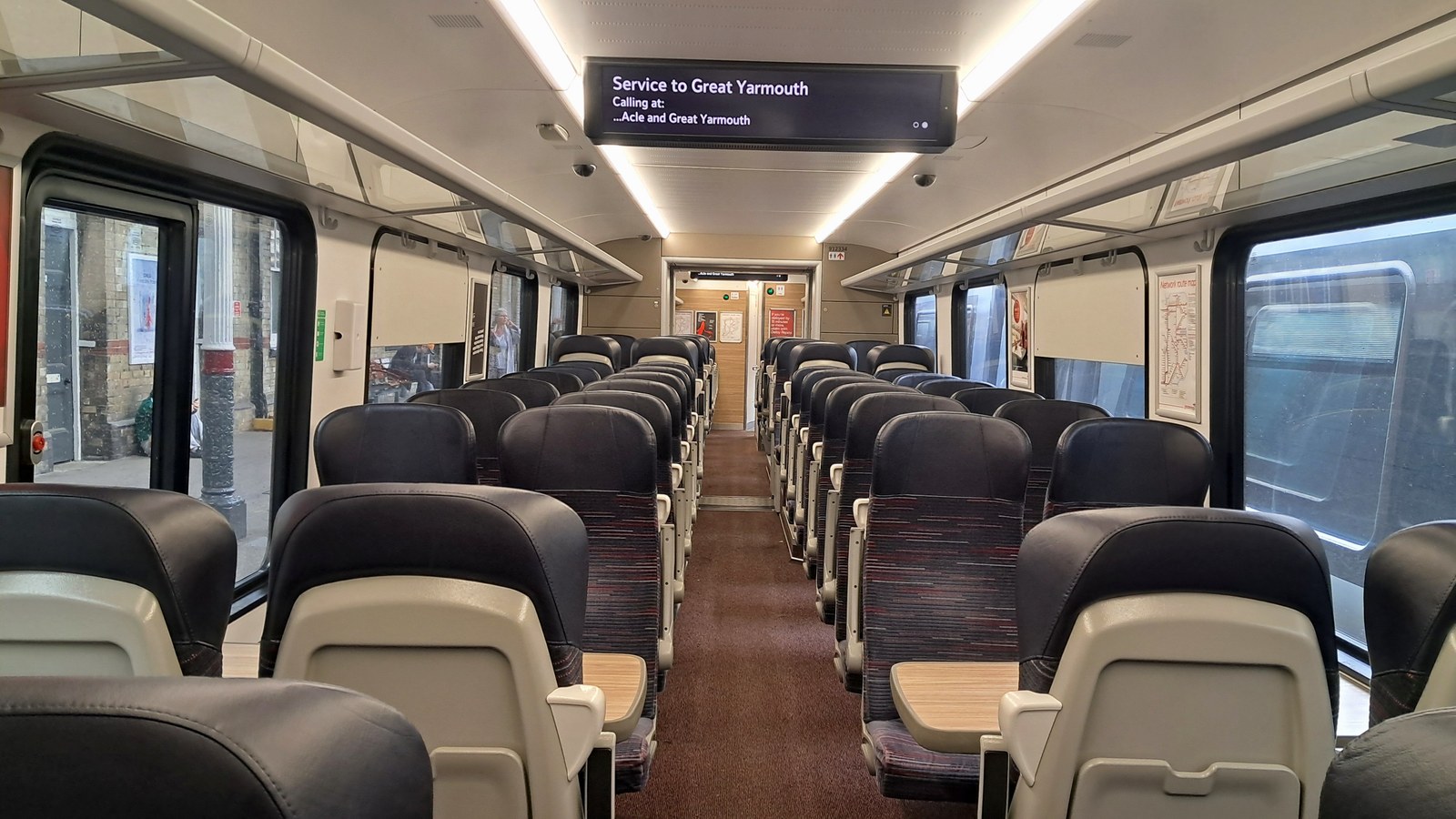
On 19 October 2026, the DfT and the Prime Minister’s Office announced two measures. The first is guidance for local transport authorities in England on using their new bus byelaw powers against loud music, littering, vaping and threatening behaviour. The second is an industry-led national rail campaign, “share the carriage, not the noise”, reminding passengers to use headphones; passengers who refuse to stop when asked by authorised rail staff can be removed from the train at the next station or face a fine of up to £1,000.
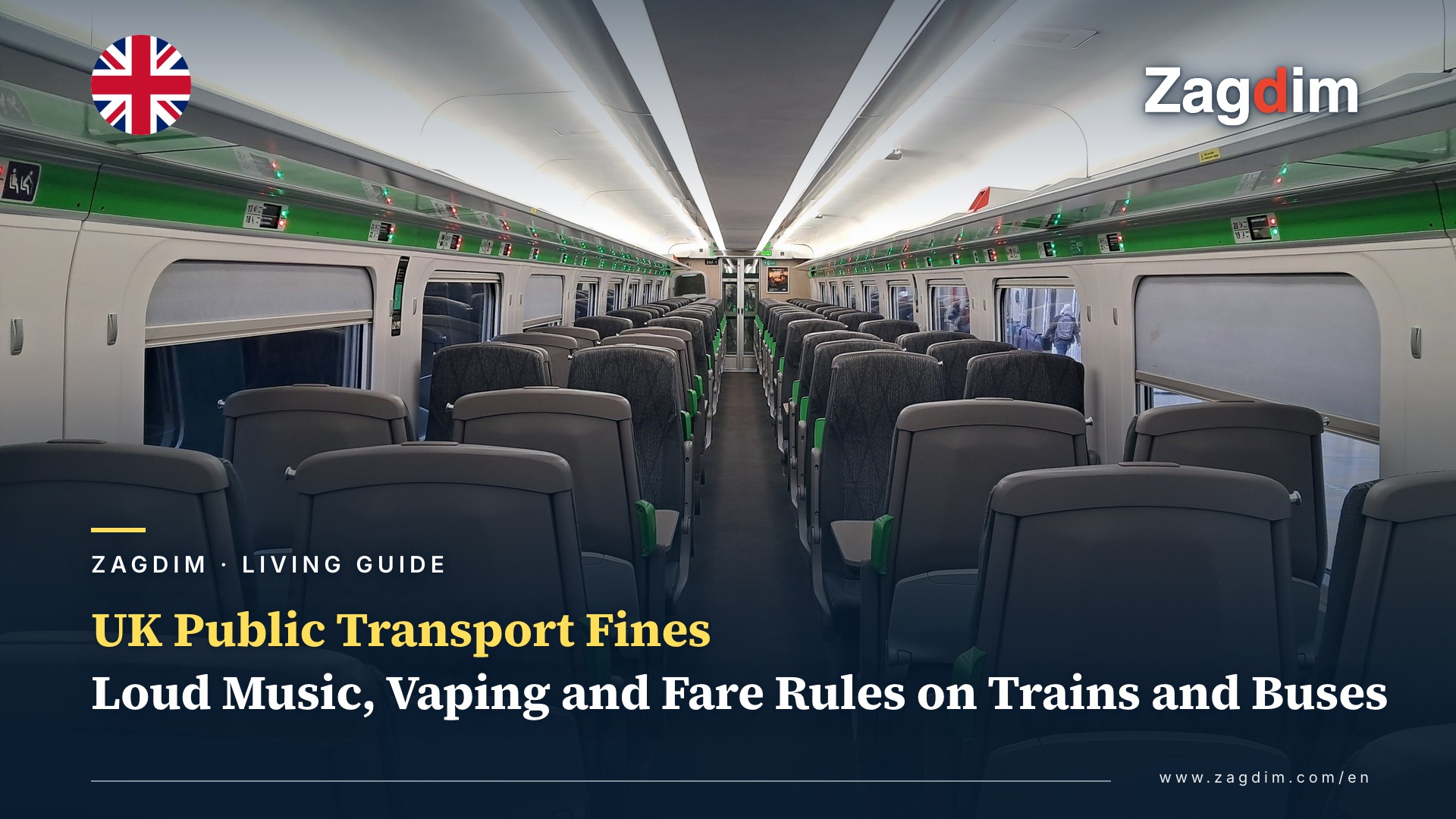
This guide uses the announcement as a starting point and explains what can get you fined on UK trains, buses and London’s transport network, how much it costs, who has the power to enforce it, and which rules already apply versus which still depend on local approval.
Key Points
- Who should pay attention: families and children newly arrived in the UK, including BN(O) visa holders; international students; daily rail and bus commuters; and short-term visitors.
- Loud music, vaping, littering and abusive behaviour on trains are already offences under the national Railway Byelaws; a conviction can mean a fine of up to £1,000, and rail staff can ask you to leave.
- Travelling without a ticket is a separate system: a rail penalty fare in England is £100 plus the full single fare, reduced to £50 plus the fare if paid within 21 days; on TfL services it is £100, or £50 within 21 days.
- The legal power behind the £100 bus penalties in England took effect on 5 August 2026, but each local byelaw must be approved by the Secretary of State before it can be enforced, so there is no single national start date.
What Is Banned on UK Trains? The National Railway Byelaws and Their Penalties
The national rail network is covered by the Railway Byelaws made in 2005. They have been amended three times, most recently with changes in force from 26 December 2025 that extended the smoking rule to electronic cigarettes. Transport for London’s rail services and Merseyrail have their own byelaws; Merseyrail’s include a general ban on drinking alcohol on its trains and stations.
All of the rules below come from the national Railway Byelaws as amended in November 2025, published by the DfT:
| Byelaw | What you must not do | Practical point |
|---|---|---|
| 3 Smoking | Smoke, or use an e-cigarette or similar device, where a notice says smoking is not allowed | E-cigarettes included from 26 December 2025 |
| 4 Intoxication and alcohol | Be too intoxicated to be on the railway; carry alcohol on a service where alcohol has been banned by notice | Staff can require you to leave or stop you boarding |
| 6 Unacceptable behaviour | Use threatening or abusive language, behave in a disorderly way, write on, soil or damage property, spit, drop litter or wilfully interfere with other passengers’ comfort | Covers littering and disturbing other passengers |
| 7 Music and sound | Sing, or use any equipment to play sound, to the annoyance of others without the operator’s written permission | The main basis for action on loud music and videos |
| 23 Name and address | Refuse to give your name and address when reasonably suspected of a breach | Staff must say in general terms what the suspected breach is |
| 24 Enforcement | Breach any byelaw (other than byelaw 17), which is an offence with a maximum fine at level 3 | You must leave immediately if asked, and can be removed with reasonable force if you refuse |
Under section 122 of the Sentencing Act 2020, level 3 on the standard scale is £1,000 in England and Wales. That is the maximum a court can impose on conviction, not an on-the-spot charge; being asked to leave a train or station is a separate step that staff can take in addition to any penalty.
The new rail campaign does not change the law. It replaces a patchwork of separate operator campaigns with one consistent message, using in-carriage announcements, posters, stations and websites. According to the DfT, most operators will take part.
Travelling Without a Ticket on UK Trains: £100 Plus the Full Single Fare
If you have no valid ticket, you will usually be charged a penalty fare rather than dealt with under the byelaws. A penalty fare is not a fine; it is an extra charge on top of the fare, although operators can prosecute deliberate fare evasion. The source differs by row:
| Situation | Amount | Source |
|---|---|---|
| National Rail in England, caught on or leaving a train | £100 plus the full single fare; £50 plus the fare if paid within 21 days | Railways (Penalty Fares) Regulations 2018, regulation 9 (as amended in 2022) |
| National Rail in England, in a compulsory ticket area and not intending to travel | £100; £50 if paid within 21 days | Same |
| Outside England, such as services within Wales | £20 or twice the full single fare, whichever is greater | Railways (Penalty Fares) Regulations 2018, regulation 9 |
| London TfL services (bus, Tube, DLR, Overground, tram) | £100; £50 if paid within 21 days | TfL Penalty Fare Appeals Policy, Version 11 (November 2025) |
| Prosecution for fare evasion on TfL | Up to £1,000, and in some cases imprisonment | Same |
National Rail points out that penalty fare stations and compulsory ticket areas are marked with yellow warning posters, that tickets can be checked at any time before, during and at the end of a journey, and that if you genuinely could not buy a ticket, for example because the ticket office was closed or the machine was broken, you can buy one on board where available or at the first opportunity. Staff can also ask you to leave the train at any station, which may not be your destination.
New UK Bus Fines: Local Byelaws With £100 Penalties, Enforced Only After Local Approval
What is already decided
Section 28 of the Bus Services Act 2025 allows every local transport authority in England to make byelaws for buses and bus facilities, with the power in force since 5 August 2026. The legislation and the DfT guidance set out:
- A fixed penalty notice (FPN) can be no more than £100; authorities may offer a lower amount for early payment within a period shorter than 14 days.
- No prosecution can start within 14 days of an FPN, and paying within that period means you cannot be convicted. You can refuse the FPN and defend the case in court instead, but a conviction may bring a higher fine and a criminal record; the maximum fine for a byelaw offence is level 3.
- Enforcement is by authorised officers, such as transport safety officers, and police constables, with police community support officers (PCSOs) where the chief constable agrees. Bus drivers are not responsible for enforcement.
- Officers follow three steps: engage with the person, explain the rules and their impact on other passengers, and enforce only if the person still refuses to comply. The guidance says a blanket zero-tolerance approach is unlikely to be proportionate and that penalties must never be used to raise revenue.
- The byelaws apply to local bus services run under franchising or an enhanced partnership scheme.
What still depends on each area
Each authority has to draft its own byelaws, publish them and allow at least 28 days for representations, then submit them to the Secretary of State for approval. Approved byelaws take effect on the date they specify or 28 days after confirmation. Neither the DfT announcement nor the guidance lists any local byelaws already approved for enforcement, so when the rules start in your area, and exactly what they cover, depends on your local transport authority’s announcements.
The model byelaws in the DfT guidance cover vaping on buses or at bus premises, drinking alcohol, being too intoxicated to travel, threatening or abusive behaviour, damage or soiling, littering, wilfully interfering with other passengers, singing or playing sound to the annoyance of others, carrying dangerous items, and travelling without a ticket. Smoking in enclosed spaces such as buses is already banned.
UK Public Transport Fines in London: TfL Rules for the Tube, Buses and Concession Cards
London’s Underground, buses, DLR, Overground, Elizabeth line and trams are run by TfL, and the rules come from the TfL Conditions of Carriage (the version in force from 24 September 2026) and TfL’s own railway byelaws:
- You must not smoke or vape, drink alcohol or carry an open container of alcohol on TfL vehicles or in its stations; the Conditions of Carriage say you may be prosecuted if you disobey these requirements.
- The TfL Railway Byelaws also ban singing or playing sound to the annoyance of others and leaving litter, with a maximum fine at level 3.
- Section 29 of the Bus Services Act 2025 also gives TfL the power to make byelaws for London buses.
For families with children or students, the most practical rules are in TfL’s Behaviour Code. Holders of 5-10, 11-15 and 16+ Oyster photocards are expected to make sure they are the only person who can hear their music, pick up their litter, keep their feet off the seats and give up their seat for others. If they do not comply, TfL can withdraw the 11-15 free bus and tram concession or the 16+ Oyster photocard concession, after which adult fares apply.
Common Misconceptions About UK Public Transport Fines
- Misconception: £100 fines for loud music on buses already apply across the UK. The legal power took effect on 5 August 2026, but each local byelaw needs Secretary of State approval before it can be enforced. Tip: watch for announcements from your local transport authority.
- Misconception: playing music aloud on a train means an instant £1,000 fine. £1,000 is the maximum a court can impose on conviction; in practice you are usually asked to stop first, and only refusal leads to removal or further action. Tip: stop as soon as staff ask, and use headphones.
- Misconception: vaping is not smoking, so it is fine on the platform. Since 26 December 2025 the national Railway Byelaws apply no-smoking notices to e-cigarettes, and TfL bans vaping on its vehicles and in its stations. Tip: treat any no-smoking sign as a no-vaping sign.
- Misconception: a penalty fare is a fine that goes on your record. A penalty fare is a charge, not a court fine, but deliberate fare evasion can be prosecuted, and on TfL a conviction can mean a fine of up to £1,000. Tip: if you could not buy a ticket, buy one at the first opportunity and keep proof.
- Misconception: bus drivers will hand out the fines. The DfT states that bus drivers will not be responsible for enforcement; authorised officers and the police will. Tip: on the railway, the byelaws require authorised staff to show identification when asked.
Scenarios: UK Public Transport Fines for Three Kinds of Passengers
Scenario 1: A BN(O) family newly arrived in London with a 13-year-old who uses an 11-15 Oyster photocard for school. Playing videos aloud on the bus or putting feet on the seats falls under TfL’s Behaviour Code. The consequence set out in the code is that TfL can withdraw the free bus and tram concession, after which the child’s journeys must be paid for. Parents may want to go through the code with their child when the card arrives.
Scenario 2: An international student in England who boards a train without a ticket in a hurry. If the station displays yellow penalty fare posters, being caught will usually cost £100 plus the full single fare, reduced to £50 plus the fare if paid within 21 days. If the ticket machine was broken or the office closed, the student can buy a ticket on board or at the first opportunity. Any appeal should follow the instructions given with the penalty fare, within the stated deadline.
Scenario 3: A visitor to family in Manchester who vapes on a bus. Whether a fixed penalty applies depends on whether local bus byelaws have been approved and are in force. If they are, an authorised officer would normally engage and explain the rules first, and issue a penalty of up to £100 only if the vaping continues. Because start dates differ by area, the simplest approach is not to vape on any public transport.
UK Public Transport Fines: Frequently Asked Questions
How much is the fine for playing loud music on a UK train?
Under byelaw 7 of the national Railway Byelaws, playing sound to the annoyance of others without permission is an offence, with a maximum fine on conviction at level 3, which is £1,000 in England and Wales. The DfT said on 19 October 2026 that passengers who refuse to stop when asked by authorised rail staff can be removed at the next station or fined up to £1,000.
When do the £100 UK public transport fines on buses start?
The power for English local transport authorities to make bus byelaws took effect on 5 August 2026, and the DfT issued enforcement guidance on 19 October 2026. Each set of byelaws must still go through public representations and be approved by the Secretary of State, then takes effect on its specified date or 28 days after approval, so start dates vary by area.
Can I vape on a UK train platform or bus?
No. Since 26 December 2025 the national Railway Byelaws ban e-cigarettes and similar devices wherever a no-smoking notice applies, and TfL’s Conditions of Carriage ban smoking and vaping on its vehicles and in its stations. New local bus byelaws in England can also ban vaping, with fixed penalties of up to £100.
What is the penalty fare for travelling without a ticket on a UK train?
In England, a rail penalty fare is £100 plus the full single fare for the journey, reduced to £50 plus the fare if paid within 21 days. In other cases, such as services within Wales, it is £20 or twice the full single fare, whichever is greater. On TfL buses, the Tube and other TfL services it is £100, or £50 if paid within 21 days.
Who can ask me to leave or give me a penalty on UK trains and buses?
On the railway, authorised operator staff and the police can enforce the byelaws; if you are reasonably suspected of a breach you must give your name and address and leave when asked. Bus byelaws are enforced by local authorised officers, police constables and, where the chief constable agrees, PCSOs, not by bus drivers.
Do UK public transport fines work differently for children and students?
In London, TfL’s Behaviour Code applies to 5-10, 11-15 and 16+ Oyster photocard holders, covering things like keeping music to yourself, picking up litter and keeping feet off seats. Breaking the code can lead TfL to withdraw the 11-15 free bus and tram concession or the 16+ concession, after which adult fares apply.
Moving to or Living in the UK? Ask Zagdim
If you want to understand everyday life in the UK, from commuting to school travel, or compare living arrangements in different cities, Ask Zagdim.
Life abroad? Ask Zagdim.
Your first stop for international property and global living.
Research and insights. Know what’s changing. Understand what matters.
Newsletter for overseas updatesSubscribe →
Important Disclaimer
This article is general information only and is not legal advice. It is based on material published in 2025 and 2026 by the Department for Transport, legislation.gov.uk, National Rail and Transport for London (TfL). Local bus byelaws and operator rules may change; the latest notices from your local transport authority and operator apply, and for any dispute you should consult a qualified UK legal professional.
Information is current as of 19 October 2026; please check the latest official notices from the Department for Transport and Transport for London (TfL).
References
Department for Transport – Share the journey, not the noise: government launches measures to prevent noise and antisocial behaviour on transport (19 October 2026) / Department for Transport – Using bus byelaws to tackle nuisance behaviour (19 October 2026) / legislation.gov.uk – Bus Services Act 2025, section 28 / Department for Transport – Railway byelaws / Department for Transport – Railway byelaws, November 2025 amendment / legislation.gov.uk – Sentencing Act 2020, section 122 / legislation.gov.uk – The Railways (Penalty Fares) Regulations 2018, regulation 9 / National Rail – Penalty Fares / Transport for London – Conditions of Carriage (from 24 September 2026) / Transport for London – Penalty Fare Appeals Policy, Version 11 (November 2025) / Transport for London – TfL Railway Byelaws