































Q1. Can foreigners own a freehold condominium in Thailand in their own name?
freehold condominium unit foreign ownership quota
Q2. What is “condo freehold”? What does a foreigner actually own?
When a foreigner buys a freehold condominium in Thailand, they own the private title to the unit itself and a proportional share of the common areas within the building, such as the lobby, corridors, pool, gym, mechanical and electrical equipment, and co-ownership rights to the land on which the building sits.
The common areas of the entire building are managed by the Juristic Condominium Person in accordance with the law.
Q3. What are the most important legal conditions for a foreigner to buy a freehold condo?
There are two key conditions:
First, the unit must still be within the foreign quota.
Second, the buyer must prove to the Land Office that the purchase funds were remitted from overseas into the Thai banking system in foreign currency, to meet the requirements for registering a freehold condo in a foreigner’s name.
Q4. What is FET, TT3, or a foreign exchange transaction certificate? Is it still needed in 2026?
Yes, it is still needed.
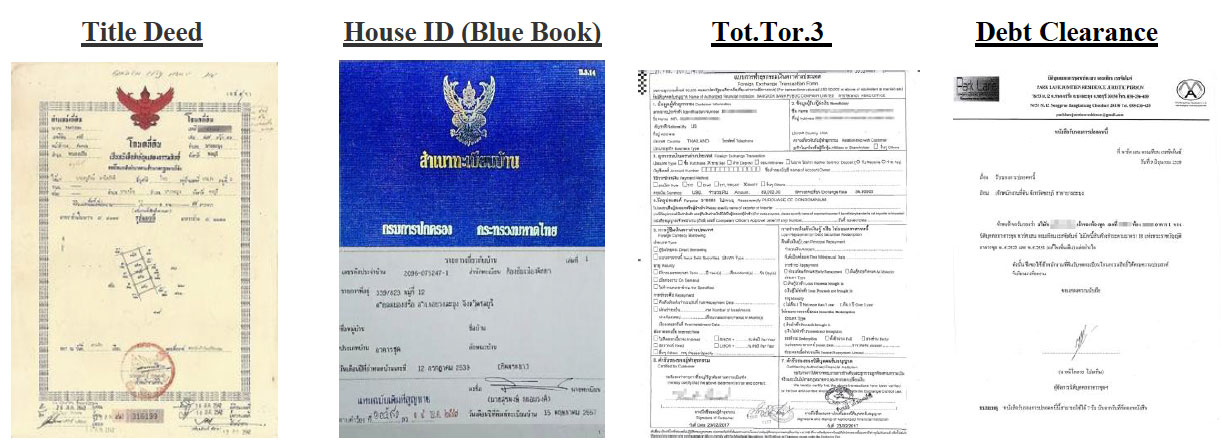
When a foreigner purchases a freehold condo, the bank typically issues a Foreign Exchange Transaction Form (FET), sometimes still referred to in the market by the old name TT3 / Tor Tor 3. This document serves to prove that the purchase funds were indeed remitted from overseas and received and processed in Thailand. The Land Office usually requires to see such documents when processing the transfer of freehold ownership to a foreigner.
Q5. Does each remittance have to exceed USD 10,000?
No.
“Each remittance must be at least USD 10,000” is not a legal threshold in 2026. A common banking practice is that for cross-border remittances of USD 50,000 or more, the bank will typically issue a formal FET; for amounts below that level, the bank may instead issue a credit advice, SWIFT confirmation, or other official receipt document.
The real point is not “must exceed USD 10,000,” but rather: the documents must be sufficient to prove the funds came from overseas, match the buyer’s name, and correspond to the condo transaction.
Q6. What should I be careful about when remitting funds?
To reduce the risk of the transfer being blocked, it is practically advisable to note the following:
- Funds should be remitted from overseas into Thailand, rather than simply being converted to Thai Baht abroad and then transferred via unclear paths.
- The name on the remittance or receipt documents should clearly match the buyer.
- The purpose of the remittance should ideally be clearly indicated as related to the condo purchase.
- All bank documents, SWIFT records, receipt notifications, and FET/credit advice should be kept in full.
If the document chain is incomplete, even if the funds have arrived, it may affect the Land Office’s ability to process the freehold registration.
Q7. What is a “Debt Clearance Letter” issued by the Juristic Condominium Person?
This is a document issued by the juristic management body of the condominium, certifying that the unit has no outstanding management fees, common charges, or other debts related to the unit before the transfer.
In transactions where a foreigner buys a condo, the Land Office will also check the foreign quota data for the project, so documents issued by the juristic person are very important in practice.
Q8. Can foreigners apply for a mortgage from a Thai bank?
Yes, but overall options are limited, and conditions are usually stricter than for Thai local buyers.
As of 2026, foreigners are not completely barred from applying for mortgages, but in most cases, non-resident foreigners still find it difficult to obtain standard residential mortgages from Thai local banks. Some banks or cross-border financial solutions may offer loans for specific nationalities, income sources, or specific projects.
Therefore, in practice, many foreign buyers still purchase with cash. If installment plans from developers or private loans are involved, it is even more important to have a lawyer familiar with Thai real estate review the contract terms.
Q9. What government fees and taxes are typically involved in a transfer?
In 2026, common government fees and taxes for second-hand or general transfer transactions in Thailand include:
- Transfer Fee: Typically 2% of the official appraised value
- Specific Business Tax (SBT): Generally 3.3%, commonly applicable to qualifying short-term resales
- Stamp Duty: Usually 0.5%, but if SBT is levied, stamp duty is typically not charged again
- Withholding Tax: Usually borne by the seller, with the calculation method varying depending on the seller’s status
- Lease Registration Fee: For a 30-year lease arrangement, commonly 1% of the lease value or registered rent
Q10. Who usually pays the transfer fee?
There is often a difference between the law and market practice.
In many transactions, the 2% transfer fee is commonly split 50/50 between buyer and seller, but the actual arrangement depends on the sale and purchase agreement, developer terms, and negotiation between the parties. In new project transactions, the developer may often dictate the fee allocation, so do not rely solely on verbal statements from sales staff; always refer to the contract text.
Q11. What is a Chanote? Will I always see one when buying a condo?
Chanote (Nor Sor 4 J) is the most complete and common type of formal land title deed in Thailand, representing land rights that have been precisely surveyed and can be fully registered for transactions.
In condo transactions, the buyer typically deals more directly with the unit title deed and Land Office registration data, rather than treating the Chanote as the sole core document. In other words, for a foreigner buying a condo, the key items to focus on are: the unit title deed, foreign quota, remittance proof, juristic person documents, and the sale and purchase agreement.
Q12. How are land and area measured in Thailand?
Common land units in Thailand are as follows:
- 1 Rai = 4 Ngan = 1,600 square meters
- 1 Ngan = 100 square Wah = 400 square meters
- 1 square Wah = 4 square meters
However, condo transactions are typically conducted in square meters (sqm), with the unit area generally including the interior usable space and balcony, based on the registered title deed data. This has not fundamentally changed as of 2026.
Q13. Does Thailand have property tax now?
Yes, but it is not the old 12.5% annual rental value tax.
Since 2020, Thailand has fully adopted the Land and Buildings Tax system. By 2026, condos, residences, second homes, rental properties, and vacant land are all taxed based on government appraised value and usage category, not on the old “12.5% of annual rental value” method.
Q14. How is the holding tax for residential properties roughly calculated in 2026?
The annual tax for residential use is generally much lower than the old 12.5%.
Under the current system, residential properties typically fall within a lower range of 0.02% to 0.10%; the applicable thresholds and rates differ for owner-occupied homes, sole residences, rental properties, and second homes. The tax rate for vacant or unused land is significantly higher.
Therefore, if you are a foreigner buying a condo for personal use, rental, or as a second home, the actual tax rate needs to be assessed based on the property’s use and holding method, and the old “12.5%” figure should no longer be used.
Q15. What is the current VAT in Thailand? Is an additional 7% VAT added when buying a condo?
As of April 2026, Thailand’s statutory VAT rate is 10%, but the government currently maintains the actual rate at 7%, at least until September 30, 2026.
However, when buying a condominium, it should not be simply understood as “all transactions have an additional 7% VAT.”
In real estate transactions, whether VAT applies often depends on factors such as the seller’s status, whether it’s a new project, whether it’s sold by the developer, and whether the price already includes tax. For many resale transactions, the core considerations are transfer fees, SBT, stamp duty, and withholding tax, rather than simply adding a 7% VAT.
Q16. What documents should I bring on the transfer day?
It is recommended that you prepare documents such as the TT3 form, debt clearance letter, Chanote (land title deed), and house registration book (Blue Book), and confirm with a Thai lawyer that all required documents are correct. Details may vary slightly depending on the land office, project, and bank document format, so it’s best to have a lawyer or someone familiar with the Thai transfer process review each item one by one before the official transfer.