































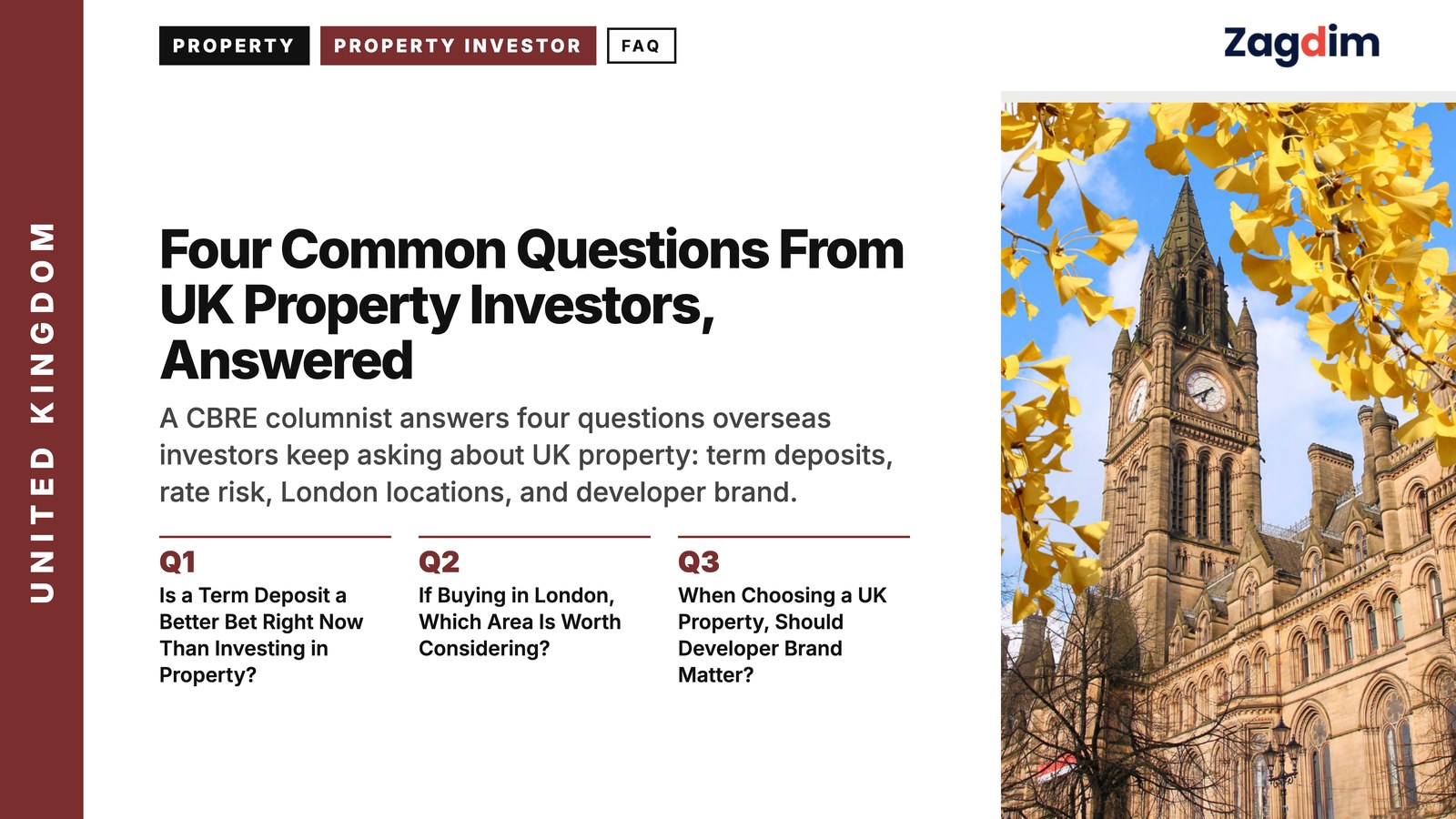
Market volatility and an uncertain global economic outlook have left many buyers hesitant, and overseas property sales have recently been going through anything but a busy season. This article gathers together the questions investors have been asking most often lately, aiming to give readers clear, objective answers.
1. Is a Term Deposit a Better Bet Right Now Than Investing in Property?
Headlines keep pointing to term-deposit rates climbing to five percent or higher, and the numbers are certainly eye-catching. But to earn that higher deposit rate, funds typically have to be locked up for close to a year or longer, which leaves little flexibility to redeploy capital and can get in the way of buying opportunities later when prices dip. Worth noting: the one-month Hong Kong dollar interbank rate has already eased back from its highs, while the three-month rate remains elevated, likely due to how banks are positioning their cross-period funding. The US rate-hiking cycle is expected to end in the first quarter of next year, and with the gap between Hong Kong dollar and US dollar rates having narrowed considerably, the current run of high term-deposit rates at local banks is likely only temporary. Investors should still think about their long-term investment allocation.
2. With UK Rates Rising Steadily, Is the Housing Market at Risk of Defaults, or Even a Repeat of the US-Style Mortgage Crisis?
The UK’s 30-year fixed mortgage rate has risen by around 300 basis points this year, yet the delinquency ratio for mortgages more than six months in arrears remains below 1%, a low level that points to healthy mortgage-asset quality. On top of that, 36% of English households owned their home outright in 2024–25 (up from 33% a decade earlier), a far higher share than in the US. In theory, this makes the UK housing market considerably better placed to withstand rising interest rates than the US market was.
3. If Buying in London, Which Area Is Worth Considering?
South West London has long been a favorite with both owner-occupiers and investors. It sits within one of London’s boroughs, offers quick and convenient access to the city center or the financial district, and — more importantly — has excellent school catchment areas, many within a walk of just a few minutes. As of the end of September, prices in South West London were up about 8% year-to-date, and have been fairly stable in recent months, largely unaffected by the UK’s broader economic and interest-rate concerns. Average prices in the area are currently just under £900,000. Because of the weaker exchange rate, the cost for Hong Kong buyers, which topped HK$10 million earlier in the year, is now just under HK$9 million — in effect, a significant discount on a prime area.
4. When Choosing a UK Property, Should Developer Brand Matter?
As in Hong Kong, properties from well-known developers tend to command a premium in the market and in the secondhand market. Many of this columnist’s longtime clients have long favored Berkeley, a well-known UK developer, whose St George brand has launched several flagship projects in recent years. A particularly popular one is Royal Exchange, in Kingston, one of London’s traditional wealthy areas and one of its most sought-after locations. Every primary and secondary school in the area holds an Ofsted rating of Outstanding or Good, with 18 rated Outstanding, most within a 20-minute drive. Another notable project, Saffron Wharf at London Dock in East London, sits next to Tower Bridge and has proven very popular with investors. Readers interested in learning more are welcome to ask Zagdim.
Victor Li, columnist, CBRE Overseas Property Weekly
Senior Director, International Residential, CBRE Hong Kong
Have a question about this guide? Leave a comment below, or ask Zagdim directly.
Your first stop for international property and global living.
Research and insights. Know what’s changing. Understand what matters.