
































Zagdim Overseas
Subscribe
  • Home
  • Real Estate & Economic News
    • All
    • Japan Market News
    • Other Market News
    • Thailand Market News
    • UK Market News
    • Vietnam Market News
    European Central Bank headquarters and the Frankfurt skyline at dawn, on the EU stablecoin rules story

    Europe’s Central Banks Urge Wider Stablecoin Yield Ban and End to MiCA Deposit Floor

    Special meeting of the Private Sector Advisory Council's Infrastructure Sector Group on real estate at Malacañan Palace, 22 September 2026

    Palace Says Marcos Backs Suspending Philippine Real Property Tax Hike

    Prime London Rental Values Jump 67% as Supply Contracts

    Prime London Rental Values Rise 67% as Supply Contracts

    Portugal's One-Bed Rent Now Tops the Minimum Wage

    One-Bedroom Flat Rent in Portugal Now Costs More Than Minimum Wage

    Dubai Rents Fall Up to 15% as Tenants Switch to New Leases

    Dubai Tenants Switch Homes as New-Lease Rents Fall Up to 15%

    Ras Al Khaimah waterfront apartments and palm promenade aerial view

    Ras Al Khaimah Apartment Prices Rise 18% in H1 2026 as Record Hotel Guest Numbers Land

    Trending Tags

  • Zagdim Insights
    • All
    • Market Trends Overview
    • Policy Interpretation
    • Zagdim Insights
    Automated immigration gates at Suvarnabhumi Airport

    Thailand’s Suvarnabhumi Auto Gates Expand to 33 Nationalities: Full List, Eligibility and TDAC Guide

    1960 archive photo of Queen Sirikit at a gala concert in The Hague, with Bank of Thailand specimens of the THB100 and THB500 commemorative notes

    Thailand’s commemorative banknotes return in October: where to exchange the THB100 and THB500 notes

    A document-style cover showing the Thai Revenue Department’s 15 September 2026 GloBE MCAA announcement with the subject line highlighted.

    Thailand joins the global minimum tax information exchange: which businesses need to pay attention, and are individuals affected?

    A 2025 file photo of Australian Home Affairs Minister Tony Burke at a meeting, alongside Zagdim’s analysis title on Australia’s migration reforms.

    Australia announces migration reforms targeting student families, visa switching and longer stays

    China’s Entry-Exit Agency Rules: What Your Business Needs to Prepare. Paper folders labelled Deadlines, Documents and Partners, with a calendar, Chinese gateway and flight route. AI-generated illustration.

    China’s New Entry-Exit Agency Rules: What Your Business Needs to Prepare

    Three UK New-Build Thresholds for 2026: The Building Safety Levy, Second Staircases and the New EPC

    Zagdim Research cover: investigator setting up cameras in an empty Japanese apartment - Japan Prices Death Into Its Housing Market, and Buyers Have Begun to Bite

    Japan Prices Death Into Its Housing Market — and Buyers Have Begun to Bite

    Thailand to Cancel 60-Day Visa Exemption: What Long-Stay Options Are Available for Foreigners?

    Thailand to Cancel 60-Day Visa Exemption: What Long-Stay Options Are Available for Foreigners?

    Thailand Cabinet Approves Cancellation of 60-Day Visa Exemption for 93 Countries; Official Effective Date Still Pending Royal Gazette Publication

    Thailand Cabinet Approves Cancellation of 60-Day Visa Exemption for 93 Countries; Official Effective Date Still Pending Royal Gazette Publication

    • Zagdim Insights
    • Market Trends Overview
    • Policy Interpretation
  • Global Reports
    Zagdim Featured CBRE Thailand Mid-Year Outlook 2026

    CBRE Thailand Mid-Year Outlook: What Is Changing Across Six Real Estate Sectors?

    More Firms, a Busier First Half, a Softer Q2: What Vietnam’s Property Data Show, and Where ‘Repositioning’ Is a Reading

    More Firms, a Busier First Half, a Softer Q2: What Vietnam’s Property Data Show, and Where ‘Repositioning’ Is a Reading

    The Headline Number and the Real One: Reading UK Home Values After Inflation

    The Headline Number and the Real One: Reading UK Home Values After Inflation

    Tokyo’s Property Boom: How to Read AMRO’s ‘Warning, Not a Crisis’

    Tokyo’s Property Boom: How to Read AMRO’s ‘Warning, Not a Crisis’

    A Soft Summer for US Housing: What the Data Show, and Where ‘Hurting’ Is CNBC’s Word

    A Soft Summer for US Housing: What the Data Show, and Where ‘Hurting’ Is CNBC’s Word

    Malaysia’s Property Market Is Getting Choosier — What \”Selective\” Does and Doesn’t Say

    Malaysia’s Property Market Is Getting Choosier — What \”Selective\” Does and Doesn’t Say

    72% at the Top: What Mainland Buyer-Share Data Say About Hong Kong Property — and What They Don’t

    72% at the Top: What Mainland Buyer-Share Data Say About Hong Kong Property — and What They Don’t

    Hong Kong Home Prices Are Up ~10% This Year — but Can the Rebound Last Without Local Owners?

    Hong Kong Home Prices Are Up ~10% This Year — but Can the Rebound Last Without Local Owners?

    193 Deals in Dubai, 94 in Hong Kong: Reading a Super-Prime Quarter Without Calling It a Cycle

    193 Deals in Dubai, 94 in Hong Kong: Reading a Super-Prime Quarter Without Calling It a Cycle

  • Buying & Immigration Guide
    • All
    • Expat Lifestyle Guide
    • International Property Buying Guide
    • Overseas Leasing & Long-Term Stay
    • Real Estate Law & Taxation
    • Relocation, Immigration & Visa
    Five things a first-time overseas buyer must settle before buying in London: entry (SDLT and the two surcharges), financing (interest relief capped at 20%), holding (NRLS and letting compliance), title (leasehold and building safety), exit (NRCGT and your treaty position)

    Is London property worth buying? Five things a first-time overseas buyer must settle first

    Japan’s Revised Condominium Ownership Act (2026): What Overseas Owners Need to Know About Voting Rights, Resolutions, and the New Domestic Manager Requirement

    Japan’s Revised Condominium Ownership Act (2026): What Overseas Owners Need to Know About Voting Rights, Resolutions, and the New Domestic Manager Requirement

    Before You Buy Property in Vietnam: Eligible Assets, Prohibited Categories, and How Land Rights Actually Work for Overseas Buyers

    Before You Buy Property in Vietnam: Eligible Assets, Prohibited Categories, and How Land Rights Actually Work for Overseas Buyers

    Buying Property in London: Key Risks to Check Before You Exchange — Leasehold, Service Charges, Off-Plan Deposits, and Contracts

    Buying Property in London: Key Risks to Check Before You Exchange — Leasehold, Service Charges, Off-Plan Deposits, and Contracts

    Opening a UK Bank Account as an Overseas Resident: Identity, Address, and What to Check Before You Apply

    Opening a UK Bank Account as an Overseas Resident: Identity, Address, and What to Check Before You Apply

    UK Residential Mortgage Readiness for Overseas Buyers: What Lenders Check on Income, Status, and Deposit

    UK Residential Mortgage Readiness for Overseas Buyers: What Lenders Check on Income, Status, and Deposit

    How should overseas owners manage and rent out property in Japan after purchase?

    How should overseas owners manage and rent out property in Japan after purchase?

    The retirees who no longer want to renew their Thai visa every year

    The retirees who no longer want to renew their Thai visa every year

    Same retirement age, different Thailand residence choices: Retirement O, LTR, and Thailand Privilege

    Same retirement age, different Thailand residence choices: Retirement O, LTR, and Thailand Privilege

    Trending Tags

  • About
    • Ask Questions
    • Zagdim Research
    • Contact Us — LINE / WhatsApp
  • 中文 EN
No Result
View All Result
Zagdim
  • Home
  • Real Estate & Economic News
    • All
    • Japan Market News
    • Other Market News
    • Thailand Market News
    • UK Market News
    • Vietnam Market News
    European Central Bank headquarters and the Frankfurt skyline at dawn, on the EU stablecoin rules story

    Europe’s Central Banks Urge Wider Stablecoin Yield Ban and End to MiCA Deposit Floor

    Special meeting of the Private Sector Advisory Council's Infrastructure Sector Group on real estate at Malacañan Palace, 22 September 2026

    Palace Says Marcos Backs Suspending Philippine Real Property Tax Hike

    Prime London Rental Values Jump 67% as Supply Contracts

    Prime London Rental Values Rise 67% as Supply Contracts

    Portugal's One-Bed Rent Now Tops the Minimum Wage

    One-Bedroom Flat Rent in Portugal Now Costs More Than Minimum Wage

    Dubai Rents Fall Up to 15% as Tenants Switch to New Leases

    Dubai Tenants Switch Homes as New-Lease Rents Fall Up to 15%

    Ras Al Khaimah waterfront apartments and palm promenade aerial view

    Ras Al Khaimah Apartment Prices Rise 18% in H1 2026 as Record Hotel Guest Numbers Land

    Trending Tags

  • Zagdim Insights
    • All
    • Market Trends Overview
    • Policy Interpretation
    • Zagdim Insights
    Automated immigration gates at Suvarnabhumi Airport

    Thailand’s Suvarnabhumi Auto Gates Expand to 33 Nationalities: Full List, Eligibility and TDAC Guide

    1960 archive photo of Queen Sirikit at a gala concert in The Hague, with Bank of Thailand specimens of the THB100 and THB500 commemorative notes

    Thailand’s commemorative banknotes return in October: where to exchange the THB100 and THB500 notes

    A document-style cover showing the Thai Revenue Department’s 15 September 2026 GloBE MCAA announcement with the subject line highlighted.

    Thailand joins the global minimum tax information exchange: which businesses need to pay attention, and are individuals affected?

    A 2025 file photo of Australian Home Affairs Minister Tony Burke at a meeting, alongside Zagdim’s analysis title on Australia’s migration reforms.

    Australia announces migration reforms targeting student families, visa switching and longer stays

    China’s Entry-Exit Agency Rules: What Your Business Needs to Prepare. Paper folders labelled Deadlines, Documents and Partners, with a calendar, Chinese gateway and flight route. AI-generated illustration.

    China’s New Entry-Exit Agency Rules: What Your Business Needs to Prepare

    Three UK New-Build Thresholds for 2026: The Building Safety Levy, Second Staircases and the New EPC

    Zagdim Research cover: investigator setting up cameras in an empty Japanese apartment - Japan Prices Death Into Its Housing Market, and Buyers Have Begun to Bite

    Japan Prices Death Into Its Housing Market — and Buyers Have Begun to Bite

    Thailand to Cancel 60-Day Visa Exemption: What Long-Stay Options Are Available for Foreigners?

    Thailand to Cancel 60-Day Visa Exemption: What Long-Stay Options Are Available for Foreigners?

    Thailand Cabinet Approves Cancellation of 60-Day Visa Exemption for 93 Countries; Official Effective Date Still Pending Royal Gazette Publication

    Thailand Cabinet Approves Cancellation of 60-Day Visa Exemption for 93 Countries; Official Effective Date Still Pending Royal Gazette Publication

    • Zagdim Insights
    • Market Trends Overview
    • Policy Interpretation
  • Global Reports
    Zagdim Featured CBRE Thailand Mid-Year Outlook 2026

    CBRE Thailand Mid-Year Outlook: What Is Changing Across Six Real Estate Sectors?

    More Firms, a Busier First Half, a Softer Q2: What Vietnam’s Property Data Show, and Where ‘Repositioning’ Is a Reading

    More Firms, a Busier First Half, a Softer Q2: What Vietnam’s Property Data Show, and Where ‘Repositioning’ Is a Reading

    The Headline Number and the Real One: Reading UK Home Values After Inflation

    The Headline Number and the Real One: Reading UK Home Values After Inflation

    Tokyo’s Property Boom: How to Read AMRO’s ‘Warning, Not a Crisis’

    Tokyo’s Property Boom: How to Read AMRO’s ‘Warning, Not a Crisis’

    A Soft Summer for US Housing: What the Data Show, and Where ‘Hurting’ Is CNBC’s Word

    A Soft Summer for US Housing: What the Data Show, and Where ‘Hurting’ Is CNBC’s Word

    Malaysia’s Property Market Is Getting Choosier — What \”Selective\” Does and Doesn’t Say

    Malaysia’s Property Market Is Getting Choosier — What \”Selective\” Does and Doesn’t Say

    72% at the Top: What Mainland Buyer-Share Data Say About Hong Kong Property — and What They Don’t

    72% at the Top: What Mainland Buyer-Share Data Say About Hong Kong Property — and What They Don’t

    Hong Kong Home Prices Are Up ~10% This Year — but Can the Rebound Last Without Local Owners?

    Hong Kong Home Prices Are Up ~10% This Year — but Can the Rebound Last Without Local Owners?

    193 Deals in Dubai, 94 in Hong Kong: Reading a Super-Prime Quarter Without Calling It a Cycle

    193 Deals in Dubai, 94 in Hong Kong: Reading a Super-Prime Quarter Without Calling It a Cycle

  • Buying & Immigration Guide
    • All
    • Expat Lifestyle Guide
    • International Property Buying Guide
    • Overseas Leasing & Long-Term Stay
    • Real Estate Law & Taxation
    • Relocation, Immigration & Visa
    Five things a first-time overseas buyer must settle before buying in London: entry (SDLT and the two surcharges), financing (interest relief capped at 20%), holding (NRLS and letting compliance), title (leasehold and building safety), exit (NRCGT and your treaty position)

    Is London property worth buying? Five things a first-time overseas buyer must settle first

    Japan’s Revised Condominium Ownership Act (2026): What Overseas Owners Need to Know About Voting Rights, Resolutions, and the New Domestic Manager Requirement

    Japan’s Revised Condominium Ownership Act (2026): What Overseas Owners Need to Know About Voting Rights, Resolutions, and the New Domestic Manager Requirement

    Before You Buy Property in Vietnam: Eligible Assets, Prohibited Categories, and How Land Rights Actually Work for Overseas Buyers

    Before You Buy Property in Vietnam: Eligible Assets, Prohibited Categories, and How Land Rights Actually Work for Overseas Buyers

    Buying Property in London: Key Risks to Check Before You Exchange — Leasehold, Service Charges, Off-Plan Deposits, and Contracts

    Buying Property in London: Key Risks to Check Before You Exchange — Leasehold, Service Charges, Off-Plan Deposits, and Contracts

    Opening a UK Bank Account as an Overseas Resident: Identity, Address, and What to Check Before You Apply

    Opening a UK Bank Account as an Overseas Resident: Identity, Address, and What to Check Before You Apply

    UK Residential Mortgage Readiness for Overseas Buyers: What Lenders Check on Income, Status, and Deposit

    UK Residential Mortgage Readiness for Overseas Buyers: What Lenders Check on Income, Status, and Deposit

    How should overseas owners manage and rent out property in Japan after purchase?

    How should overseas owners manage and rent out property in Japan after purchase?

    The retirees who no longer want to renew their Thai visa every year

    The retirees who no longer want to renew their Thai visa every year

    Same retirement age, different Thailand residence choices: Retirement O, LTR, and Thailand Privilege

    Same retirement age, different Thailand residence choices: Retirement O, LTR, and Thailand Privilege

    Trending Tags

  • About
    • Ask Questions
    • Zagdim Research
    • Contact Us — LINE / WhatsApp
  • 中文 EN
No Result
View All Result
Zagdim
No Result
View All Result

What Is an SPV? Holding UK Property Through a Limited Company

Home Living Abroad
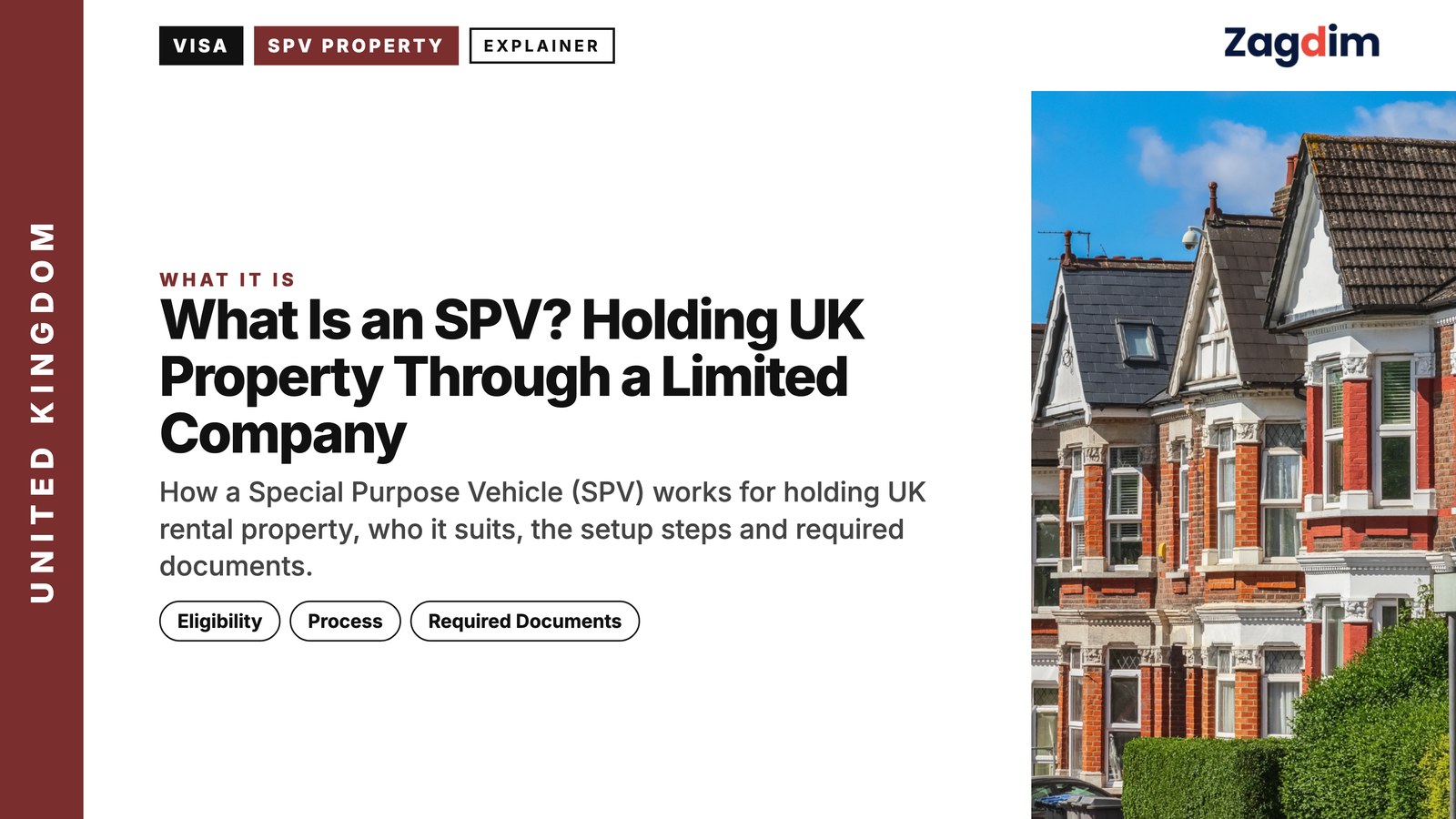
Victorian terraced houses, illustrating What Is an SPV? Holding UK Property Through a Limited Company

Image: Zagdim

September 24, 2026
in Living Abroad, Property, United Kingdom
Reading Time: 12 mins read

Introduction

As the global property market continues to develop, investors are increasingly turning to the “Special Purpose Vehicle” (SPV) legal structure when planning their asset allocation, and this is especially true in UK property investment, where using an SPV has become a popular choice. An SPV is an independently established legal entity set up specifically to hold or manage a particular asset, giving it clear advantages when it comes to isolating risk, managing finances and providing tax benefits.

Current Trend

As the UK property market offers strong return potential alongside constantly changing policy, more and more high-net-worth individuals, digital nomads and international investors are choosing to hold property through an SPV. An SPV lets investors benefit from more flexible financial planning and tax advantages, particularly when it comes to managing a high tax burden, protecting assets and estate planning. For investors looking to allocate assets across borders, an SPV has become a legitimate and efficient choice.

Common Questions

Although an SPV offers clear advantages for investors, many readers still have questions when it comes to understanding and choosing this structure. For example: is an SPV suitable for every type of investor? What are the costs and legal requirements for setting one up? And how can an SPV be used effectively to achieve asset protection and tax planning? This article breaks down the process of setting up an SPV in detail, looks at its function in tax treatment, asset protection and risk management, and offers specific advice to help readers make an informed choice.

Eligibility

When considering whether to use a Special Purpose Vehicle (SPV) to hold UK property, investors need to understand which groups this structure suits best. An SPV isn’t right for everyone — understanding who it’s aimed at helps investors make a more precise decision.

1. High-Net-Worth Individuals

For high-net-worth individuals, an SPV is an ideal choice. Because high-net-worth individuals typically have broad and substantial income sources, holding property through an SPV can effectively reduce a personal income tax burden that could otherwise reach as high as 45%, while benefiting from a lower corporation tax rate. This not only optimizes the overall tax structure, but also lets property income be extracted as dividends, further reducing the tax burden. So this group is particularly well suited to using an SPV for large-scale property investment.

2. Digital Nomads and Expatriate Executives

As globalization progresses, digital nomads and expatriate executives increasingly choose to live and work across borders. For this group, an SPV is not just an effective way to manage international property — it also offers flexible asset-allocation opportunities. Through an SPV, these investors can hold property in different countries and benefit from certain tax advantages, while keeping their assets separate from their personal finances and reducing international operating risk. This structure is particularly well suited to those looking to diversify risk and invest internationally.

3. Prospective Immigrants and Long-Term Residents

For prospective immigrants and long-term residents planning to settle in the UK, using an SPV for property investment not only helps with planning future living arrangements, but also offers more flexibility for asset allocation. In particular, for those planning to hold multiple properties after relocating, an SPV provides a legal way to separate assets and reduce financial risk, while also helping with estate planning and tax matters. So for those with plans to relocate, setting up an SPV is not just an asset-allocation choice — it’s also a foundation for future stability.

Not sure whether an SPV suits your situation for holding property? If you have questions, ask Zagdim and we’ll help you look into it.

Process: Step by Step

Setting up and running a Special Purpose Vehicle (SPV) to hold UK property involves a series of legal and administrative steps. Here are the main steps and points to watch out for, to help you set up and manage an SPV smoothly.

Step 1: Set up the SPV company

First, you need to set up the SPV company. This is an independent legal entity, set up specifically to hold and manage property assets. The basic steps for setting up an SPV include:

  • Choose the right company structure: an SPV can be a limited liability company (LLC) or another company type suited to your investment needs. Choosing the right structure helps ensure the company’s tax efficiency and asset protection.
  • Choose the registration location: an SPV is usually registered within the UK. When choosing a registration location, you should consider the local legal and tax environment. For international investors, choosing the UK as the registration location offers the benefit of a relatively stable legal framework.
  • Submit the required documents: the registration process requires submitting the company’s articles of association, shareholder agreements and other relevant corporate documents.

Points to watch out for: when registering the company, make sure you choose the correct company structure and location, to comply with UK legal requirements and maximize tax efficiency.

Step 2: Choose a suitable funding source and structure

Once the SPV is set up, the next step is to decide how to fund the company. You can choose to use private capital or fund it through borrowing.

  • Private capital: this usually comes from the investor’s own savings or capital. This approach reduces the funding burden but affects the investor’s own cash flow.
  • Borrowing: another approach is to fund the SPV through a loan. Many banks and financial institutions offer loan products designed specifically for SPVs.

Points to watch out for:

  • If you choose borrowing, you need to consider the loan terms, including interest rate, repayment period and deposit requirements.
  • You also need to fully understand the tax implications, to make sure the SPV’s funding structure delivers the maximum tax benefit.

Step 3: Choose and purchase the property

Choosing the right property is a key step in the investment process. This isn’t just about the property’s location and return potential — it also involves how the purchase is carried out through the SPV.

  • Choose the property type: an SPV is mainly suited to holding rental property, commercial property or development projects. Choosing a property type that matches your investment goals is essential.
  • The purchase process: once you’ve chosen a property, the SPV can complete the purchase in the company’s name, using its corporate structure to carry out the transaction.

Points to watch out for:

  • Investors should choose a property type that matches the SPV’s asset-allocation strategy, and consider the expected return on the investment.
  • When carrying out the purchase, make sure you comply with local law and tax rules, to avoid unnecessary risk.

Step 4: Asset management and tax planning

Once the property purchase is complete, the SPV moves into the asset management and tax planning stage. This includes the day-to-day management of the property, rent collection and other property-related operations.

  • Property management: an SPV can appoint a professional property management company to handle the maintenance and management of the property.
  • Tax planning: sensible tax planning can effectively reduce the SPV’s overall tax burden. This includes choosing the most suitable tax structure and filing method.

Points to watch out for:

  • Make sure the SPV’s tax structure complies with local tax policy, and choose the best filing method to maximize returns.
  • Regularly review and update your tax planning, to make sure policy changes don’t affect your investment returns.

Step 5: Asset protection and risk management

Finally, one of the biggest advantages of holding property through an SPV is asset protection. As an independent legal entity, an SPV can effectively isolate risk and protect the investor’s personal assets from being affected.

  • Asset protection: an SPV can separate ownership of the property from other personal or corporate assets, providing protection in the event of legal disputes or bankruptcy.
  • Risk management: beyond legal protection, investors should also consider purchasing appropriate insurance to deal with possible losses or risks.

Points to watch out for:

  • Make sure you choose appropriate legal safeguards, such as setting up the right company structure and registration location.
  • Purchase adequate insurance to protect the property, and make sure your risk-management strategy matches your actual needs.

Required Documents

Setting up and running a Special Purpose Vehicle (SPV) to hold UK property requires several key documents. These documents not only ensure the SPV complies with legal requirements, but also help the investment process run smoothly. Here is a list of commonly required documents:

Documents Required to Register an SPV

  • Company formation documents: including the company’s registration application form and certificate of incorporation. These documents are issued by Companies House (the UK’s company registrar) and confirm the SPV exists as an independent legal entity.
  • Shareholder agreement: this is the agreement reached between shareholders, setting out shareholders’ rights and obligations clearly — especially important where multiple parties are working together, since a shareholder agreement helps protect everyone’s interests.
  • Board resolutions: when setting up an SPV or making major decisions (such as a property purchase decision), a board resolution is required. These resolution documents show that the company’s senior management has approved a particular action.

Funding Source and Supporting Documents

  1. Proof of bank deposit: if the SPV’s funding comes from private capital or another source, you need to provide the corresponding proof of bank deposit, showing that the required funds are in place. These documents usually show the deposit amount and date.
  2. Loan agreement: if the SPV’s funding includes a loan, you need to provide the formal loan agreement signed with the lender. This agreement must clearly set out the loan amount, interest rate, repayment period and other terms, and provide proof of approval from the lender.

Legal Documents Required to Purchase Property

  1. Property purchase contract: once a property is chosen, the SPV needs to sign a formal property purchase contract. This contract includes detailed information such as the property price, completion conditions and delivery timing.
  2. Loan contract: if the purchase funding comes from a loan, you need to provide the relevant loan contract. This contract will set out the loan amount, repayment schedule, interest rate and the lender’s terms.

Points to watch out for:

  • Make sure all documents comply with UK legal and tax requirements, and are reviewed by a qualified professional institution or lawyer.
  • Where international fund transfers are involved, additional documents relating to the source of funds may be required, such as proof of foreign exchange transfer.

FAQ

The following are common questions about setting up and running a Special Purpose Vehicle (SPV), to help you better understand how an SPV works and its related advantages.

1. How is an SPV different from an ordinary company?
An SPV (Special Purpose Vehicle) is a specially established legal entity, usually set up to hold a single asset or a specific type of asset, aimed at isolating risk and providing dedicated management. Unlike an ordinary company, an SPV’s operations are usually limited to a specific project or business, and it focuses on a particular financial structure. An ordinary company, by contrast, may run a diversified business and manage a wide range of different assets and liabilities.

2. What tax advantages does setting up an SPV offer?
Setting up an SPV can effectively reduce an investor’s tax burden. Rental income through an SPV is generally taxed at the corporation tax rate rather than personal income tax rate, which is particularly beneficial for higher-income investors. In addition, an SPV can deduct mortgage interest in full as a business expense, reducing taxable income. An SPV also offers more flexibility for extracting dividends, potentially benefiting from a lower tax rate, or retaining profit within the company for reinvestment, achieving more efficient use of capital.

3. How do I choose an SPV’s registration location?
When choosing an SPV’s registration location, consider the following factors:

  • Legal environment: choosing a location with a stable legal framework helps ensure the SPV’s operations comply with regulatory requirements.
  • Tax benefits: some locations offer favorable tax conditions, particularly around Capital Gains Tax and dividend tax, which can be attractive to investors.
  • Setup and maintenance costs: setup and running costs can vary by location, so consider choosing a location with lower costs.
  • Convenience for international operations: if international investment is involved, choosing a location with strong international financial and tax cooperation may be more convenient.

4. Can an SPV take on a loan?
Yes, an SPV can take on a loan. Many financial institutions offer loan products designed specifically for SPVs, which can be used to purchase property and serve as collateral. Loan terms usually depend on the SPV’s financial position and balance sheet. Through borrowing, an SPV can achieve a leverage effect, further expanding the scale of investment.

5. What types of property investment is an SPV suited to?
An SPV is mainly suited to:

  • Rental property: many investors use an SPV to hold rental property, particularly for large-scale property investment or commercial property.
  • Development projects: an SPV is also suited to raising funds and managing risk for property development projects.
  • International property investment: if an investor wants to hold property in different countries, an SPV can provide a suitable structure to isolate risk and manage asset allocation.

6. How is the cost of setting up an SPV calculated?
The cost of setting up an SPV includes:

  • Company registration fees: initial setup costs for an SPV vary depending on the registration location.
  • Legal and accounting fees: setting up an SPV requires the help of a professional lawyer and accountant, and this cost is usually relatively high.
  • Annual maintenance fees: an SPV needs to pay annual maintenance fees, including tax filing, accounting reports and other regulatory compliance costs.
  • Loan and investment setup fees: if the SPV funds the property purchase through borrowing, you also need to consider the cost of setting up and managing the loan.

Things to Watch Out For

When setting up and running a Special Purpose Vehicle (SPV), investors often run into some common mistakes and misunderstandings. Understanding and avoiding these common issues will help ensure the SPV runs smoothly and achieves the best investment outcome. Here are a few key points to watch out for:

1. Misunderstanding the SPV’s Tax Structure

When setting up an SPV, many investors may misunderstand its tax structure, particularly around planning and filing. An SPV’s main tax advantages come from the lower corporation tax rate and mortgage interest deductions, among other benefits, but these advantages don’t apply automatically to every situation.

How to avoid setting it up incorrectly:

  • Before setting up an SPV, carefully understand the tax terms involved, and make sure the structure you set up meets local tax requirements.
  • Consult a professional accountant or tax advisor, to make sure the SPV’s tax structure matches your long-term financial goals.
  • Pay particular attention to avoiding double taxation, such as Capital Gains Tax at the company level and dividend income tax at the shareholder level.

2. Overlooking Differences Between the SPV’s Registration Location and UK Property Market Rules

The choice of registration location for an SPV has a significant effect on tax structure, ease of management, and compliance requirements. Overlooking the legal rules and specific requirements of the property market in different locations could lead to unnecessary legal risk and additional cost.

How to avoid overlooking differences in registration location:

  • Carefully weigh the tax policy and setup cost of the SPV’s registration location, and choose the location that’s most advantageous for your property investment.
  • When choosing a registration location, understand the support and rules different regions offer for international investment, and discuss the best choice with a professional.
  • Make sure the SPV’s chosen registration location complies with the relevant rules of the UK property market, and maximizes the use of local legal and tax advantages.

3. Comparing the Tax Burden of an SPV Against Personal Ownership, and Avoiding Over-Reliance

An SPV does offer tax advantages compared with holding property personally, but it isn’t better than personal ownership in every situation. Many investors, when setting up an SPV, over-rely on its tax benefits and overlook the additional burden the SPV might bring in terms of cash flow, management costs and double taxation.

How to avoid over-relying on an SPV’s tax advantages:

  • When choosing between an SPV and personal ownership, weigh all relevant factors together, including tax burden, management costs and liquidity.
  • Discuss with a professional accountant, and choose the most cost-effective ownership structure based on your financial position and investment plans.
  • Understand the specific impact an SPV has on asset transfer, dividend distribution and handling property appreciation, to avoid underestimating the tax risk involved.

Summary

Using a Special Purpose Vehicle (SPV) to hold UK property doesn’t just offer clear tax advantages — it can also provide effective asset protection and risk management. Through an SPV, investors can benefit from a lower corporation tax rate, and can keep property income separate from personal income tax, reducing the overall tax burden. In addition, an SPV’s structure keeps property separate from personal assets, reducing legal risk and providing additional asset protection — offering greater flexibility for international investors too.

Related in this series:

  • UK Virtual Office and Company Registration: A Practical Guide
  • How to File UK Rental Income Tax as an Overseas Landlord
  • UK Stamp Duty in 2025: Rates and Refund Strategies
  • Common UK Property Tax Filing Mistakes and How to Avoid Penalties

Have a question about this guide? Leave a comment below, or ask Zagdim directly.

Life abroad? Ask Zagdim.

Your first stop for international property and global living.

Research and insights. Know what’s changing. Understand what matters.

Sources

  • Accountex – Investment Companies Opened in 2023: How Do They Support the Goals of Business Owners
  • Accounting Firms – SPV vs Personal Ownership
  • Adam Accountancy – Unlocking the Power of SPV: Special Purpose Vehicles to Purchase Properties
  • LegalVision – Special Purpose Vehicles
  • Moore KS – Tax and UK Commercial Property Deals: Corporate Due Diligence
  • GM Professional Accountants – Pros and Cons of Using an SPV to Buy Property: A Detailed Guide
  • Financial Reporter – Using a Special Purpose Vehicle (SPV) for Property Investment
  • TaxD – Tax Benefits of Buy-to-Let SPV’s
  • Ocorian – Why Should I Set Up an SPV?
  • Osome – Special Purpose Vehicle (SPV) in the UK
  • Invoice Funding – What is a Special Purpose Vehicle?
  • Fusion BS – Unlocking Property Investment Potential: Harnessing SPVs for Rental Properties in the UK
  • UK Property Accountants – 5 Ways to Save Tax with Property Investment Company

Zagdim AI
All content is researched, written, or authorized for publication by the @Zagdim Overseas team. Sharing and reposting are welcome, but please make sure to credit the source and include the original article link from this website. Any plagiarism or unauthorized use may result in legal action. For article submissions, please contact us via Facebook. Thank you for your support!

For article submissions, press release publication, or interview notices, please contact [email protected]. 

Zagdim Ask

Have a specific question about overseas living, property, visa, or practical arrangements?

Fill in your situation and key concerns through Zagdim Ask. Our team will review your message and get back to you by email where appropriate.

Submit your enquiry →

Similar Topics

How Foreigners Can Buy Property in Ras Al Khaimah: Freehold Areas, Ownership Rights and Transfer Steps
Living Abroad

How Foreigners Can Buy Property in Ras Al Khaimah: Freehold Areas, Ownership Rights and Transfer Steps

September 26, 2026
How to Apply for Singapore PR: Eligibility, Fees, Processing Time and Citizenship Rules
Living Abroad

How to Apply for Singapore PR: Eligibility, Fees, Processing Time and Citizenship Rules

September 26, 2026
Transport — jeepney passing a university clock tower under trees (Manila), illustrating BGC (Bonifacio Global City): Manila's Modern International District
Philippines

BGC (Bonifacio Global City): Manila’s Modern International District

September 25, 2026
Next Post
White stucco townhouse frontage, illustrating Holding UK Property Through an Offshore Company: Tax Benefits and Risks

Holding UK Property Through an Offshore Company: Tax Benefits and Risks

Bank of England £50 notes and pound coins, illustrating How Non-Resident Sellers Can Reduce UK Capital Gains Tax on Property

How Non-Resident Sellers Can Reduce UK Capital Gains Tax on Property

Tree-lined park path, illustrating Moving to the UK: Your First-Weeks Checklist for Banking, Tax and the NHS

Moving to the UK: Your First-Weeks Checklist for Banking, Tax and the NHS

Facebook Twitter Youtube

About Us

Zagdim is a global knowledge platform focused on cross-border property, relocation, lifestyle, and location-based decision-making.

We provide insights on overseas real estate, market trends, regional analysis, economic developments, and practical relocation information. Through continuous market observation and on-the-ground research, Zagdim helps readers better understand a place before deciding where to live, invest, buy property, or establish a base abroad.

We currently follow markets including the UK, Japan, Thailand, Malaysia, Germany, Australia, the UAE, Greece, Portugal, and Spain, while continuing to track emerging lifestyle, relocation, and property trends worldwide.

Category

  • Australia
  • Buying & Immigration Guide
  • Canada
  • Costa Rica
  • Dubai
  • Encyclopedia
  • Europe
  • Expat Lifestyle Guide
  • Germany
  • Global Reports Analysis
  • Hong Kong
  • Human-Picked
  • Indonesia
  • International Property Buying Guide
  • Japan
  • Japan Market News
  • Kenya
  • Living Abroad
  • Malaysia
  • Mallorca
  • Market Trends Overview
  • News
  • Other Market News
  • Overseas Leasing & Long-Term Stay
  • Philippines
  • Policy Interpretation
  • Portugal
  • Property
  • Property Law & Tax
  • Real Estate & Economic News
  • Real Estate Law & Taxation
  • Relocation, Immigration & Visa
  • Singapore
  • South Korea
  • Spain
  • Switzerland
  • Thailand
  • Thailand Market News
  • UK Market News
  • United Kingdom
  • United States
  • Vietnam Market News
  • Visa & Immigration
  • Zagdim Insights
  • Zagdim Property Insights

Email:[email protected]


Add Friends


WhatsApp
Contact Us


Wechat:Zagdim

Work with Zagdim

Put your brand inside the overseas property research process — in English and in Chinese. Reaching buyers, expats and investors across 19 markets.

View partnership packages →

©2026 Zagdim Overseas All Right Reserved

No Result
View All Result
  • Home
  • Zagdim Property Insights
    • Market Trends Overview
    • Policy Interpretation
    • Forest
    • PLACEHOLDER sub-cate for Zagdim Property Insights
  • Global Reports Analysis
    • In-Depth Project Analysis
  • Real Estate & Economic News
    • Thailand Market News
    • UK Market News
    • Germany Market News
    • Japan Market News
  • Buying & Immigration Guide
    • Expat Lifestyle Guide
    • Real Estate Law & Taxation
    • Overseas Leasing & Long-Term Stay
    • Starting a Business & Company Setup
  • Zagdim Ask
  • 中文 EN

©2026 Zagdim Overseas All Right Reserved