






























Introduction
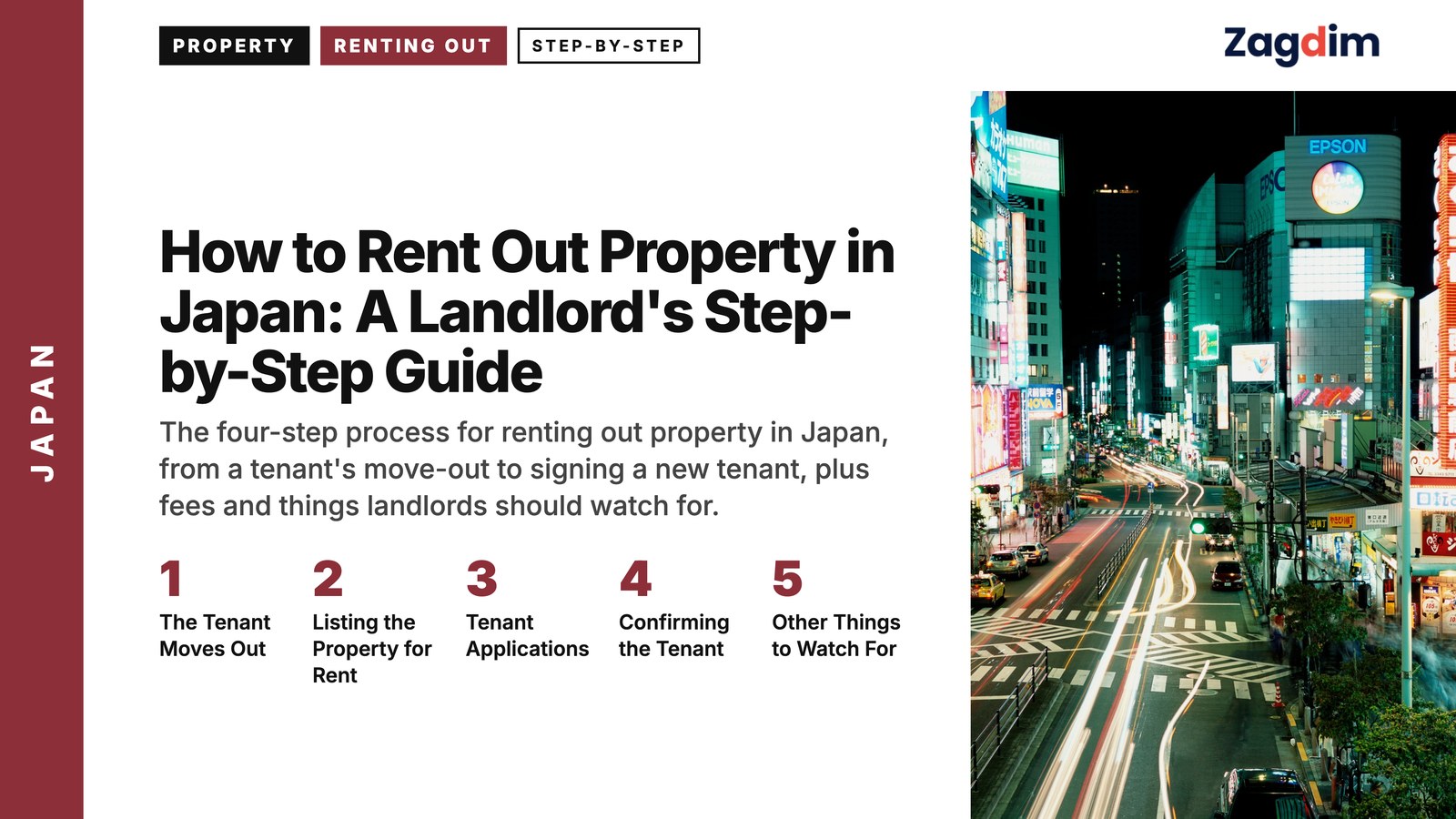
Japan’s residential rental market is active, and many buyers invest in Japanese property specifically to collect rental income. But a landlord will inevitably face tenant turnover at some point, so understanding the leasing process thoroughly can save landlords both time and money. Below is a detailed walkthrough of the leasing process in Japan and what to watch for.
Step 1: The Tenant Moves Out
Once a tenant decides to move out, they notify the landlord of the exact move-out date — the day they will vacate the unit. The landlord can ask an agent to inspect the unit, and once everything checks out, the security deposit is returned to the tenant. After the tenant moves out, the landlord needs to have the unit cleaned, which can be outsourced to an agent; cleaning typically costs around JPY 20,000–30,000. The cleaning fee can also be specified upfront when the unit is first listed, so that the outgoing tenant is required to pay it on move-out. Once cleaning is complete, the unit can be shown to new tenants again.
Step 2: Listing the Property for Rent
The landlord can engage a real estate agency to list the unit on the market, specifying requirements such as monthly rent, deposit, and the term of the new lease. The agency then compiles this information into a listing sheet and uploads it to Japan’s Real Estate Information Network System, making it visible to the market. The agency naturally charges a service fee too — generally equivalent to one to two months’ rent — and in special cases may charge an extra month’s rent as an advertising fee, though this typically only happens when the landlord urgently needs to rent the unit out, or when the unit has been listed for a while with no takers.
Step 3: Tenant Applications
Once an application comes in, the agent passes the applicant’s information to the landlord — generally including the tenant’s age, employment status, a copy of their residence card or resident record, whether they have a joint guarantor, and their intended move-in date. Once the landlord reviews the applicant’s information, they can decide whether to rent to that applicant, and the agent handles the remaining paperwork.
Step 4: Confirming the Tenant
Once the new tenant and move-in date are confirmed, the landlord signs the lease with the tenant; an overseas landlord can also delegate this to the agent. Before signing, the lease should be reviewed carefully to confirm the tenant’s details match what was provided earlier. After that, the landlord pays the agency’s service fee to the agency. The agency also collects the security deposit from the tenant, which can be held with the landlord and returned when the tenant eventually moves out — though an overseas landlord may instead choose to leave it with the Japanese agency to save on remittance fees. The tenant then moves in on the previously confirmed date.
Other Things to Watch For
Before renting out a unit, landlords should confirm that the tenant has a joint guarantor or a guarantee company in place. In Japan, a guarantee company functions somewhat like insurance: the tenant pays the fee, and if the landlord is ever unable to collect rent from the tenant, the guarantee company steps in to pay on the tenant’s behalf. For landlords, this protects their interests. At the same time, a guarantee company thoroughly reviews the tenant’s background before providing this service, which effectively means the guarantee company also runs a background check on the tenant on the landlord’s behalf.
Notice of Lease Termination
A lease will usually specify how early termination during the lease term is handled and what it costs. A common arrangement is that if a tenant moves out having lived in the unit for less than six months, they must pay an extra two months’ rent to the landlord; if they move out before completing a full year, they must pay back one month’s rent. Tenants are also generally required to give written notice one to two months before moving out. The exact handling is set out in the lease itself, so it is worth paying close attention when reading through it.
Confirming Key Money and the Renewal Fee
Key money is a token of thanks paid to the landlord for renting out the property, equivalent to one to two months’ rent, and it is not refunded to the tenant on move-out. Although key money is meant as the tenant’s gesture of thanks to the landlord, it is negotiable, and practice varies by region — Tokyo, for example, rarely requires it. The renewal fee, meanwhile, is the amount a tenant pays the landlord when renewing the lease, though some landlords choose not to charge it. Either way, landlords should be clear about their requirements on key money and renewal fees before renting out a unit.
Conclusion
In short, a Japanese landlord who wants to rent out a unit quickly can offer the agent an advertising fee, or raise the agency’s service fee. Landlords can also choose to waive or reduce the tenant’s key money and renewal fee. Before renting out a unit, landlords should also require the tenant to have a guarantee company in place, to help ensure rent is collected reliably in future and to guard against problem tenants who default on rent.
If you need help with property leasing in Japan, feel free to ask Zagdim.
Have a question about this guide? Leave a comment below, or ask Zagdim directly.
Your first stop for international property and global living.
Research and insights. Know what’s changing. Understand what matters.