
































Just moved to Thailand? There’s always a transition period where things aren’t fully settled yet. You might have just rented a place, gotten a SIM card, and are still figuring out the local supermarket and transport. Opening a bank account often isn’t something you can do right away. But bills don’t pause while you adapt. When water and electricity bills are due, they still need to be paid.
For many expats new to Thailand, the real question isn’t “can I pay?” but “how can I pay most reliably and conveniently without a Thai bank card?” The good news is that in Thailand, not having a local bank card doesn’t mean you can’t handle your daily payments. You just need a few transitional methods to keep things running.
First Things First: Water and Electricity Are Separate Systems
Many newcomers to Thailand assume water and electricity bills can be handled the same way. In reality, they are often managed by different authorities, and payment channels may vary by region.
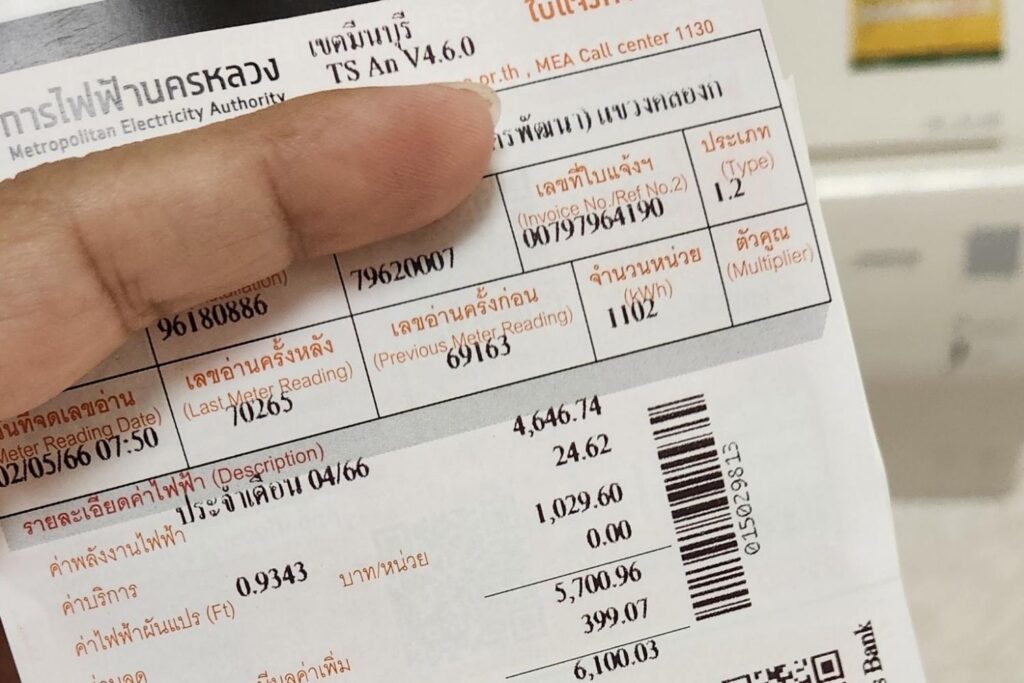
For electricity, Bangkok is typically served by MEA (Metropolitan Electricity Authority), while many other areas are covered by PEA (Provincial Electricity Authority).
For water, Bangkok commonly uses MWA (Metropolitan Waterworks Authority), while many other provinces fall under PWA (Provincial Waterworks Authority).

However, for someone new to Thailand, you don’t need to memorize all these names right away. What’s more important is to confirm which authority issues the bill for your residence and whether the bill you have is an official one.
This is crucial because if you live in a condo, apartment, or serviced residence, sometimes the bill you receive isn’t an official utility bill but one reissued by the management office. In such cases, you may not be able to use official apps or standard payment channels and must follow the management’s specified payment method.
Method 1: Ask Your Landlord or Management Office to Pay on Your Behalf
If you live in a condo, apartment, or managed property, this is often the easiest and most reliable method.
Many management offices have arrangements for collecting water and electricity fees. When the bill arrives, you simply go to the counter, pay in cash, or follow their specified payment method. For newcomers who aren’t yet fluent in the language and haven’t opened a bank account, this is the path with the fewest errors.
If you’re renting a unit managed directly by the landlord, ask them about their process. Some landlords collect payment monthly, some forward the official bill to you, and others direct you to a specific payment point. The key here is not to guess but to confirm: are you receiving an official bill or one reissued by the landlord/management?
The advantage of this method is that you don’t need to research payment systems yourself. The limitation is that transparency isn’t always guaranteed, especially if some residences add management or service fees on top of the official rates. It’s best to keep each bill or receipt for future verification.
Method 2: Take Your Bill to a Convenience Store or Counter and Pay in Cash
If you have a bill with a barcode or relevant payment information, paying in cash at a convenience store or service counter is often the most practical transitional method.
In Thailand, 7-Eleven counter services are widespread. TrueMoney’s official 7-Eleven service page clearly states that counter services can handle utility bill payments including water, electricity, and phone bills.
The advantage is clear: you don’t need a Thai bank card, you don’t need to learn a local banking app, and you don’t need to set up an e-wallet in advance. As long as the bill details are complete and you have cash, you can often get it done.
However, two things to note. First, not all bills are applicable, especially if your utilities are handled internally by the management office and may not scan at a retail counter. Second, service details may vary between stores. The safest approach is to check if the bill has a barcode or payment instructions, or ask the staff if they can process it.
Method 3: Pay Directly at Official Offices or Service Centers
For some, the most reassuring method is to go directly to a counter. This is especially suitable for two situations: when the amount is large and you want to confirm on-site, or when there are questions about the bill, such as account number, name, month, or outstanding status.
MEA and PEA have official channels for bill inquiry and payment; PWA also lists customer service and processing information for its branches. This means if you’re willing to spend some time, going directly to the relevant service center usually works.
The advantage is clarity, confirmation, and a clear receipt. The downside is that it’s time-consuming and depends on location and office hours. If you just need to pay the month’s bill quickly, a convenience store or management office is usually more efficient.
Method 4: Try Online Platforms or E-Wallets
Let’s specifically talk about Lazada and similar e-commerce and payment platforms, as many expats rely on them for bill payments.
Lazada is primarily an e-commerce platform, but its payment feature “LazWallet” and in-app bill payment service support paying electricity and water bills—and can be linked to overseas Visa or Mastercard credit cards, no Thai bank account needed.
The process is roughly: download the Lazada app, find “Pay Bills” or “Utilities” on the homepage, select the electricity provider (MEA or PEA) or water authority, enter your account number, choose credit card payment, and complete. The entire process can be done in English, making it very expat-friendly.
Another platform with similar features is TrueMoney Wallet, which also supports linking overseas cards. You can top up TrueMoney at 7-Eleven and then use the app to pay bills.
However, these platforms have some limitations to be aware of:
First, some platforms’ bill systems only cover specific regions or providers. Rural areas or smaller water utilities may not be listed.
Second, if your apartment’s utilities are managed by the management office, the account number format may differ from the official one, and the online platform may not find your account. In that case, you’ll need to go back to the management office and pay in cash.
Third, some overseas credit cards charge foreign transaction fees (usually 1.5% to 3%) for transactions in Thailand. It’s recommended to use a card that waives foreign transaction fees, such as a Wise card or certain travel credit cards.
Overall, Lazada and TrueMoney are the closest to an “online payment” experience without needing a Thai bank account, and are worth trying for those who prefer managing life through apps.
Method 5: Ask a Friend or Family Member to Pay for You
If you have friends who have been living in Thailand for a while and have local bank accounts, asking them to pay on your behalf is a very practical transitional method.
It’s not glamorous, but it’s very practical. Often, you just need to send them a photo of the bill, they pay using their local banking app or preferred method, and you reimburse them in cash, via international transfer, or another way.
The advantage is direct, fast, and flexible. The limitation is that it’s not a long-term solution. Using it occasionally is fine, but relying on others every month keeps your living arrangements in an unstable state.
Summary: Best Methods for Newcomers Without a Bank Account
Back to the most practical question: if you’ve just arrived in Thailand, your bank account is still being processed, and next month’s bill is due, what should you do?
Easiest: If you live in a managed apartment, go directly to the management office and pay in cash. No preparation needed.
Most flexible: Take your bill to 7-Eleven, pay in cash, and it’s done in five minutes. Suitable for anyone, anywhere.
Closest to digital experience: Try downloading Lazada or TrueMoney, link an overseas credit card, and pay within the app. However, these methods are more affected by platform rules, coverage, card restrictions, and foreigner verification requirements.