































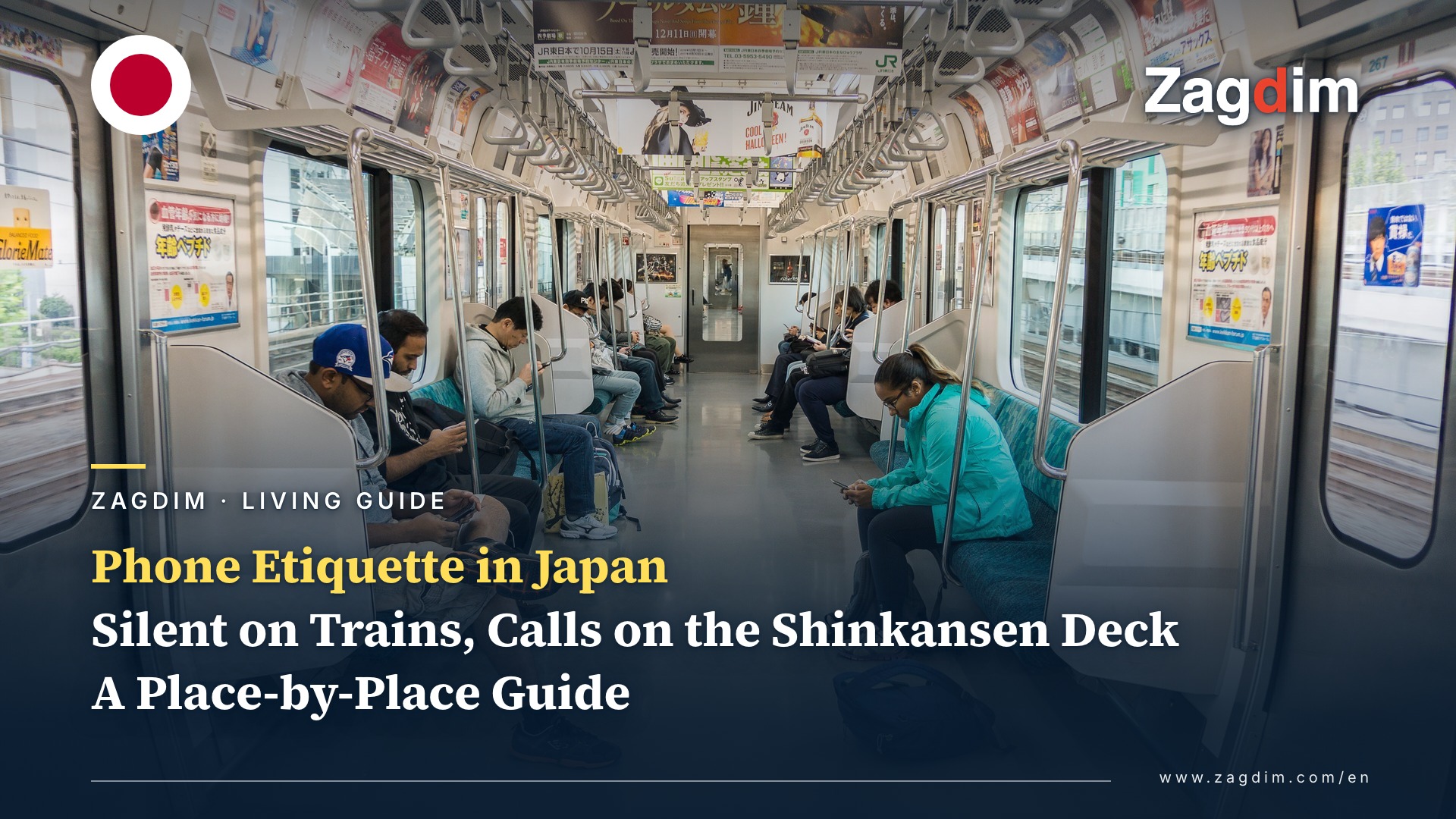
Phone etiquette in Japan comes down to one rule on trains: silent mode, no calls on board, and step into the vestibule on the Shinkansen
Phone etiquette in Japan, according to Tokyu Railways and Kintetsu Railway, means silent mode (マナーモード) and no calls on trains however busy they are; since 1 October 2015, 37 operators in eastern Japan ask passengers to switch off near priority seats when crowded. On limited express trains, calls belong in the vestibule (デッキ).
On 18 October 2026, a report by Japanese broadcaster BSS San’in Broadcasting drew wide discussion on Yahoo! News Japan: more people now hold their phone flat under the chin instead of against the ear, like a slice of pizza (the ‘pizza hold’, ピザ持ち), usually on speaker or with earphones. Of 55 people asked outside Yonago Station in Tottori, 31 said they skip the ear and 24 still hold the phone to it; one reason given by the second group was that speakerphone bothers people nearby.
How you hold your phone is personal. Where and how loudly you talk in Japan is not. This guide uses that report as a starting point to explain where you can and cannot take calls in Japan, and why it matters so much there.
Key Points
- Who should pay attention: travellers visiting Japan for leisure or business, foreigners who have just moved to Japan, and overseas owners who travel to Japan to view or manage property.
- Trains and subways: silent mode and no calls on board; near priority seats, switch off when crowded. This is a request rather than a legal rule, but almost everyone follows it.
- Shinkansen and express trains: no calls in ordinary carriages either; step into the vestibule. Car 7 on the Tokaido Shinkansen, the S Work car, is the exception, where quiet calls at your seat are allowed.
- The most common mistakes: speakerphone on board, talking loudly through earphones, videos playing out loud, and assuming an empty carriage makes a call acceptable.
Phone Etiquette in Japan, Place by Place
The basis for each row is shown in the last column:
| Place | Can you take a call? | What to do | Source |
|---|---|---|---|
| Local trains and subways | No | Silent mode, no calls on board | Tokyu Railways, Kintetsu Railway |
| Near priority seats | No | Switch off when crowded | Tokyu Railways, Kintetsu Railway |
| Shinkansen and limited express, ordinary cars | Not at your seat | Take the call in the vestibule (デッキ) | Kintetsu Railway, NTT Docomo |
| Tokaido Shinkansen car 7 (S Work car) | Yes | Talk quietly at your seat, use a headset | JR Central |
| Restaurants and hotel lobbies | Yes, quietly | Keep your voice down; step outside for long calls | NTT Docomo |
| Cinemas, theatres and museums | No | Switch off or similar | NTT Docomo |
| Hospitals | Depends on the hospital | Follow each facility’s instructions | NTT Docomo |
| Streets | Yes | Move out of the way of other people | NTT Docomo |
| While driving | No (handheld) | Holding a phone while driving is subject to penalties | NTT Docomo |
Taking Calls on Japanese Trains: Silent Mode, No Calls, Switch Off Near Priority Seats When Crowded
Tokyu Railways puts it plainly: set your phone to silent mode on board and please do not take calls; near priority seats, please switch your phone off when the train is crowded. Kintetsu Railway says almost the same, and defines ‘crowded’ as standing passengers’ bodies touching one another. It also asks passengers not to let video sound leak and to watch their earphone volume.
The priority-seat rule changed once, in 2015. Tokyu announced on 1 October 2015 that 37 rail operators in the Tohoku, Kanto and Koshinetsu regions would change ‘please switch off near priority seats’ to ‘please switch off near priority seats when crowded’. The reasons given were a January 2013 revision by the Ministry of Internal Affairs and Communications of its guideline on radio waves and implanted medical devices, and the spread of smartphones. The same notice said that calls on board bother other passengers, so passengers would still be asked not to make calls regardless of how crowded the train is.
In other words, what was relaxed in 2015 was when to switch off, not whether you can talk.
Taking Calls on the Shinkansen: Use the Vestibule, With One Exception
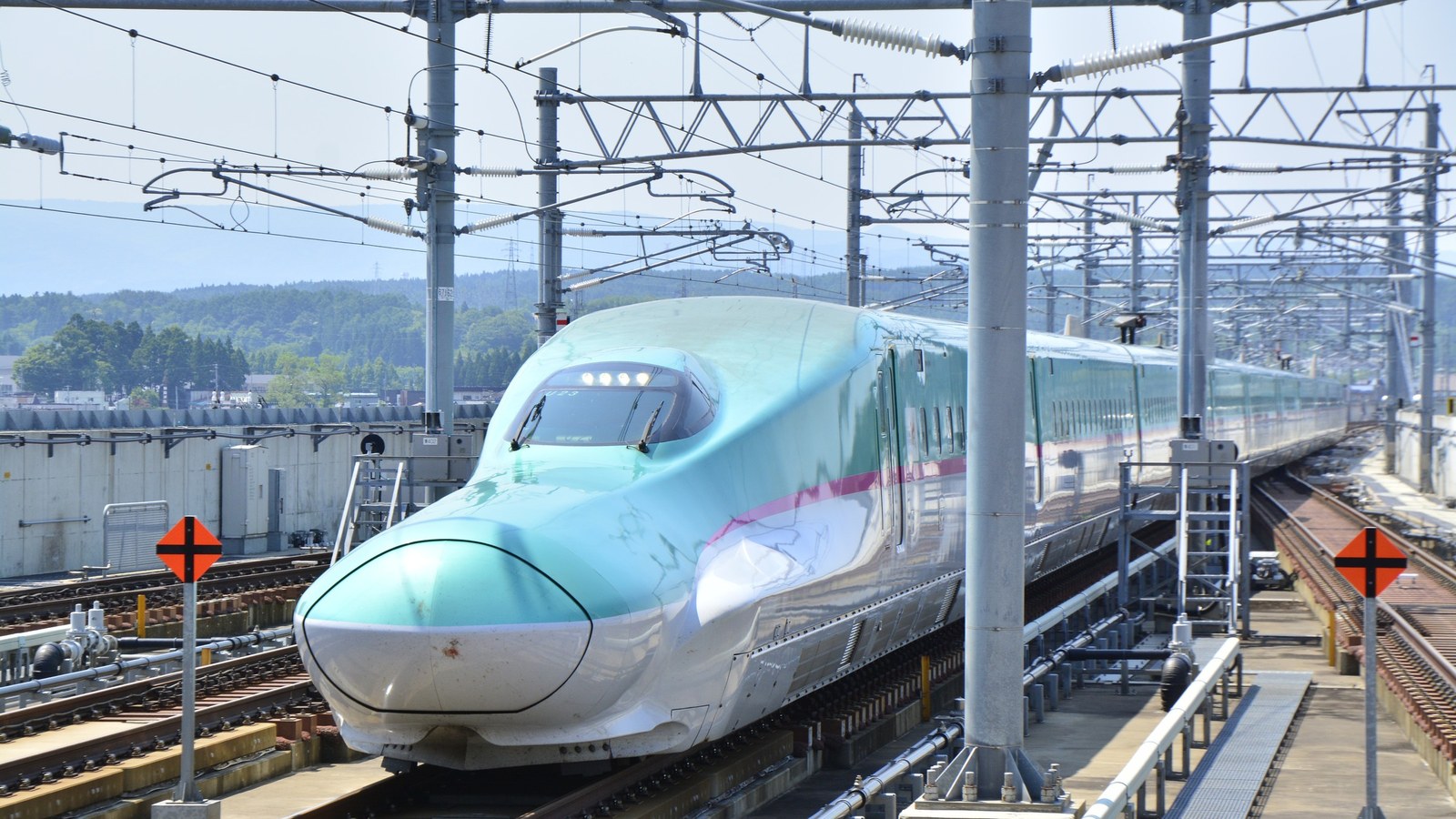
NTT Docomo’s phone etiquette guide groups the Shinkansen with ordinary trains: switch to silent mode on board, refrain from calls and follow each rail operator’s rules. When people in Japan need to take a call, they get up and walk to the vestibule (デッキ), the area by the doors between carriages. Kintetsu Railway writes this into its etiquette page: no calls in ordinary trains, and calls on limited express trains should be made in the vestibule.
The Tokaido Shinkansen has an exception. JR Central began trialling the ‘S Work car’ in car 7 of Nozomi trains on 1 October 2021. Its website now says that in car 7 (ordinary reserved seats) of Nozomi, Hikari and Kodama trains, you may take phone calls and join video meetings at your seat, using a headset and a quiet voice or the chat function, out of consideration for others. To talk at your seat you need to book a seat in that car; check JR Central’s website for the current service.
Why Japan Cares So Much: Not Disturbing the People Around You
Tokyu Railways explains that its on-board phone etiquette came about because many passengers asked for calls on trains to be avoided and for better manners. In other words, the rule reflects what passengers themselves expect, not just what the rail company wants.
The Japan Private Railway Association runs an annual survey on nuisance behaviour in stations and on trains. The 2024 survey ran online from 1 October to 30 November 2024 and received 5,314 replies. Published on 19 December 2024, it asked for the first time about visitors to Japan: 62.9% (3,344 people) said visitors’ behaviour had bothered them, and loud talking and boisterous behaviour topped the list at 51.8%.
In a closed, crowded space where people are commuting or resting, one phone call means the whole carriage hears half a conversation. That is why people in Japan would rather call back after getting off, or send a quick message saying they are on a train. Even in the BSS street interviews, some who hold the phone to their ear said they do so to avoid bothering others with speakerphone.
Common Phone Mistakes Visitors Make in Japan
- Thinking an empty carriage makes it fine: Tokyu’s 2015 notice says calls should be avoided regardless of how crowded the train is; crowding only decides whether to switch off near priority seats. Tip: decline the call or say a quick word and call back.
- Thinking earphones make it acceptable: earphones stop the other person’s voice from being heard, but the whole carriage still hears yours. Tip: earphones are for listening, not for talking on trains.
- Speakerphone or videos playing out loud: Kintetsu asks passengers not to let video sound leak and to watch earphone volume; a speakerphone call is even more disruptive. Tip: check that your phone is on silent before boarding.
- Talking at your Shinkansen seat: ordinary Shinkansen carriages are no-call zones too; only designated cars such as the S Work car allow calls at your seat. Tip: if you expect to work on the phone, book the S Work car.
- Thinking it is the law and you will be fined: avoiding calls on trains is an etiquette request, not a legal penalty. Holding a phone while driving, however, is subject to penalties, so do not confuse the two.
Scenarios: When You Need to Take a Call in Japan
Scenario 1: A first-time visitor on the Yamanote Line gets a call from family
The rule on Japanese trains is no calls on board. The simplest approach is to decline, send a message saying you are on a train, and call back at the next stop or after you arrive. Answering on speakerphone to explain is exactly the scene most likely to draw looks.
Scenario 2: A business traveller on the Shinkansen has a call they cannot miss
On a trip from Tokyo to Osaka, step into the vestibule to take the call. If you will need to talk or join video meetings for much of the journey, book car 7 on the Tokaido Shinkansen, the S Work car, and talk quietly at your seat with a headset.
Scenario 3: An overseas owner viewing property in Tokyo gets a call from the agent
An owner who travels to Japan to manage property receives a call from the agent while eating out. NTT Docomo’s guide says quiet places such as restaurants and hotel lobbies call for a lower voice; a short check is fine, but for a longer conversation about details it is better to step outside.
Phone Etiquette in Japan: Frequently Asked Questions
Is it really not okay to talk on the phone on Japanese trains?
Rail operators including Tokyu Railways and Kintetsu Railway ask passengers not to take calls on board, regardless of how crowded the train is. It is an etiquette request with no fine, but almost everyone follows it and a call on board will draw attention. If it is urgent, say quietly that you are on a train, hang up and call back after you get off.
Under phone etiquette in Japan, why switch off near priority seats?
The rule began because of concerns that radio waves could affect implanted medical devices such as pacemakers. From 1 October 2015, 37 rail operators in Tohoku, Kanto and Koshinetsu relaxed it to ‘switch off when crowded’, citing a 2013 revision of the relevant government guideline and the spread of smartphones. Kintetsu defines crowded as standing passengers’ bodies touching.
Can you take calls on the Shinkansen, and where?
Please do not take calls in ordinary Shinkansen carriages; get up and walk to the vestibule (デッキ) by the doors. The exception is car 7, the S Work car, on Tokaido Shinkansen Nozomi, Hikari and Kodama trains, where JR Central allows calls and video meetings at your seat with a headset and a quiet voice. Check JR Central’s website for the latest details.
Can I talk on the phone with earphones on the train?
It is best not to. Earphones only stop the other person’s voice from being heard; people around you still hear everything you say, and rail operators make no exception for earphones when asking passengers not to take calls. Earphones are for keeping music and video sound to yourself, and Kintetsu also asks passengers to keep the volume down.
Does phone etiquette in Japan apply in restaurants and cafes?
Yes, in a gentler form. NTT Docomo’s guide says that in quiet places such as restaurants and hotel lobbies you should keep your voice down. In practice a short call is fine, but for a longer or more personal conversation it is more in keeping with local manners to step outside, so you do not make people at your table or the next one uncomfortable.
Is the ‘pizza hold’ rude in Japan?
How you hold your phone is not right or wrong in itself, and the BSS street interviews found more people skipping the ear than holding the phone to it. What matters is the speakerphone that often comes with it: on trains you should not be taking calls anyway, and on speaker in a restaurant or on the street others can hear the other person too. Holding the phone to your ear or using earphones, at a low voice, disturbs others least.
Travelling or Living in Japan? Ask Zagdim
If you have questions about travelling, working or managing property in Japan, or about settling in for a longer stay, tell us about your situation at Ask Zagdim.
Life abroad? Ask Zagdim.
Your first stop for international property and global living.
Research and insights. Know what’s changing. Understand what matters.
Newsletter for overseas updatesSubscribe →
Important Disclaimer
This article is general information and is not legal advice. It is based mainly on guidance and surveys published from 2015 to 2026 by Tokyu Railways, Kintetsu Railway, JR Central, NTT Docomo and the Japan Private Railway Association, and on media reports from October 2026. Details vary by rail operator; follow on-board announcements, signs and each operator’s latest guidance.
This guide to phone etiquette in public places in Japan is current as of 24 October 2026; check each rail operator’s latest notices.
References
Tokyu Railways – マナー向上のお願い (Requests for better manners) / Tokyu Railways – Change to phone etiquette near priority seats: “please switch off when crowded” (1 October 2015) / Kintetsu Railway – マナーについて (About manners) / JR Central – S Work車両 (S Work car) / JR Central – Launch of the S Work car for business travellers (17 September 2021) / NTT Docomo – 携帯電話のマナー (Mobile phone etiquette) / Japan Private Railway Association – 2024 ranking of nuisance behaviour in stations and on trains (19 December 2024) / BSS San’in Broadcasting via Yahoo! News Japan – More people use the ‘pizza hold’ for phone calls (18 October 2026) / Zagdim – Japan Train Tickets: How to Buy Them, How to Get Through the Gates, and Choosing Between IC Cards, Paper Tickets and QR Tickets (19 October 2026)